
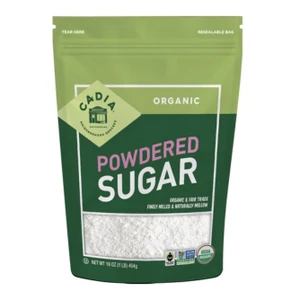

Brown Sugar - 16 oz
Cadia
$4.29
Below are the available bulk discount rates for each individual item when you purchase a certain amount
- Buy 2 - 5 and get 2% off
- Buy 6 - 11 and get 4% off
- Buy 12 or above and get 8% off
(No reviews yet)

Write a Review

Cadia
Brown Sugar - 16 oz
Made from just two ingredients, organic cane sugar and organic molasses, this brown sugar is kosher, non-GMO, and sustainably sourced, and sold exclusively at independent neighborhood grocers who partner with Cadia to keep ethically sourced staples affordable on their shelves.
- Stir into oatmeal, whisk into glazes for roasted vegetables, or fold into classic baking like gingerbread and chocolate chip cookies where molasses depth matters.
- Every purchase supports Cadia's network of independent neighborhood grocers, helping keep organic, ethically sourced pantry staples accessible in local communities.
- Kosher and non-GMO, and suited to vegan kitchens since organic cane sugar is refined without the bone-char filtration common in conventional sugar.
Cadia partners with independent neighborhood grocers to put organic, ethically sourced pantry staples within reach of everyday shoppers — this organic brown sugar included.
This brown sugar is built from exactly two ingredients: organic cane sugar and organic molasses. The molasses is what gives it that characteristic moisture, deep color, and caramel-forward flavor — and it's blended in, not just coating refined white sugar as happens with many conventional brands. Molasses also carries trace minerals, including small amounts of iron, calcium, and potassium, that refined white sugar doesn't retain.
Use it anywhere a recipe calls for depth: gingerbread, barbecue sauce, glazed carrots, baked beans, or a spoonful stirred into morning oatmeal or coffee. Because it's organic cane sugar rather than conventional, it's also typically processed without bone char — a detail that matters if you're building a strictly vegan pantry. As a caloric sweetener made from cane, it's not suited to keto, paleo, or other strict low-carb ways of eating, so treat it as an occasional addition rather than a daily staple on those plans.
Kosher and non-GMO. Store in a sealed, airtight container in a cool, dry pantry; if it hardens, a slice of bread or a damp paper towel sealed in the container overnight will soften it back up.
Ingredients: Organic Cane Sugar and Organic Molasses.
Common Questions
How does this compare nutritionally to conventional brown sugar?
Gram for gram, the calorie and carbohydrate counts are nearly identical — about 15 calories and 4 grams of carbohydrate per teaspoon, same as any brown sugar. The real difference is in processing and trace mineral content. Conventional brown sugar is typically refined white sugar with a thin coating of molasses sprayed back on, and much of the cane sugar used in the US is processed using bone char as a decolorizing filter. Cadia's is organic cane sugar blended with molasses rather than coated, and organic processing standards in the US prohibit bone char filtration, so the mineral content from the molasses (small amounts of iron, calcium, and potassium) stays intact rather than being stripped and partially reapplied.
What does molasses actually do nutritionally, and how much mineral content are we talking about?
Molasses is the syrup left behind after sucrose crystals are extracted from cane juice, and it concentrates minerals that would otherwise be discarded, including iron, calcium, potassium, and magnesium. In this brown sugar, the molasses percentage is small enough that a teaspoon still delivers under 1% of your daily value for any of these minerals — it's not a meaningful mineral source on its own. The honest takeaway is that brown sugar is still sugar; the molasses changes flavor, moisture, and color more than it changes the nutrition label.
Does this fit a keto, paleo, or carnivore diet?
No, for keto or carnivore: at 4 grams of carbohydrate per teaspoon, entirely from sucrose, it will pull you out of ketosis quickly and has no place in a zero-carb carnivore protocol. For paleo, it's more of a gray area — some paleo frameworks allow small amounts of unrefined or minimally processed sweeteners like this one in place of refined white sugar, since it retains molasses rather than being stripped of it, but strict paleo eaters who avoid all added sugars will still exclude it.
What dishes work best with this, and do I need to adjust the recipe?
It performs well anywhere you want moisture and caramel depth: gingerbread, barbecue sauce, baked beans, glazed carrots, pecan pie filling, and stirred into oatmeal or coffee. If you're substituting it for white sugar in a recipe that doesn't call for brown sugar, use a roughly 1-to-1 swap but expect a slightly moister, denser result in baked goods like cookies or cakes because molasses adds hygroscopic moisture. For recipes that specify light versus dark brown sugar, this one sits closer to a standard or dark brown sugar in molasses intensity, so if a recipe calls for light brown sugar and you want a milder flavor, cut the amount by about 10% and make up the difference with plain cane sugar.
How do I know the Fair Trade and organic claims are real?
Fair Trade certification means an independent third-party auditor — in this case operating under Fair Trade standards — verified that the farms in the supply chain paid workers fair wages, prohibited forced and child labor, and received a Fair Trade premium paid directly to the farming community for reinvestment in things like schools or infrastructure. The organic claim means the cane was grown without synthetic pesticides or fertilizers and processed without prohibited substances, verified through USDA organic certification, which requires annual inspections of both farms and processing facilities. You can look up the certifying body's name on the package and cross-check it against the USDA Organic Integrity Database or the Fair Trade certifier's public registry if you want to verify a specific lot.
Why does it matter that this is blended rather than just molasses-coated?
Many mass-market brown sugars are made by taking fully refined white sugar and spraying a molasses coating onto the surface afterward, which means the flavor and moisture sit unevenly on the outside of the crystal and can separate or dry out faster in storage. Cadia's process incorporates the molasses into the sugar rather than applying it as a surface coating, which is why the color and moisture are consistent all the way through a spoonful rather than concentrated on the outer layer. In practical terms, this shows up as more even melting and caramelization when you use it in sauces or baked goods, since you're not getting pockets of drier, less-flavorful sugar mixed with wetter, more molasses-heavy crystals.
Why does brown sugar harden, and is that a sign it's gone bad?
Hardening isn't spoilage — it happens because the moisture in the molasses evaporates when the sugar is exposed to air, causing the crystals to bond together and stiffen. Because this sugar has moisture blended throughout rather than just on the surface, it's somewhat more resistant to hardening than coated brown sugars, but it will still stiffen if left unsealed. Sealing it in an airtight container and storing it in a cool, dry pantry prevents most of this, and if it does harden, resealing it overnight with a damp paper towel or a slice of bread restores the moisture and softens it back to a usable texture.
This brown sugar is built from exactly two ingredients: organic cane sugar and organic molasses. The molasses is what gives it that characteristic moisture, deep color, and caramel-forward flavor — and it's blended in, not just coating refined white sugar as happens with many conventional brands. Molasses also carries trace minerals, including small amounts of iron, calcium, and potassium, that refined white sugar doesn't retain.
Use it anywhere a recipe calls for depth: gingerbread, barbecue sauce, glazed carrots, baked beans, or a spoonful stirred into morning oatmeal or coffee. Because it's organic cane sugar rather than conventional, it's also typically processed without bone char — a detail that matters if you're building a strictly vegan pantry. As a caloric sweetener made from cane, it's not suited to keto, paleo, or other strict low-carb ways of eating, so treat it as an occasional addition rather than a daily staple on those plans.
Kosher and non-GMO. Store in a sealed, airtight container in a cool, dry pantry; if it hardens, a slice of bread or a damp paper towel sealed in the container overnight will soften it back up.
Ingredients: Organic Cane Sugar and Organic Molasses.
Common Questions
How does this compare nutritionally to conventional brown sugar?
Gram for gram, the calorie and carbohydrate counts are nearly identical — about 15 calories and 4 grams of carbohydrate per teaspoon, same as any brown sugar. The real difference is in processing and trace mineral content. Conventional brown sugar is typically refined white sugar with a thin coating of molasses sprayed back on, and much of the cane sugar used in the US is processed using bone char as a decolorizing filter. Cadia's is organic cane sugar blended with molasses rather than coated, and organic processing standards in the US prohibit bone char filtration, so the mineral content from the molasses (small amounts of iron, calcium, and potassium) stays intact rather than being stripped and partially reapplied.
What does molasses actually do nutritionally, and how much mineral content are we talking about?
Molasses is the syrup left behind after sucrose crystals are extracted from cane juice, and it concentrates minerals that would otherwise be discarded, including iron, calcium, potassium, and magnesium. In this brown sugar, the molasses percentage is small enough that a teaspoon still delivers under 1% of your daily value for any of these minerals — it's not a meaningful mineral source on its own. The honest takeaway is that brown sugar is still sugar; the molasses changes flavor, moisture, and color more than it changes the nutrition label.
Does this fit a keto, paleo, or carnivore diet?
No, for keto or carnivore: at 4 grams of carbohydrate per teaspoon, entirely from sucrose, it will pull you out of ketosis quickly and has no place in a zero-carb carnivore protocol. For paleo, it's more of a gray area — some paleo frameworks allow small amounts of unrefined or minimally processed sweeteners like this one in place of refined white sugar, since it retains molasses rather than being stripped of it, but strict paleo eaters who avoid all added sugars will still exclude it.
What dishes work best with this, and do I need to adjust the recipe?
It performs well anywhere you want moisture and caramel depth: gingerbread, barbecue sauce, baked beans, glazed carrots, pecan pie filling, and stirred into oatmeal or coffee. If you're substituting it for white sugar in a recipe that doesn't call for brown sugar, use a roughly 1-to-1 swap but expect a slightly moister, denser result in baked goods like cookies or cakes because molasses adds hygroscopic moisture. For recipes that specify light versus dark brown sugar, this one sits closer to a standard or dark brown sugar in molasses intensity, so if a recipe calls for light brown sugar and you want a milder flavor, cut the amount by about 10% and make up the difference with plain cane sugar.
How do I know the Fair Trade and organic claims are real?
Fair Trade certification means an independent third-party auditor — in this case operating under Fair Trade standards — verified that the farms in the supply chain paid workers fair wages, prohibited forced and child labor, and received a Fair Trade premium paid directly to the farming community for reinvestment in things like schools or infrastructure. The organic claim means the cane was grown without synthetic pesticides or fertilizers and processed without prohibited substances, verified through USDA organic certification, which requires annual inspections of both farms and processing facilities. You can look up the certifying body's name on the package and cross-check it against the USDA Organic Integrity Database or the Fair Trade certifier's public registry if you want to verify a specific lot.
Why does it matter that this is blended rather than just molasses-coated?
Many mass-market brown sugars are made by taking fully refined white sugar and spraying a molasses coating onto the surface afterward, which means the flavor and moisture sit unevenly on the outside of the crystal and can separate or dry out faster in storage. Cadia's process incorporates the molasses into the sugar rather than applying it as a surface coating, which is why the color and moisture are consistent all the way through a spoonful rather than concentrated on the outer layer. In practical terms, this shows up as more even melting and caramelization when you use it in sauces or baked goods, since you're not getting pockets of drier, less-flavorful sugar mixed with wetter, more molasses-heavy crystals.
Why does brown sugar harden, and is that a sign it's gone bad?
Hardening isn't spoilage — it happens because the moisture in the molasses evaporates when the sugar is exposed to air, causing the crystals to bond together and stiffen. Because this sugar has moisture blended throughout rather than just on the surface, it's somewhat more resistant to hardening than coated brown sugars, but it will still stiffen if left unsealed. Sealing it in an airtight container and storing it in a cool, dry pantry prevents most of this, and if it does harden, resealing it overnight with a damp paper towel or a slice of bread restores the moisture and softens it back to a usable texture.
- __Storage_Location:
- Dry
- __Volume:
- 700
- __Owner:
- TCFarm
Related Products
-
-
Sale
-
-


