


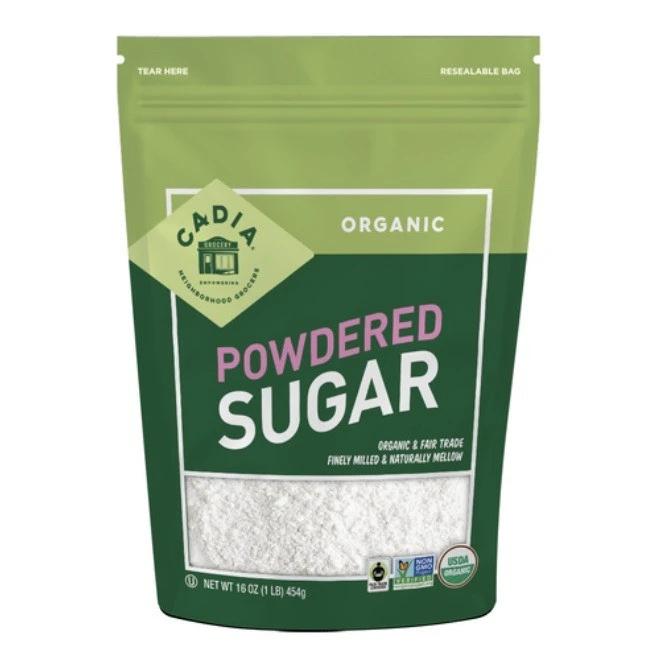
Powdered Sugar - 16 oz
Cadia
$4.29
Below are the available bulk discount rates for each individual item when you purchase a certain amount
- Buy 2 - 5 and get 2% off
- Buy 6 - 11 and get 4% off
- Buy 12 or above and get 8% off
(No reviews yet)

Write a Review
Cadia
Powdered Sugar - 16 oz
Most powdered sugar leans on cornstarch to stay fine and free-flowing — an anti-caking shortcut that usually traces back to conventional, GMO corn. Cadia swaps it for organic tapioca starch blended with organic cane sugar, keeping this two-ingredient staple free of GMO corn without sacrificing the smooth, clump-free texture bakers rely on. It's exactly the kind of clean-label swap independent neighborhood grocers are proud to offer their communities.
- Sifts into buttercream frosting, whisks into glazes, and dusts evenly over cakes, cookies, and pancakes
- Anti-caked with organic tapioca starch instead of cornstarch, keeping the ingredient list non-GMO
- Vegan-friendly and gluten-free by ingredient, Certified Organic and Kosher
Cadia's Organic Powdered Sugar pairs organic cane sugar with organic tapioca starch instead of the cornstarch most powdered sugar relies on to stay free-flowing — a swap that keeps this two-ingredient blend free of GMO corn from the first spoonful.
The fine, confectioners'-style texture sifts smoothly into buttercream frostings, whisks into glazes for cakes and cinnamon rolls, and dusts evenly over baked goods without clumping. Because the tapioca starch performs the same anti-caking job as cornstarch, it substitutes 1:1 in any recipe calling for powdered sugar.
Made from plant-based ingredients with no dairy, eggs, or animal products, this powdered sugar fits vegan and vegetarian kitchens, though its cane sugar base means it isn't suited for keto, paleo, or carnivore diets.
Certified Organic, Kosher, and non-GMO, this powdered sugar is sourced with the same ethical-sourcing standards behind Cadia's whole line — sold exclusively through independent, community-owned neighborhood grocers, supporting small retailers who bring clean-ingredient pantry staples to their communities.
Store in a sealed, airtight container in a cool, dry pantry to keep it free-flowing.
Ingredients: Organic Cane Sugar and Organic Tapioca Starch.
Common Questions
How does this compare to a typical box of powdered sugar from the grocery store?
Most conventional powdered sugar is made by grinding refined cane or beet sugar with 2-3% cornstarch, and that corn is very likely genetically modified since over 90% of U.S. corn acreage is GMO. Cadia's version swaps that cornstarch for organic tapioca starch, so the whole blend — both the sugar and the anti-caking agent — is certified organic and non-GMO. Nutritionally the two are nearly identical: about 30 calories and 8 grams of carbohydrate per tablespoon, all from sugar, with no fat or protein in either. The real differences are in sourcing and processing, not macros — this one is Fair Trade certified and made from organic sugarcane grown without synthetic pesticides or fertilizers.
Why does tapioca starch keep the sugar from clumping instead of cornstarch?
Powdered sugar is ground fine enough that it absorbs ambient moisture and cakes together, so every brand adds a starch to coat the particles and block that moisture uptake. Tapioca starch, extracted from the cassava root, is made mostly of amylopectin, a branched carbohydrate that binds water just as effectively as the amylose-heavy cornstarch used in conventional versions. Because the two starches perform the same job through the same basic mechanism — physically separating sugar crystals and absorbing surface moisture — the swap doesn't change how the sugar sifts, dissolves, or dusts.
Does this fit into a keto, paleo, or carnivore diet?
No. This is straight sucrose, and one tablespoon delivers roughly 8 grams of carbohydrate, all of it sugar, which puts it well outside keto's typical 20-50 gram daily carb ceiling with almost nothing else eaten. Paleo frameworks generally exclude refined sugar entirely since it didn't exist in a pre-agricultural diet, regardless of whether the cane itself is organic. Carnivore excludes all plant-derived carbohydrates, so a sugar-and-starch product is off the list there too. This is best treated as an occasional-use baking ingredient rather than a diet-compliant sweetener.
What can I use this for and does the tapioca starch change how recipes turn out?
It works as a straight 1:1 substitute anywhere a recipe calls for confectioners' or powdered sugar: buttercream frosting, glazes for cinnamon rolls or donuts, royal icing for cookies, and dusting over cakes, brownies, or pancakes. Tapioca starch gelatinizes at a slightly lower temperature than cornstarch, so in cooked applications like a boiled glaze or a stirred custard-style frosting, it can thicken a touch faster — worth watching if you're used to timing a cornstarch-based recipe. For simple whisked or sifted uses like buttercream and dusting, you won't notice any difference in texture or sweetness at all.
What do the Organic and Fair Trade certifications actually verify here?
USDA Organic certification means the sugarcane was grown without synthetic pesticides, herbicides, or GMO seed, and that the refining process met USDA standards for organic handling — you can confirm any batch through the USDA Organic Integrity Database. Fair Trade Certified means the cane sugar was sourced under Fairtrade International's standards, which set a minimum price floor for farmers and add a community development premium paid on top of that price, verified through third-party audits of the supply chain. Kosher certification confirms the ingredients and production process were reviewed by a certifying rabbinical agency. All three marks appear on the package and can be independently checked against each certifying body's public registry rather than taken on faith.
Is this sugar processed with bone char like some cane sugar can be?
No. Some conventional cane sugar refining in the U.S. uses bone char as a decolorizing filter, which is a sticking point for strict vegans even though no bone char ends up in the final product. Organic cane sugar refining, including what Cadia uses here, relies on non-animal filtration methods to meet USDA organic standards, so there's no bone char step in the process at all.
Will this dissolve as smoothly as regular powdered sugar in a thin glaze?
Yes. The particle size and sweetness are the same as any confectioners'-style sugar, and tapioca starch is just as inert in liquid as cornstarch at the small quantity present, so a thin milk or lemon-juice glaze whisks together just as smoothly with no graininess or starchy aftertaste. The main practical note is storage: because tapioca starch is slightly more hygroscopic than cornstarch, keeping the bag sealed in a cool, dry spot matters a bit more here to prevent clumping before you even get to mixing.
The fine, confectioners'-style texture sifts smoothly into buttercream frostings, whisks into glazes for cakes and cinnamon rolls, and dusts evenly over baked goods without clumping. Because the tapioca starch performs the same anti-caking job as cornstarch, it substitutes 1:1 in any recipe calling for powdered sugar.
Made from plant-based ingredients with no dairy, eggs, or animal products, this powdered sugar fits vegan and vegetarian kitchens, though its cane sugar base means it isn't suited for keto, paleo, or carnivore diets.
Certified Organic, Kosher, and non-GMO, this powdered sugar is sourced with the same ethical-sourcing standards behind Cadia's whole line — sold exclusively through independent, community-owned neighborhood grocers, supporting small retailers who bring clean-ingredient pantry staples to their communities.
Store in a sealed, airtight container in a cool, dry pantry to keep it free-flowing.
Ingredients: Organic Cane Sugar and Organic Tapioca Starch.
Common Questions
How does this compare to a typical box of powdered sugar from the grocery store?
Most conventional powdered sugar is made by grinding refined cane or beet sugar with 2-3% cornstarch, and that corn is very likely genetically modified since over 90% of U.S. corn acreage is GMO. Cadia's version swaps that cornstarch for organic tapioca starch, so the whole blend — both the sugar and the anti-caking agent — is certified organic and non-GMO. Nutritionally the two are nearly identical: about 30 calories and 8 grams of carbohydrate per tablespoon, all from sugar, with no fat or protein in either. The real differences are in sourcing and processing, not macros — this one is Fair Trade certified and made from organic sugarcane grown without synthetic pesticides or fertilizers.
Why does tapioca starch keep the sugar from clumping instead of cornstarch?
Powdered sugar is ground fine enough that it absorbs ambient moisture and cakes together, so every brand adds a starch to coat the particles and block that moisture uptake. Tapioca starch, extracted from the cassava root, is made mostly of amylopectin, a branched carbohydrate that binds water just as effectively as the amylose-heavy cornstarch used in conventional versions. Because the two starches perform the same job through the same basic mechanism — physically separating sugar crystals and absorbing surface moisture — the swap doesn't change how the sugar sifts, dissolves, or dusts.
Does this fit into a keto, paleo, or carnivore diet?
No. This is straight sucrose, and one tablespoon delivers roughly 8 grams of carbohydrate, all of it sugar, which puts it well outside keto's typical 20-50 gram daily carb ceiling with almost nothing else eaten. Paleo frameworks generally exclude refined sugar entirely since it didn't exist in a pre-agricultural diet, regardless of whether the cane itself is organic. Carnivore excludes all plant-derived carbohydrates, so a sugar-and-starch product is off the list there too. This is best treated as an occasional-use baking ingredient rather than a diet-compliant sweetener.
What can I use this for and does the tapioca starch change how recipes turn out?
It works as a straight 1:1 substitute anywhere a recipe calls for confectioners' or powdered sugar: buttercream frosting, glazes for cinnamon rolls or donuts, royal icing for cookies, and dusting over cakes, brownies, or pancakes. Tapioca starch gelatinizes at a slightly lower temperature than cornstarch, so in cooked applications like a boiled glaze or a stirred custard-style frosting, it can thicken a touch faster — worth watching if you're used to timing a cornstarch-based recipe. For simple whisked or sifted uses like buttercream and dusting, you won't notice any difference in texture or sweetness at all.
What do the Organic and Fair Trade certifications actually verify here?
USDA Organic certification means the sugarcane was grown without synthetic pesticides, herbicides, or GMO seed, and that the refining process met USDA standards for organic handling — you can confirm any batch through the USDA Organic Integrity Database. Fair Trade Certified means the cane sugar was sourced under Fairtrade International's standards, which set a minimum price floor for farmers and add a community development premium paid on top of that price, verified through third-party audits of the supply chain. Kosher certification confirms the ingredients and production process were reviewed by a certifying rabbinical agency. All three marks appear on the package and can be independently checked against each certifying body's public registry rather than taken on faith.
Is this sugar processed with bone char like some cane sugar can be?
No. Some conventional cane sugar refining in the U.S. uses bone char as a decolorizing filter, which is a sticking point for strict vegans even though no bone char ends up in the final product. Organic cane sugar refining, including what Cadia uses here, relies on non-animal filtration methods to meet USDA organic standards, so there's no bone char step in the process at all.
Will this dissolve as smoothly as regular powdered sugar in a thin glaze?
Yes. The particle size and sweetness are the same as any confectioners'-style sugar, and tapioca starch is just as inert in liquid as cornstarch at the small quantity present, so a thin milk or lemon-juice glaze whisks together just as smoothly with no graininess or starchy aftertaste. The main practical note is storage: because tapioca starch is slightly more hygroscopic than cornstarch, keeping the bag sealed in a cool, dry spot matters a bit more here to prevent clumping before you even get to mixing.
- __Storage_Location:
- Dry
- __Volume:
- 700
- __Owner:
- TCFarm


