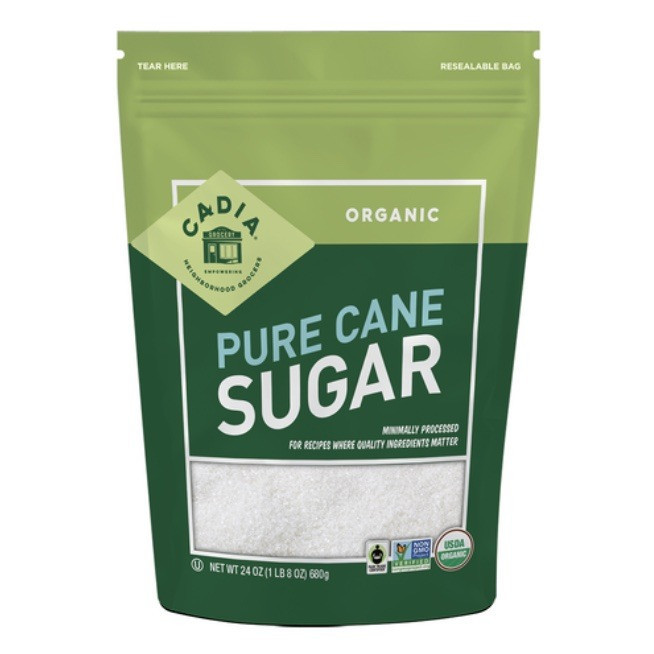
Cane Sugar - 24 oz
Cadia
$4.29
Below are the available bulk discount rates for each individual item when you purchase a certain amount
- Buy 2 - 5 and get 2% off
- Buy 6 - 11 and get 4% off
- Buy 12 or above and get 8% off
(No reviews yet)

Write a Review
Cadia
Cane Sugar - 24 oz
Cadia's cane sugar is certified organic (95%+) and certified kosher, grown without synthetic pesticides or fertilizers. It's sold exclusively through independent neighborhood grocers, so your purchase supports the local shop that stocks it.
- A pantry staple for baking, sweetening coffee and tea, or any recipe that calls for granulated sugar
- Certified organic (95%+) and certified kosher — a pure, single-ingredient sugar
- Suitable for vegan, kosher, and gluten-free diets
Cadia's organic cane sugar starts with one thing: organic sugar cane, grown without synthetic pesticides or fertilizers.
This is a single-ingredient product - organic cane sugar, nothing else - certified organic (95%+) and certified kosher. It's non-GMO by nature of its organic certification, since USDA Organic standards prohibit genetically modified crops and synthetic pesticides.
Use this organic granulated sugar exactly as you would any cane sugar: baking, sweetening hot or cold beverages, or finishing a batch of preserves.
Suitable for vegan, kosher, and gluten-free kitchens, though as a pure sugar it isn't a fit for keto, paleo, or carnivore diets, which limit added sugars. Store in a sealed, dry container at room temperature, away from moisture, and it will keep indefinitely. Available exclusively at independent neighborhood grocers, sustainably sourced from certified organic, non-GMO ingredients.
Ingredients: Organic Cane Sugar.
Common Questions
How does this sugar actually differ from conventional white granulated sugar?
Chemically, both are sucrose, so the calorie count is nearly identical at 16 calories and 4 grams of carbohydrate per teaspoon. The differences are in processing and sourcing. Conventional cane sugar is typically refined further and often filtered through activated carbon that in some supply chains includes bone char, which makes it non-vegan and strips out the last traces of molasses, leaving a pure white crystal. Cadia's sugar is only minimally refined, so it retains a faint golden tint and trace amounts of molasses, along with small amounts of calcium, potassium, and iron that heavily processed white sugar loses. It's also grown without synthetic pesticides or GMO seed stock, which conventional cane sugar frequently is not.
Does the golden color mean it's less processed on a molecular level, or is it purely cosmetic?
It reflects a real difference in refining steps, not just appearance. White table sugar goes through additional washing, filtering, and sometimes bleaching cycles specifically to strip out the molasses film that naturally coats raw sugar crystals during crystallization from cane juice. Cadia's sugar stops earlier in that process, so a thin residual molasses layer stays on the crystal, which is what gives it the pale gold hue and a slightly more rounded, less one-dimensional sweetness than bleached white sugar. Nutritionally the difference is small, since the molasses trace amounts don't meaningfully change the sugar content, but it does affect flavor depth in recipes like caramel or shortbread where sugar quality is noticeable.
Does this fit into keto, paleo, or carnivore eating?
No, on all three counts, and this isn't specific to this brand, it's true of any cane sugar. One teaspoon delivers 4 grams of carbohydrate, all of it sucrose with zero fiber, so it breaks down quickly into glucose and fructose and raises blood sugar in a way that conflicts directly with ketosis and with carnivore's zero-plant-carbohydrate framework. Paleo is more nuanced: strict paleo protocols exclude refined sweeteners entirely, but some looser paleo interpretations permit small amounts of minimally processed cane sugar or maple syrup in occasional baking. If you're tracking net carbs for a ketogenic diet, this product should be counted at full carbohydrate value with no exceptions.
Can I swap this 1:1 for regular sugar in baking, or does it change the recipe?
Yes, it substitutes at a 1:1 ratio by volume or weight in essentially any application calling for granulated sugar, including cookies, cakes, sweetened coffee or tea, and fruit preserves. The one place to pay attention is in recipes where pure white color matters, like meringue, royal icing, or a classic white layer cake, since the faint golden tint can carry through slightly and make the finished product a touch less stark white. In caramel, streusel, or oatmeal cookies, the trace molasses actually works in your favor, adding a rounder flavor closer to what you'd get from blending white sugar with a small amount of brown sugar.
What does the Fair Trade certification actually guarantee, and how would I verify it?
Fair Trade certification means the farming cooperatives that grow the cane were paid a guaranteed minimum price for their crop regardless of volatile world sugar prices, plus an additional cash premium on top of that price. That premium isn't kept by the company, it's paid into a community fund controlled by the farmers themselves, typically directed toward things like schools, clean water infrastructure, or healthcare in the growing region. The certification is issued and audited by independent third-party bodies such as Fairtrade International, and you can look up the certification status of specific supply chains through their public registries. This is separate from and in addition to the USDA Organic certification, which addresses farming inputs like pesticides rather than farmer compensation.
What does USDA Organic certification cover here, and what does it rule out?
USDA Organic certification at the 95%+ level means the cane was grown without synthetic pesticides, synthetic fertilizers, or genetically modified seed, and the growing operation passed an annual inspection by a USDA-accredited certifying agent. Because GMO crops are prohibited outright under organic standards, there's no need for a separate non-GMO verification, the organic seal already covers that ground. It doesn't govern refining methods beyond prohibiting certain synthetic processing aids, which is part of why this product can still be minimally refined and retain its golden color rather than being bleached white. The certifying agent's name and certificate number are typically printed on the packaging if you want to verify the specific inspection body.
Since it's just one ingredient, what makes this different from any other bag of raw or turbinado sugar?
The single-ingredient ingredient list is standard for granulated cane sugar in general, so the real distinctions are the sourcing and certification stack behind it rather than the ingredient itself. Turbinado or raw sugar sold without Fair Trade or organic certification gives you no guarantee about pesticide use, GMO status, or farmer pay, whereas this product carries verified organic and Fair Trade certification plus kosher certification. If you're comparing bags side by side, look for the actual certification seals and certifying body names on the package rather than marketing terms like natural or raw, since those terms aren't regulated the way organic and Fair Trade are.
This is a single-ingredient product - organic cane sugar, nothing else - certified organic (95%+) and certified kosher. It's non-GMO by nature of its organic certification, since USDA Organic standards prohibit genetically modified crops and synthetic pesticides.
Use this organic granulated sugar exactly as you would any cane sugar: baking, sweetening hot or cold beverages, or finishing a batch of preserves.
Suitable for vegan, kosher, and gluten-free kitchens, though as a pure sugar it isn't a fit for keto, paleo, or carnivore diets, which limit added sugars. Store in a sealed, dry container at room temperature, away from moisture, and it will keep indefinitely. Available exclusively at independent neighborhood grocers, sustainably sourced from certified organic, non-GMO ingredients.
Ingredients: Organic Cane Sugar.
Common Questions
How does this sugar actually differ from conventional white granulated sugar?
Chemically, both are sucrose, so the calorie count is nearly identical at 16 calories and 4 grams of carbohydrate per teaspoon. The differences are in processing and sourcing. Conventional cane sugar is typically refined further and often filtered through activated carbon that in some supply chains includes bone char, which makes it non-vegan and strips out the last traces of molasses, leaving a pure white crystal. Cadia's sugar is only minimally refined, so it retains a faint golden tint and trace amounts of molasses, along with small amounts of calcium, potassium, and iron that heavily processed white sugar loses. It's also grown without synthetic pesticides or GMO seed stock, which conventional cane sugar frequently is not.
Does the golden color mean it's less processed on a molecular level, or is it purely cosmetic?
It reflects a real difference in refining steps, not just appearance. White table sugar goes through additional washing, filtering, and sometimes bleaching cycles specifically to strip out the molasses film that naturally coats raw sugar crystals during crystallization from cane juice. Cadia's sugar stops earlier in that process, so a thin residual molasses layer stays on the crystal, which is what gives it the pale gold hue and a slightly more rounded, less one-dimensional sweetness than bleached white sugar. Nutritionally the difference is small, since the molasses trace amounts don't meaningfully change the sugar content, but it does affect flavor depth in recipes like caramel or shortbread where sugar quality is noticeable.
Does this fit into keto, paleo, or carnivore eating?
No, on all three counts, and this isn't specific to this brand, it's true of any cane sugar. One teaspoon delivers 4 grams of carbohydrate, all of it sucrose with zero fiber, so it breaks down quickly into glucose and fructose and raises blood sugar in a way that conflicts directly with ketosis and with carnivore's zero-plant-carbohydrate framework. Paleo is more nuanced: strict paleo protocols exclude refined sweeteners entirely, but some looser paleo interpretations permit small amounts of minimally processed cane sugar or maple syrup in occasional baking. If you're tracking net carbs for a ketogenic diet, this product should be counted at full carbohydrate value with no exceptions.
Can I swap this 1:1 for regular sugar in baking, or does it change the recipe?
Yes, it substitutes at a 1:1 ratio by volume or weight in essentially any application calling for granulated sugar, including cookies, cakes, sweetened coffee or tea, and fruit preserves. The one place to pay attention is in recipes where pure white color matters, like meringue, royal icing, or a classic white layer cake, since the faint golden tint can carry through slightly and make the finished product a touch less stark white. In caramel, streusel, or oatmeal cookies, the trace molasses actually works in your favor, adding a rounder flavor closer to what you'd get from blending white sugar with a small amount of brown sugar.
What does the Fair Trade certification actually guarantee, and how would I verify it?
Fair Trade certification means the farming cooperatives that grow the cane were paid a guaranteed minimum price for their crop regardless of volatile world sugar prices, plus an additional cash premium on top of that price. That premium isn't kept by the company, it's paid into a community fund controlled by the farmers themselves, typically directed toward things like schools, clean water infrastructure, or healthcare in the growing region. The certification is issued and audited by independent third-party bodies such as Fairtrade International, and you can look up the certification status of specific supply chains through their public registries. This is separate from and in addition to the USDA Organic certification, which addresses farming inputs like pesticides rather than farmer compensation.
What does USDA Organic certification cover here, and what does it rule out?
USDA Organic certification at the 95%+ level means the cane was grown without synthetic pesticides, synthetic fertilizers, or genetically modified seed, and the growing operation passed an annual inspection by a USDA-accredited certifying agent. Because GMO crops are prohibited outright under organic standards, there's no need for a separate non-GMO verification, the organic seal already covers that ground. It doesn't govern refining methods beyond prohibiting certain synthetic processing aids, which is part of why this product can still be minimally refined and retain its golden color rather than being bleached white. The certifying agent's name and certificate number are typically printed on the packaging if you want to verify the specific inspection body.
Since it's just one ingredient, what makes this different from any other bag of raw or turbinado sugar?
The single-ingredient ingredient list is standard for granulated cane sugar in general, so the real distinctions are the sourcing and certification stack behind it rather than the ingredient itself. Turbinado or raw sugar sold without Fair Trade or organic certification gives you no guarantee about pesticide use, GMO status, or farmer pay, whereas this product carries verified organic and Fair Trade certification plus kosher certification. If you're comparing bags side by side, look for the actual certification seals and certifying body names on the package rather than marketing terms like natural or raw, since those terms aren't regulated the way organic and Fair Trade are.
- __Storage_Location:
- Dry
- __Volume:
- 1500
- __Owner:
- TCFarm