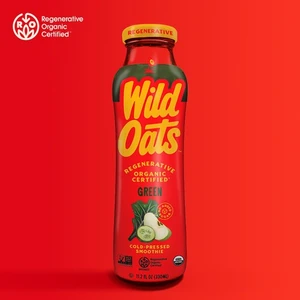
Watermelon Juice - 11.2 oz
Wild Oats
$4.49
Below are the available bulk discount rates for each individual item when you purchase a certain amount
- Buy 2 - 5 and get 5% off
- Buy 6 - 11 and get 10% off
- Buy 12 or above and get 20% off
(No reviews yet)

Write a Review

Wild Oats
Watermelon Juice - 11.2 oz
Regenerative Organic Certified watermelon juice — two ingredients, zero shortcuts, and a supply chain built to restore the soil it grew in.
- Drink it straight, blend into a agua fresca, or freeze into popsicles — the clean, lightly tart profile (watermelon + a touch of organic lemon) works anywhere you'd reach for a refreshing summer beverage.
- Certified beyond Organic: Regenerative Organic Certified Bronze means the farms behind this juice meet rigorous standards for soil health, fair living wages for farmworkers, and humane land stewardship — a bar organic certification alone doesn't set.
- Vegan, Kosher, Fairtrade certified, and Non-GMO Verified — suitable for nearly every values-aligned diet and lifestyle.
Most juice brands strip watermelon down to sugar water and call it a day. This 11.2 fl oz bottle is the whole fruit's juice — organic watermelon with a squeeze of organic lemon to balance the sweetness — and nothing else gets added. No concentrates, no natural flavors, no sweeteners.
The certifications on this bottle tell a layered story. USDA Organic means no synthetic pesticides or fertilizers at the farm level. Non-GMO Project Verified adds an independent audit layer. Certified Fairtrade means the farmworkers who grew this watermelon earned a fair living wage under verified safe conditions. And sitting above all of those: Regenerative Organic Certified Bronze — a standard developed to go further than organic by requiring active soil-building practices, no monocropping, no deforestation, and documented worker well-being. That's not a marketing tier; it's a third-party-audited supply chain commitment.
At 11.2 fl oz, this is a single-serve bottle designed to be drunk as-is or used as a base. Pour over ice with sparkling water for a fast agua fresca. Blend with frozen lime and mint. Freeze the whole bottle's contents into pops. The lemon juice in the formulation gives it just enough tartness to prevent one-note sweetness — it drinks closer to fresh-cut watermelon than to juice-box fruit punch.
Vegan, Kosher (Orthodox Union), Fairtrade Certified, KIWA verified, and Non-GMO Project Verified. Shelf-stable before opening; refrigerate after opening and consume promptly.
Ingredients: Organic Watermelon Juice, Organic Lemon Juice.
Common Questions
How does this watermelon juice compare nutritionally to conventional watermelon juices or juice blends on store shelves?
Most conventional watermelon drinks are made from concentrate, which involves heating the juice to remove water, then reconstituting it later — a process that degrades heat-sensitive compounds like vitamin C and some antioxidants. This product uses direct-pressed organic watermelon juice with no reconstitution step, preserving the natural lycopene content that watermelon is known for; fresh watermelon juice contains roughly 4–6 mg of lycopene per 100 ml, compared to concentrate-based products where lycopene levels can be significantly reduced by thermal processing. Conventional juice blends also routinely add natural flavors or sweeteners to compensate for flavor loss during concentration, whereas this ingredient list is two items: organic watermelon juice and organic lemon juice. The lemon juice serves a functional role — its citric acid content (lemon juice averages about 1.44 g citric acid per ounce) balances sweetness and acts as a mild natural preservative without any added ascorbic acid or citric acid isolates.
What is lycopene and why does it matter in watermelon juice specifically?
Lycopene is a carotenoid pigment — the same compound that gives watermelon and tomatoes their red color — and it functions as a fat-soluble antioxidant that neutralizes singlet oxygen and peroxyl radicals in human tissue. Watermelon is actually one of the richest dietary sources of lycopene, containing more per serving than raw tomatoes; a 100g serving of fresh watermelon provides approximately 4.5–6.0 mg of lycopene, while a comparable serving of raw tomato averages around 2.5–3.3 mg. Epidemiological studies have linked higher lycopene intake to reduced oxidative stress markers and lower risk of certain cardiovascular events, with some research suggesting a meaningful reduction in LDL oxidation at intakes above 10–15 mg per day. Because lycopene is fat-soluble, bioavailability increases slightly when the juice is consumed alongside a meal that contains some dietary fat — pairing this juice with nuts, avocado, or a meal that includes healthy fats is a practical way to improve absorption.
What does Regenerative Organic Certified Bronze actually require, and how is it different from USDA Organic?
USDA Organic certification prohibits synthetic pesticides, synthetic fertilizers, and GMOs, and requires a system plan for maintaining or improving natural resources — but it does not mandate specific soil-building outcomes or set enforceable worker welfare standards beyond baseline labor law compliance. Regenerative Organic Certified (ROC), developed by the Rodale Institute alongside Patagonia and Dr. Bronner's and launched in 2020, builds on top of USDA Organic as a prerequisite and then adds three pillars: soil health (requiring active practices like cover cropping, composting, and crop rotation verified to measurably build organic matter), animal welfare (not applicable here but part of the full standard), and social fairness (documented fair wages, safe working conditions, and grievance mechanisms audited by a third party). The Bronze tier means the farm is verified to be implementing these practices with a pathway toward Silver and Gold, which require deeper measurable outcomes over time. Third-party auditors conduct on-site inspections — this is not a self-reported claim. For a product like watermelon juice, the relevant impact is that the watermelons were grown in soil managed to sequester carbon and reduce erosion rather than deplete the land, and the farmworkers were verified to earn living wages under safe conditions.
What does Certified Fairtrade mean for the people who grew the watermelons in this juice?
Fairtrade International certification requires that farms meet baseline social standards including a minimum price floor that protects farmers from market volatility, a Fairtrade Premium (an additional sum paid on top of the product price that the farming cooperative must invest in community or worker-decided projects like schools, healthcare, or equipment), and verified safe working conditions including restrictions on child labor and requirements for protective equipment where relevant. Independent auditors from FLOCERT — Fairtrade's auditing body — conduct unannounced and scheduled inspections of certified supply chains. This is distinct from a brand's own corporate social responsibility claims, which are self-reported and not independently verified. The KIWA certification noted on this product is an additional third-party food safety and quality verification from the Netherlands-based certification body KIWA, adding another independent audit layer on top of the Fairtrade and organic certifications.
Is this juice suitable for someone following a vegan or kosher diet, and what do those specific certifications verify?
Yes to both. The Vegan certification confirms that no animal-derived ingredients, processing aids, or cross-contamination risks were identified in the supply chain — this goes beyond simply looking at the ingredient list, since some juice clarification processes use animal-derived fining agents like gelatin or isinglass, which would not appear on a label. The Orthodox Union (OU) Kosher certification is one of the most widely recognized kosher standards globally; OU certifies that the product meets Jewish dietary law requirements, which for a juice product involves verifying ingredient sourcing, production facility practices, and equipment cleanliness. For practical purposes, OU Kosher certification also functions as an independent supply chain audit, since rabbinic supervisors inspect facilities and review supplier documentation. Both certifications are issued by external bodies and require ongoing renewal, not one-time approval.
Does this juice fit into a low-sugar or blood-sugar-conscious diet?
Watermelon juice is naturally higher in simple sugars than many other fruit juices — fresh watermelon contains roughly 6 g of sugar per 100g, and this 11.2 fl oz (approximately 331 ml) bottle would deliver around 20–22 g of naturally occurring sugars with no added sweeteners on top of that. The glycemic index of watermelon is often cited between 72–80, which is relatively high, though the glycemic load per typical serving is moderate because of watermelon's high water content. For someone managing blood glucose closely — including those on ketogenic or strict low-carb protocols — this juice would not fit within standard carb targets (typically under 20–50g net carbs per day for keto). For paleo or general whole-food diets without strict carb limits, this juice is a clean option since every gram of sugar present is from whole fruit with no concentration or added sugars. Consuming it with a meal containing protein and fat rather than on an empty stomach will blunt the glycemic response for most people.
Can this juice be used as an ingredient in cooking or drinks beyond drinking it straight?
Yes, and the lemon juice already in the formulation makes it more versatile than a plain sweet watermelon juice because it brings mild acidity that holds up in applications where flat sweetness would fall apart. For beverages, it works as a ready-made base for agua fresca — just dilute 1:1 with sparkling water over ice — or as a mixer with citrus spirits where it contributes body and natural sweetness without added syrups. In the kitchen, it can substitute for simple syrup in salad dressings where you want a fruit-forward sweetness with less sugar concentration; reduce it by half on the stovetop and the resulting syrup can glaze grilled proteins or be drizzled over fresh cheese. It also freezes cleanly into popsicles or granita without texture problems since there are no stabilizers or thickeners to interfere with ice crystal formation. For smoothies, it replaces water or coconut water as a liquid base and adds lycopene and electrolytes (watermelon juice provides roughly 112 mg of potassium per 100 ml) that plain water won't contribute.
The certifications on this bottle tell a layered story. USDA Organic means no synthetic pesticides or fertilizers at the farm level. Non-GMO Project Verified adds an independent audit layer. Certified Fairtrade means the farmworkers who grew this watermelon earned a fair living wage under verified safe conditions. And sitting above all of those: Regenerative Organic Certified Bronze — a standard developed to go further than organic by requiring active soil-building practices, no monocropping, no deforestation, and documented worker well-being. That's not a marketing tier; it's a third-party-audited supply chain commitment.
At 11.2 fl oz, this is a single-serve bottle designed to be drunk as-is or used as a base. Pour over ice with sparkling water for a fast agua fresca. Blend with frozen lime and mint. Freeze the whole bottle's contents into pops. The lemon juice in the formulation gives it just enough tartness to prevent one-note sweetness — it drinks closer to fresh-cut watermelon than to juice-box fruit punch.
Vegan, Kosher (Orthodox Union), Fairtrade Certified, KIWA verified, and Non-GMO Project Verified. Shelf-stable before opening; refrigerate after opening and consume promptly.
Ingredients: Organic Watermelon Juice, Organic Lemon Juice.
Common Questions
How does this watermelon juice compare nutritionally to conventional watermelon juices or juice blends on store shelves?
Most conventional watermelon drinks are made from concentrate, which involves heating the juice to remove water, then reconstituting it later — a process that degrades heat-sensitive compounds like vitamin C and some antioxidants. This product uses direct-pressed organic watermelon juice with no reconstitution step, preserving the natural lycopene content that watermelon is known for; fresh watermelon juice contains roughly 4–6 mg of lycopene per 100 ml, compared to concentrate-based products where lycopene levels can be significantly reduced by thermal processing. Conventional juice blends also routinely add natural flavors or sweeteners to compensate for flavor loss during concentration, whereas this ingredient list is two items: organic watermelon juice and organic lemon juice. The lemon juice serves a functional role — its citric acid content (lemon juice averages about 1.44 g citric acid per ounce) balances sweetness and acts as a mild natural preservative without any added ascorbic acid or citric acid isolates.
What is lycopene and why does it matter in watermelon juice specifically?
Lycopene is a carotenoid pigment — the same compound that gives watermelon and tomatoes their red color — and it functions as a fat-soluble antioxidant that neutralizes singlet oxygen and peroxyl radicals in human tissue. Watermelon is actually one of the richest dietary sources of lycopene, containing more per serving than raw tomatoes; a 100g serving of fresh watermelon provides approximately 4.5–6.0 mg of lycopene, while a comparable serving of raw tomato averages around 2.5–3.3 mg. Epidemiological studies have linked higher lycopene intake to reduced oxidative stress markers and lower risk of certain cardiovascular events, with some research suggesting a meaningful reduction in LDL oxidation at intakes above 10–15 mg per day. Because lycopene is fat-soluble, bioavailability increases slightly when the juice is consumed alongside a meal that contains some dietary fat — pairing this juice with nuts, avocado, or a meal that includes healthy fats is a practical way to improve absorption.
What does Regenerative Organic Certified Bronze actually require, and how is it different from USDA Organic?
USDA Organic certification prohibits synthetic pesticides, synthetic fertilizers, and GMOs, and requires a system plan for maintaining or improving natural resources — but it does not mandate specific soil-building outcomes or set enforceable worker welfare standards beyond baseline labor law compliance. Regenerative Organic Certified (ROC), developed by the Rodale Institute alongside Patagonia and Dr. Bronner's and launched in 2020, builds on top of USDA Organic as a prerequisite and then adds three pillars: soil health (requiring active practices like cover cropping, composting, and crop rotation verified to measurably build organic matter), animal welfare (not applicable here but part of the full standard), and social fairness (documented fair wages, safe working conditions, and grievance mechanisms audited by a third party). The Bronze tier means the farm is verified to be implementing these practices with a pathway toward Silver and Gold, which require deeper measurable outcomes over time. Third-party auditors conduct on-site inspections — this is not a self-reported claim. For a product like watermelon juice, the relevant impact is that the watermelons were grown in soil managed to sequester carbon and reduce erosion rather than deplete the land, and the farmworkers were verified to earn living wages under safe conditions.
What does Certified Fairtrade mean for the people who grew the watermelons in this juice?
Fairtrade International certification requires that farms meet baseline social standards including a minimum price floor that protects farmers from market volatility, a Fairtrade Premium (an additional sum paid on top of the product price that the farming cooperative must invest in community or worker-decided projects like schools, healthcare, or equipment), and verified safe working conditions including restrictions on child labor and requirements for protective equipment where relevant. Independent auditors from FLOCERT — Fairtrade's auditing body — conduct unannounced and scheduled inspections of certified supply chains. This is distinct from a brand's own corporate social responsibility claims, which are self-reported and not independently verified. The KIWA certification noted on this product is an additional third-party food safety and quality verification from the Netherlands-based certification body KIWA, adding another independent audit layer on top of the Fairtrade and organic certifications.
Is this juice suitable for someone following a vegan or kosher diet, and what do those specific certifications verify?
Yes to both. The Vegan certification confirms that no animal-derived ingredients, processing aids, or cross-contamination risks were identified in the supply chain — this goes beyond simply looking at the ingredient list, since some juice clarification processes use animal-derived fining agents like gelatin or isinglass, which would not appear on a label. The Orthodox Union (OU) Kosher certification is one of the most widely recognized kosher standards globally; OU certifies that the product meets Jewish dietary law requirements, which for a juice product involves verifying ingredient sourcing, production facility practices, and equipment cleanliness. For practical purposes, OU Kosher certification also functions as an independent supply chain audit, since rabbinic supervisors inspect facilities and review supplier documentation. Both certifications are issued by external bodies and require ongoing renewal, not one-time approval.
Does this juice fit into a low-sugar or blood-sugar-conscious diet?
Watermelon juice is naturally higher in simple sugars than many other fruit juices — fresh watermelon contains roughly 6 g of sugar per 100g, and this 11.2 fl oz (approximately 331 ml) bottle would deliver around 20–22 g of naturally occurring sugars with no added sweeteners on top of that. The glycemic index of watermelon is often cited between 72–80, which is relatively high, though the glycemic load per typical serving is moderate because of watermelon's high water content. For someone managing blood glucose closely — including those on ketogenic or strict low-carb protocols — this juice would not fit within standard carb targets (typically under 20–50g net carbs per day for keto). For paleo or general whole-food diets without strict carb limits, this juice is a clean option since every gram of sugar present is from whole fruit with no concentration or added sugars. Consuming it with a meal containing protein and fat rather than on an empty stomach will blunt the glycemic response for most people.
Can this juice be used as an ingredient in cooking or drinks beyond drinking it straight?
Yes, and the lemon juice already in the formulation makes it more versatile than a plain sweet watermelon juice because it brings mild acidity that holds up in applications where flat sweetness would fall apart. For beverages, it works as a ready-made base for agua fresca — just dilute 1:1 with sparkling water over ice — or as a mixer with citrus spirits where it contributes body and natural sweetness without added syrups. In the kitchen, it can substitute for simple syrup in salad dressings where you want a fruit-forward sweetness with less sugar concentration; reduce it by half on the stovetop and the resulting syrup can glaze grilled proteins or be drizzled over fresh cheese. It also freezes cleanly into popsicles or granita without texture problems since there are no stabilizers or thickeners to interfere with ice crystal formation. For smoothies, it replaces water or coconut water as a liquid base and adds lycopene and electrolytes (watermelon juice provides roughly 112 mg of potassium per 100 ml) that plain water won't contribute.
- __Storage_Location:
- Dry
- __Volume:
- 500
- __badge:
- Regenerative
- __Owner:
- TCFarm