



Sale
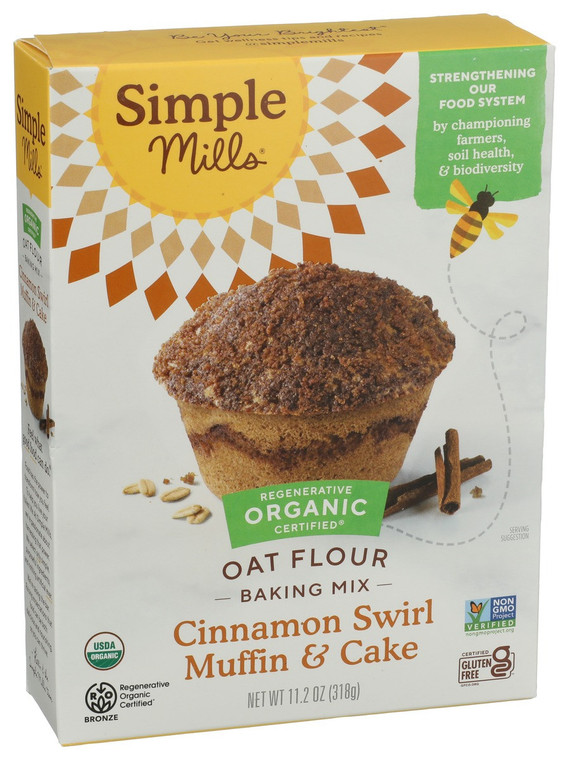
Cinnamon Swirl Muffin & Cake Mix - 11.2 oz
Simple Mills
$7.49
$5.99
Below are the available bulk discount rates for each individual item when you purchase a certain amount
- Buy 2 - 2 and get 2% off
- Buy 3 - 5 and get 4% off
- Buy 6 or above and get 8% off
(No reviews yet)

Write a Review
Simple Mills
Cinnamon Swirl Muffin & Cake Mix - 11.2 oz
This mix starts with three ingredients grown under Regenerative Organic Certified farming — a standard that goes beyond USDA Organic to require soil health practices, animal welfare standards, and fair treatment of farmworkers. Simple Mills built this Cinnamon Swirl blend on oat flour, coconut sugar, and cassava flour sourced this way, then folded in organic cinnamon for a warm, spiced swirl in every batch.
- Bakes into muffins or a full cake from one bag — mix, add your wet ingredients, and bake
- All three base ingredients are Regenerative Organic Certified, a rarer standard than organic alone in the baking mix aisle
- Gluten-free by ingredient design — built on oat and cassava flour rather than wheat
Simple Mills built this Cinnamon Swirl Muffin & Cake Mix, a gluten-free baking mix, around ingredients grown by farmers practicing regenerative agriculture -- a certification that requires healthier soil, better conditions for farm animals, and fair treatment for the people growing the crop, on top of the organic baseline.
The mix combines Regenerative Organic Certified oat flour, coconut sugar, and cassava flour with organic cinnamon, baking soda, and sea salt -- six ingredients total, no gums, starches, or fillers added to compensate for the absence of wheat. The cassava and oat flour base means the finished muffins or cake come out gluten-free without any substitution work on your end. With coconut sugar and oat flour as core ingredients, this mix is not keto or strict paleo, but it fits grain-flexible, gluten-free baking plans well.
Use it exactly as the name suggests: add your wet ingredients per the bag's instructions to bake a batch of cinnamon swirl muffins, or bake it into a single layer cake with a streusel-like swirl running through it. The cinnamon runs through the batter rather than sitting only on top, so every slice carries the spice.
Suitable for gluten-free kitchens. Store the unopened bag in a cool, dry pantry and keep opened bags sealed tightly to protect the natural oat and cassava flours from moisture. Simple Mills' Regenerative Organic Certified oat and cassava flours are grown by farmers practicing regenerative agriculture; the package does not specify a single growing region for these ingredients.
Ingredients: Regenerative Organic Certified Oat Flour, Regenerative Organic Certified Coconut Sugar, Regenerative Organic Certified Cassava Flour, Organic Cinnamon, Baking Soda, and Sea Salt.
Common Questions
How does this mix compare nutritionally to a conventional boxed muffin or cake mix?
Most conventional muffin mixes list 12-18 ingredients and lean on bleached wheat flour, refined white sugar, partially hydrogenated or soybean oil, and stabilizers like xanthan gum or mono- and diglycerides to extend shelf life. This mix has six ingredients total: three Regenerative Organic Certified flours and sugars, organic cinnamon, baking soda, and sea salt, with no gums or starches added. Coconut sugar, the only sweetener here, has a glycemic index in the 35-54 range depending on the batch, compared to roughly 60-65 for refined table sugar, so it raises blood sugar more gradually. Because there's no wheat flour, the carbohydrate here comes primarily from oat and cassava flour rather than bleached starch.
What does the cinnamon actually contribute besides flavor?
Cinnamon's flavor and much of its documented physiological activity come from cinnamaldehyde, the aromatic compound that makes up the bulk of cinnamon bark oil. Because the cinnamon is mixed directly into the dry batter rather than dusted on top, cinnamaldehyde is distributed through every slice or muffin instead of concentrating in a top layer that bakes off. Organic cinnamon also tends to carry lower coumarin levels than bulk cassia cinnamon blends, since organic certification restricts some of the high-coumarin cassia sourcing common in cheap spice blends. This doesn't make the product a supplement, but it does mean the spice flavor holds up through baking rather than fading.
Is this mix keto, paleo, or carnivore friendly?
It is not keto-appropriate: oat flour and cassava flour are both carbohydrate-dense, and a typical prepared serving runs in the range of 18-22 grams of carbohydrate, well above what a strict ketogenic diet (usually capped at 20-50 grams total per day) can accommodate. It's not carnivore-compatible either, since carnivore excludes all plant-based flours and sugars. Paleo compatibility is mixed: cassava flour and coconut sugar are commonly used in paleo baking, but oats are a grain, and strict paleo protocols exclude grains even when gluten-free. It is certified gluten-free, so anyone avoiding wheat, barley, or rye specifically can use it without cross-contamination concerns.
Can this be used for anything besides muffins or a swirl cake?
The batter base works as a spiced pancake or waffle batter if you thin it with an extra tablespoon or two of milk or water per cup of dry mix, since the flour blend is more absorbent than wheat flour. It also holds up well as a coffee-cake base baked in a loaf pan instead of a round cake pan, giving you sliceable bread rather than wedges. If you want a more pronounced streusel top rather than a swirl running through the batter, reserve about a third of the dry mix before adding wet ingredients and sprinkle it over the batter before baking. Because there's no added gum for structure, avoid overmixing once the eggs and oil go in, as the batter can turn gummy if worked too long.
What does Regenerative Organic Certified actually verify, and how can I check it myself?
Regenerative Organic Certified (ROC) is a third-party standard run by the Regenerative Organic Alliance that sits on top of USDA Organic certification, adding requirements for soil health practices like cover cropping and reduced tillage, animal welfare standards for any livestock involved in the farming system, and fair labor practices audited on farms. It's not a marketing label a brand can self-apply; farms and supply chains are inspected and certified by accredited third-party bodies, the same structure used for USDA Organic verification. You can look up ROC-certified brands and supply chains through the Regenerative Organic Alliance's public directory to confirm current certification status. The organic and kosher certifications on this bag follow the same third-party audit model, verified independently of the manufacturer.
Why only six ingredients, and what's left out compared to typical mixes?
The formula uses oat flour and cassava flour together specifically because their starch and fiber characteristics complement each other closely enough to mimic wheat flour's structure without needing xanthan gum, guar gum, or modified food starch as binders. Baking soda and sea salt handle leavening and flavor balance, and coconut sugar and cinnamon carry the sweetness and spice, so nothing is added purely for shelf stability or texture correction. This means the ingredient list matches what you'd use if you were formulating a gluten-free muffin recipe from scratch at home, rather than relying on industrial stabilizers to compensate for the missing gluten network. The tradeoff is that the batter is less forgiving of overmixing or ingredient substitution than a gum-stabilized mix, since there's no gum to mask structural mistakes.
The mix combines Regenerative Organic Certified oat flour, coconut sugar, and cassava flour with organic cinnamon, baking soda, and sea salt -- six ingredients total, no gums, starches, or fillers added to compensate for the absence of wheat. The cassava and oat flour base means the finished muffins or cake come out gluten-free without any substitution work on your end. With coconut sugar and oat flour as core ingredients, this mix is not keto or strict paleo, but it fits grain-flexible, gluten-free baking plans well.
Use it exactly as the name suggests: add your wet ingredients per the bag's instructions to bake a batch of cinnamon swirl muffins, or bake it into a single layer cake with a streusel-like swirl running through it. The cinnamon runs through the batter rather than sitting only on top, so every slice carries the spice.
Suitable for gluten-free kitchens. Store the unopened bag in a cool, dry pantry and keep opened bags sealed tightly to protect the natural oat and cassava flours from moisture. Simple Mills' Regenerative Organic Certified oat and cassava flours are grown by farmers practicing regenerative agriculture; the package does not specify a single growing region for these ingredients.
Ingredients: Regenerative Organic Certified Oat Flour, Regenerative Organic Certified Coconut Sugar, Regenerative Organic Certified Cassava Flour, Organic Cinnamon, Baking Soda, and Sea Salt.
Common Questions
How does this mix compare nutritionally to a conventional boxed muffin or cake mix?
Most conventional muffin mixes list 12-18 ingredients and lean on bleached wheat flour, refined white sugar, partially hydrogenated or soybean oil, and stabilizers like xanthan gum or mono- and diglycerides to extend shelf life. This mix has six ingredients total: three Regenerative Organic Certified flours and sugars, organic cinnamon, baking soda, and sea salt, with no gums or starches added. Coconut sugar, the only sweetener here, has a glycemic index in the 35-54 range depending on the batch, compared to roughly 60-65 for refined table sugar, so it raises blood sugar more gradually. Because there's no wheat flour, the carbohydrate here comes primarily from oat and cassava flour rather than bleached starch.
What does the cinnamon actually contribute besides flavor?
Cinnamon's flavor and much of its documented physiological activity come from cinnamaldehyde, the aromatic compound that makes up the bulk of cinnamon bark oil. Because the cinnamon is mixed directly into the dry batter rather than dusted on top, cinnamaldehyde is distributed through every slice or muffin instead of concentrating in a top layer that bakes off. Organic cinnamon also tends to carry lower coumarin levels than bulk cassia cinnamon blends, since organic certification restricts some of the high-coumarin cassia sourcing common in cheap spice blends. This doesn't make the product a supplement, but it does mean the spice flavor holds up through baking rather than fading.
Is this mix keto, paleo, or carnivore friendly?
It is not keto-appropriate: oat flour and cassava flour are both carbohydrate-dense, and a typical prepared serving runs in the range of 18-22 grams of carbohydrate, well above what a strict ketogenic diet (usually capped at 20-50 grams total per day) can accommodate. It's not carnivore-compatible either, since carnivore excludes all plant-based flours and sugars. Paleo compatibility is mixed: cassava flour and coconut sugar are commonly used in paleo baking, but oats are a grain, and strict paleo protocols exclude grains even when gluten-free. It is certified gluten-free, so anyone avoiding wheat, barley, or rye specifically can use it without cross-contamination concerns.
Can this be used for anything besides muffins or a swirl cake?
The batter base works as a spiced pancake or waffle batter if you thin it with an extra tablespoon or two of milk or water per cup of dry mix, since the flour blend is more absorbent than wheat flour. It also holds up well as a coffee-cake base baked in a loaf pan instead of a round cake pan, giving you sliceable bread rather than wedges. If you want a more pronounced streusel top rather than a swirl running through the batter, reserve about a third of the dry mix before adding wet ingredients and sprinkle it over the batter before baking. Because there's no added gum for structure, avoid overmixing once the eggs and oil go in, as the batter can turn gummy if worked too long.
What does Regenerative Organic Certified actually verify, and how can I check it myself?
Regenerative Organic Certified (ROC) is a third-party standard run by the Regenerative Organic Alliance that sits on top of USDA Organic certification, adding requirements for soil health practices like cover cropping and reduced tillage, animal welfare standards for any livestock involved in the farming system, and fair labor practices audited on farms. It's not a marketing label a brand can self-apply; farms and supply chains are inspected and certified by accredited third-party bodies, the same structure used for USDA Organic verification. You can look up ROC-certified brands and supply chains through the Regenerative Organic Alliance's public directory to confirm current certification status. The organic and kosher certifications on this bag follow the same third-party audit model, verified independently of the manufacturer.
Why only six ingredients, and what's left out compared to typical mixes?
The formula uses oat flour and cassava flour together specifically because their starch and fiber characteristics complement each other closely enough to mimic wheat flour's structure without needing xanthan gum, guar gum, or modified food starch as binders. Baking soda and sea salt handle leavening and flavor balance, and coconut sugar and cinnamon carry the sweetness and spice, so nothing is added purely for shelf stability or texture correction. This means the ingredient list matches what you'd use if you were formulating a gluten-free muffin recipe from scratch at home, rather than relying on industrial stabilizers to compensate for the missing gluten network. The tradeoff is that the batter is less forgiving of overmixing or ingredient substitution than a gum-stabilized mix, since there's no gum to mask structural mistakes.
- __Storage_Location:
- Dry
- __Volume:
- 400
- __Owner:
- TCFarm
- __badge:
- for delivery by 10/21


