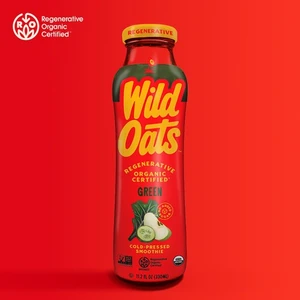

Mixed Berry Smoothie - 11.2 oz
Wild Oats
$4.49
Below are the available bulk discount rates for each individual item when you purchase a certain amount
- Buy 2 - 5 and get 5% off
- Buy 6 - 11 and get 10% off
- Buy 12 or above and get 20% off
(No reviews yet)

Write a Review

Wild Oats
Mixed Berry Smoothie - 11.2 oz
Eight organic fruit and vegetable juices — zero added sugar, zero fillers, zero shortcuts. Wild Oats' Mixed Berry Smoothie is built from whole-fruit purees and juices: blackberry, strawberry, raspberry, tart cherry, cranberry, pomegranate, acai, and purple carrot — every sip drawing its depth from ingredients that earned their place. This isn't a sweetened juice blend wearing a smoothie label; it's a tart, layered fruit drink that trusts the fruit to do the work.
- Drink it straight, blend it into a smoothie base, or pour over ice — the tart-rich balance of pomegranate, cranberry, and tart cherry holds up against dairy, nut milks, or protein powder without disappearing into sweetness.
- Certified Regenerative Organic (Bronze), USDA Organic, Non-GMO Project Verified, and Fairtrade — a certification stack rare in bottled beverages, meaning the fruits were grown without synthetic pesticides, on farms with verified soil health practices and fair labor standards.
- Vegan and Kosher, with no added sugars, no artificial flavors, and no preservatives — the ingredients list is eight items, all organic.
Wild Oats' Mixed Berry Smoothie earns its depth from fruit, not from the sweetener line. Eight organic ingredients — blackberry puree, strawberry puree, raspberry puree, tart cherry juice, cranberry juice, pomegranate juice, acai juice, and purple carrot juice — create a layered tartness that most bottled smoothies dilute with added cane sugar or natural flavor concentrates. This one doesn't.
The 11.2 fl oz bottle is a single-serve format built for people who read labels. Tart cherry and cranberry bring sharpness; blackberry and strawberry purees anchor it with body; pomegranate and acai add antioxidant-dense complexity; purple carrot rounds the color and flavor without signaling sweetness. The result is a genuinely tart profile — the brand's own copy calls it "no syrupy sugars to take the edge off," and that's accurate.
The certification stack on this smoothie is unusually deep for a bottled beverage. Regenerative Organic Certified Bronze is the highest tier of supply-chain accountability currently available in U.S. food certification — it verifies soil health practices (no synthetic pesticides, herbicides, or chemical fertilizers), Social Fairness (fair living wages and safe working conditions for farmers and workers), and Animal Welfare standards on farm. Layered on top: USDA Organic, Non-GMO Project Verified, Certified Fairtrade, Orthodox Union Kosher, and KIWA certification — a combination that speaks to verified sourcing integrity at every level of the supply chain.
Serve chilled straight from the bottle, use as a smoothie bowl base, blend with frozen banana and a scoop of plant-based protein, or stir into sparkling water for a lightly tart spritzer. The tartness profile holds up well in recipes where a sweeter juice blend would disappear.
Suitable for vegan, kosher, and Fairtrade-conscious diets. No dairy, no gluten-containing ingredients, no added sugars. Store refrigerated; best consumed within the bottle's freshness window after opening.
Ingredients: Organic Blackberry Puree, Organic Tart Cherry Juice, Organic Pomegranate Juice, Organic Purple Carrot Juice, Organic Strawberry Puree, Organic Cranberry Juice, Organic Raspberry Puree, Organic Acai Juice.
Common Questions
How does this smoothie compare to conventional bottled berry smoothies in terms of sugar and ingredient quality?
Most mass-market bottled berry smoothies — including popular brands sold at major grocery chains — list apple juice concentrate, cane sugar, or natural flavors in the first three ingredients, which dilutes fruit content and spikes the sugar-to-fiber ratio. This smoothie contains no added sugars whatsoever; every gram of sugar present comes directly from the eight organic fruit and vegetable purees and juices listed. Conventional smoothies in the 11–12 oz single-serve category often contain 30–40 grams of added sugar per bottle; this one contributes only naturally occurring fruit sugars. The absence of water as a filler ingredient also means you're getting a higher density of actual fruit solids per ounce than most competitors in the same format.
What makes tart cherry and pomegranate nutritionally significant, and what does the science say about their compounds?
Tart cherry juice is one of the most studied functional fruit juices for its high concentration of anthocyanins — specifically cyanidin-3-glucoside and cyanidin-3-rutinoside — which have been shown in peer-reviewed trials to reduce markers of exercise-induced muscle inflammation and support sleep by contributing to melatonin precursors. Pomegranate juice contains ellagitannins (particularly punicalagin), which gut bacteria convert into urolithin A, a compound linked in clinical research to mitochondrial function and muscle recovery. Acai provides a distinct class of anthocyanins alongside oleic acid, making it one of the few fruits with a meaningful fat-soluble antioxidant component. Cranberry contributes A-type proanthocyanidins, which have a well-documented mechanism for inhibiting bacterial adhesion in the urinary tract. Together, these four ingredients represent four different antioxidant and phytonutrient classes acting through distinct biological pathways.
Is this smoothie appropriate for a vegan, gluten-free, or whole-food plant-based diet?
Yes across all three. The ingredient list is entirely plant-derived — eight organic fruit and vegetable ingredients with no dairy, eggs, honey, or animal byproducts — making it fully vegan and certified as such through a third-party Vegan certification. There are no gluten-containing grains or derivatives anywhere in the formula, though the label does not carry a dedicated gluten-free certification, so individuals with celiac disease should confirm with the manufacturer regarding shared production facilities. For whole-food plant-based (WFPB) adherents, the only consideration is that juices and purees remove most of the dietary fiber present in whole fruit; this smoothie is not a fiber-equivalent replacement for eating whole berries, but it delivers the phytonutrient and micronutrient content of the fruit in concentrated liquid form. It is also Kosher-certified by the Orthodox Union, suitable for Kosher dietary requirements.
How can I use this smoothie as an ingredient in recipes beyond drinking it straight?
The tart, deep-berry profile holds up well in recipes where a sweeter juice would become cloying or invisible. Use it as the liquid base in a smoothie bowl — blend with 1/2 frozen banana and a tablespoon of chia seeds, then top with granola; the tartness balances the sweetness of toppings effectively. It works as a reduction sauce for plant-based dishes: simmer about 4 oz in a small saucepan with a teaspoon of balsamic vinegar until reduced by half, and it becomes a glaze suitable for roasted beets, lentil dishes, or grain bowls. Stirred 1:3 into sparkling water, it functions as a lightly tart shrub-style spritzer. You can also use it in place of cranberry juice or cherry juice in baked goods — the color and acidity translate well, and the flavor is complex enough that it adds dimension rather than just sweetness.
What does Regenerative Organic Certified Bronze actually verify, and how is it different from standard USDA Organic?
USDA Organic certification verifies that crops were grown without synthetic pesticides, herbicides, or chemical fertilizers, and that animals were not given antibiotics or synthetic growth hormones — but it does not evaluate soil health practices over time, farmer wages, or working conditions. Regenerative Organic Certified (ROC), administered by the Regenerative Organic Alliance, adds three additional pillars on top of USDA Organic as a baseline requirement: Soil Health and Land Management (verifying practices like cover cropping, composting, and reduced tillage that actively rebuild soil carbon), Social Fairness (fair living wages, safe working conditions, and democratic worker rights verified through third-party audit), and Animal Welfare (pasture access and humane treatment standards). The Bronze tier is the entry level of ROC's three-tier system (Bronze, Silver, Gold), meaning it meets the foundational requirements in all three pillars. For a packaged beverage to carry this certification, the ROC requirements must be met at the farm level for ingredient sourcing — it is not a processing-facility certification but a supply-chain origin certification.
What does the Certified Fairtrade designation mean for the farmers who grew these ingredients?
Fairtrade certification, administered by Fairtrade International, establishes a guaranteed minimum price floor for covered crops that protects farmers from commodity market volatility — when market prices drop below the floor, farmers still receive the Fairtrade Minimum Price. In addition, buyers pay a Fairtrade Premium on top of the purchase price, which is a separately tracked fund (typically $0.10–$0.15 per pound for many fruits, depending on the crop) that farmer cooperatives vote to allocate democratically toward community needs — schools, clinics, equipment, or business development. The certification also prohibits forced labor and child labor, requires safe working conditions, and mandates that farmers have the organizational capacity to negotiate directly rather than through intermediaries. For a beverage containing eight different fruit-sourced ingredients, Fairtrade coverage signals that at least the covered commodity ingredients in the supply chain were sourced under these price and labor standards.
Why is purple carrot juice included, and what role does it play beyond color?
Purple carrot gets its color from anthocyanins — the same class of flavonoid pigments responsible for the deep hues in blackberries, acai, and pomegranate — rather than from beta-carotene, which colors orange carrots. This means purple carrot contributes an additional anthocyanin load on top of what the berry ingredients already deliver, reinforcing the antioxidant profile rather than just adding visual depth. Nutritionally, purple carrots also contain beta-carotene (a provitamin A carotenoid), which means the juice delivers both the anthocyanin benefits of the purple pigment and the carotenoid benefits typical of conventional carrots. Functionally in the flavor profile, purple carrot juice adds mild earthy sweetness and body without the sharp sugar spike of grape or apple juice, which makes it a structurally useful ingredient for blending tartness without sweetener. It also acts as a natural color stabilizer, helping maintain the smoothie's deep red-purple hue.
The 11.2 fl oz bottle is a single-serve format built for people who read labels. Tart cherry and cranberry bring sharpness; blackberry and strawberry purees anchor it with body; pomegranate and acai add antioxidant-dense complexity; purple carrot rounds the color and flavor without signaling sweetness. The result is a genuinely tart profile — the brand's own copy calls it "no syrupy sugars to take the edge off," and that's accurate.
The certification stack on this smoothie is unusually deep for a bottled beverage. Regenerative Organic Certified Bronze is the highest tier of supply-chain accountability currently available in U.S. food certification — it verifies soil health practices (no synthetic pesticides, herbicides, or chemical fertilizers), Social Fairness (fair living wages and safe working conditions for farmers and workers), and Animal Welfare standards on farm. Layered on top: USDA Organic, Non-GMO Project Verified, Certified Fairtrade, Orthodox Union Kosher, and KIWA certification — a combination that speaks to verified sourcing integrity at every level of the supply chain.
Serve chilled straight from the bottle, use as a smoothie bowl base, blend with frozen banana and a scoop of plant-based protein, or stir into sparkling water for a lightly tart spritzer. The tartness profile holds up well in recipes where a sweeter juice blend would disappear.
Suitable for vegan, kosher, and Fairtrade-conscious diets. No dairy, no gluten-containing ingredients, no added sugars. Store refrigerated; best consumed within the bottle's freshness window after opening.
Ingredients: Organic Blackberry Puree, Organic Tart Cherry Juice, Organic Pomegranate Juice, Organic Purple Carrot Juice, Organic Strawberry Puree, Organic Cranberry Juice, Organic Raspberry Puree, Organic Acai Juice.
Common Questions
How does this smoothie compare to conventional bottled berry smoothies in terms of sugar and ingredient quality?
Most mass-market bottled berry smoothies — including popular brands sold at major grocery chains — list apple juice concentrate, cane sugar, or natural flavors in the first three ingredients, which dilutes fruit content and spikes the sugar-to-fiber ratio. This smoothie contains no added sugars whatsoever; every gram of sugar present comes directly from the eight organic fruit and vegetable purees and juices listed. Conventional smoothies in the 11–12 oz single-serve category often contain 30–40 grams of added sugar per bottle; this one contributes only naturally occurring fruit sugars. The absence of water as a filler ingredient also means you're getting a higher density of actual fruit solids per ounce than most competitors in the same format.
What makes tart cherry and pomegranate nutritionally significant, and what does the science say about their compounds?
Tart cherry juice is one of the most studied functional fruit juices for its high concentration of anthocyanins — specifically cyanidin-3-glucoside and cyanidin-3-rutinoside — which have been shown in peer-reviewed trials to reduce markers of exercise-induced muscle inflammation and support sleep by contributing to melatonin precursors. Pomegranate juice contains ellagitannins (particularly punicalagin), which gut bacteria convert into urolithin A, a compound linked in clinical research to mitochondrial function and muscle recovery. Acai provides a distinct class of anthocyanins alongside oleic acid, making it one of the few fruits with a meaningful fat-soluble antioxidant component. Cranberry contributes A-type proanthocyanidins, which have a well-documented mechanism for inhibiting bacterial adhesion in the urinary tract. Together, these four ingredients represent four different antioxidant and phytonutrient classes acting through distinct biological pathways.
Is this smoothie appropriate for a vegan, gluten-free, or whole-food plant-based diet?
Yes across all three. The ingredient list is entirely plant-derived — eight organic fruit and vegetable ingredients with no dairy, eggs, honey, or animal byproducts — making it fully vegan and certified as such through a third-party Vegan certification. There are no gluten-containing grains or derivatives anywhere in the formula, though the label does not carry a dedicated gluten-free certification, so individuals with celiac disease should confirm with the manufacturer regarding shared production facilities. For whole-food plant-based (WFPB) adherents, the only consideration is that juices and purees remove most of the dietary fiber present in whole fruit; this smoothie is not a fiber-equivalent replacement for eating whole berries, but it delivers the phytonutrient and micronutrient content of the fruit in concentrated liquid form. It is also Kosher-certified by the Orthodox Union, suitable for Kosher dietary requirements.
How can I use this smoothie as an ingredient in recipes beyond drinking it straight?
The tart, deep-berry profile holds up well in recipes where a sweeter juice would become cloying or invisible. Use it as the liquid base in a smoothie bowl — blend with 1/2 frozen banana and a tablespoon of chia seeds, then top with granola; the tartness balances the sweetness of toppings effectively. It works as a reduction sauce for plant-based dishes: simmer about 4 oz in a small saucepan with a teaspoon of balsamic vinegar until reduced by half, and it becomes a glaze suitable for roasted beets, lentil dishes, or grain bowls. Stirred 1:3 into sparkling water, it functions as a lightly tart shrub-style spritzer. You can also use it in place of cranberry juice or cherry juice in baked goods — the color and acidity translate well, and the flavor is complex enough that it adds dimension rather than just sweetness.
What does Regenerative Organic Certified Bronze actually verify, and how is it different from standard USDA Organic?
USDA Organic certification verifies that crops were grown without synthetic pesticides, herbicides, or chemical fertilizers, and that animals were not given antibiotics or synthetic growth hormones — but it does not evaluate soil health practices over time, farmer wages, or working conditions. Regenerative Organic Certified (ROC), administered by the Regenerative Organic Alliance, adds three additional pillars on top of USDA Organic as a baseline requirement: Soil Health and Land Management (verifying practices like cover cropping, composting, and reduced tillage that actively rebuild soil carbon), Social Fairness (fair living wages, safe working conditions, and democratic worker rights verified through third-party audit), and Animal Welfare (pasture access and humane treatment standards). The Bronze tier is the entry level of ROC's three-tier system (Bronze, Silver, Gold), meaning it meets the foundational requirements in all three pillars. For a packaged beverage to carry this certification, the ROC requirements must be met at the farm level for ingredient sourcing — it is not a processing-facility certification but a supply-chain origin certification.
What does the Certified Fairtrade designation mean for the farmers who grew these ingredients?
Fairtrade certification, administered by Fairtrade International, establishes a guaranteed minimum price floor for covered crops that protects farmers from commodity market volatility — when market prices drop below the floor, farmers still receive the Fairtrade Minimum Price. In addition, buyers pay a Fairtrade Premium on top of the purchase price, which is a separately tracked fund (typically $0.10–$0.15 per pound for many fruits, depending on the crop) that farmer cooperatives vote to allocate democratically toward community needs — schools, clinics, equipment, or business development. The certification also prohibits forced labor and child labor, requires safe working conditions, and mandates that farmers have the organizational capacity to negotiate directly rather than through intermediaries. For a beverage containing eight different fruit-sourced ingredients, Fairtrade coverage signals that at least the covered commodity ingredients in the supply chain were sourced under these price and labor standards.
Why is purple carrot juice included, and what role does it play beyond color?
Purple carrot gets its color from anthocyanins — the same class of flavonoid pigments responsible for the deep hues in blackberries, acai, and pomegranate — rather than from beta-carotene, which colors orange carrots. This means purple carrot contributes an additional anthocyanin load on top of what the berry ingredients already deliver, reinforcing the antioxidant profile rather than just adding visual depth. Nutritionally, purple carrots also contain beta-carotene (a provitamin A carotenoid), which means the juice delivers both the anthocyanin benefits of the purple pigment and the carotenoid benefits typical of conventional carrots. Functionally in the flavor profile, purple carrot juice adds mild earthy sweetness and body without the sharp sugar spike of grape or apple juice, which makes it a structurally useful ingredient for blending tartness without sweetener. It also acts as a natural color stabilizer, helping maintain the smoothie's deep red-purple hue.
- __Volume:
- 500
- __badge:
- Regenerative
- __Owner:
- TCFarm
- __Storage_Location:
- Dry
Related Products
-
-
-
Sale
-