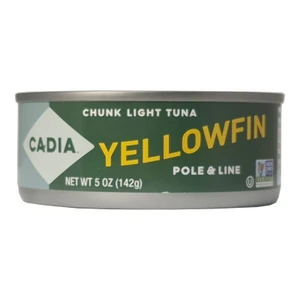
Chunk Light Skipjack Tuna in Water - 5 oz
Cadia
$2.49
Below are the available bulk discount rates for each individual item when you purchase a certain amount
- Buy 2 - 11 and get 2% off
- Buy 12 - 23 and get 4% off
- Buy 24 or above and get 8% off
(No reviews yet)

Write a Review
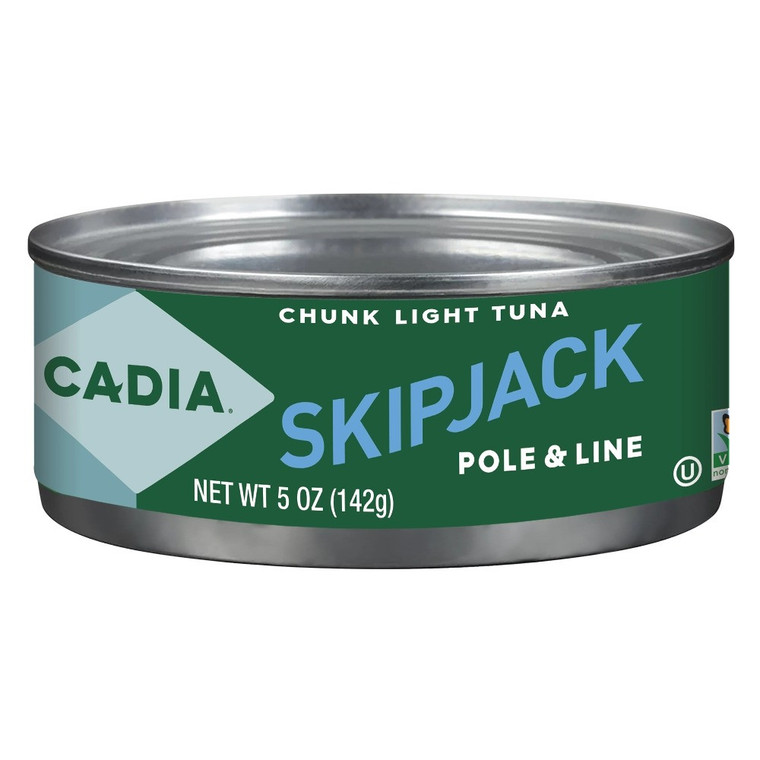
Cadia
Chunk Light Skipjack Tuna in Water - 5 oz
Wild-caught and dolphin-safe — Cadia Everyday's Skipjack Tuna is sourced responsibly, packing tender, flaky chunks in nothing but spring water and salt. It's sold exclusively at independent neighborhood grocers, proof that sustainably sourced, non-GMO pantry staples don't have to come from a big-box shelf.
- Ready straight from the can for a fast tuna salad, a protein boost stirred into pasta, or piled onto crackers when there's no time to cook.
- Our skipjack tuna is wild-caught and specifically sourced to be dolphin-safe, so you get responsibly caught fish without the bycatch concerns of less careful sourcing.
- Kosher-certified and non-GMO, with just three ingredients on the label, it fits keto, paleo, and high-protein diets without a second glance at the panel.
Cadia Everyday's Chunk Light Skipjack Tuna is wild-caught and specifically sourced to be dolphin-safe, so you get responsibly caught fish without the bycatch concerns of less careful sourcing.
Each 5 oz can holds tender, flaky chunks of wild-caught skipjack tuna packed simply in spring water with a touch of salt. No oil to drain off, no fillers, no artificial flavor enhancers — just the clean taste of the fish itself.
Straight from the can, it works for a quick tuna salad, a protein boost stirred into pasta or grain bowls, a tuna melt, or piled onto crackers for an on-the-go snack — no cooking required.
Kosher-certified and Non-GMO, this canned tuna fits keto, paleo, and high-protein eating patterns, and it's sold exclusively through independent, neighborhood grocers who put sustainable sourcing and fair pricing on the everyday shelf.
The can itself is shelf-stable at room temperature until opened; once opened, transfer any unused tuna to a non-metallic container, refrigerate, and use within 2 days for the cleanest taste.
Ingredients: Skipjack Tuna, Spring Water, and Salt.
Common Questions
How does pole-and-line caught skipjack compare to tuna caught by conventional methods?
Conventional tuna fishing often relies on purse seine nets set around fish aggregating devices (FADs), which scoop up entire schools along with sharks, turtles, and juvenile tuna of other species — bycatch rates on FAD-set purse seines can run as high as 10-20% of total catch by some fishery estimates. Pole-and-line fishing catches one skipjack at a time using a baited hook and rod, so boats can release non-target species on the spot and bycatch drops to near zero. Nutritionally the fish itself is identical either way — same species, same protein and omega-3 content — the difference is entirely in what else ends up in the net. This is also why pole-and-line skipjack typically costs more per can than mass-market FAD-caught tuna.
What makes skipjack tuna nutritionally distinct, and what does the science say about its omega-3 content?
Skipjack (Katsuwonus pelamis) is a smaller, leaner tuna species compared to albacore or bluefin, which means it carries less total fat but still delivers a meaningful dose of the long-chain omega-3s EPA and DHA — typically in the range of 150-250mg combined per 3-ounce serving. These fatty acids are incorporated into cell membranes and compete with arachidonic acid in the inflammatory pathway, which is the mechanism behind their associated cardiovascular benefits. Skipjack is also a strong source of selenium, an essential cofactor for the antioxidant enzyme glutathione peroxidase, with a single 3-ounce serving providing roughly 60-80% of the Daily Value. Because it's a smaller, shorter-lived species lower on the food chain, skipjack also tends to accumulate less mercury than larger, longer-lived tuna like albacore or bigeye.
Does this fit keto, paleo, or carnivore eating patterns?
Yes, on all three counts. A 5-ounce can contains roughly 22-25 grams of protein per typical 3-ounce drained serving with essentially zero carbohydrates, which fits keto macros without touching your daily carb allowance. The three-ingredient list — skipjack, spring water, salt — has no fillers, soy protein, or vegetable oil, so it clears paleo whole-food standards and works within a carnivore protocol where oil-packed or flavored tuna often doesn't due to added starches or hydrolyzed proteins. Sodium runs around 250-300mg per serving depending on drained weight, which is worth factoring in if you're tracking electrolytes closely on a low-carb diet.
What dishes can I substitute this tuna into, and does it need any recipe adjustment?
It works as a direct swap for canned chicken in salads, for ground meat in a pinch when making a quick protein bowl, or as the base for a classic tuna melt on toast with cheese under the broiler. For pasta or grain bowls, stir it in off-heat at the very end since the fish is already fully cooked and only needs to warm through, not simmer, to avoid drying out the flaky texture. In tuna salad, drain it well first since it's packed in water rather than oil, or the mayo-based dressing will turn watery. It also holds up fine cold, straight onto crackers or into a lettuce wrap, with no prep beyond opening the can.
What does the Organic certification mean for a wild-caught fish, and how can I verify the sourcing claims?
USDA Organic certification for wild-caught seafood is unusual because the fish itself isn't farmed or fed a controlled diet — here it applies to the processing chain, confirming the tuna is handled and packed without synthetic additives, artificial preservatives, or irradiation, consistent with USDA National Organic Program standards. The pole-and-line catch method is separately verifiable through the vessel and fishery documentation that importers maintain for wild-caught claims, and the product also carries Kosher certification, which requires third-party rabbinical supervision of the packing facility. Non-GMO status is straightforward here since tuna isn't a genetically modified organism to begin with, but the label confirms no GMO-derived ingredients were introduced during processing. If you want to verify any of these claims independently, the certifying bodies (USDA NOP, the kosher certifying agency listed on the can) maintain public databases of certified facilities and products.
Why does Cadia Everyday use spring water instead of oil, and does that change the nutrition profile?
Packing in spring water rather than oil keeps the calorie count lower — this tuna runs about 90-100 calories per 3-ounce serving, compared to 150-180 calories for the same amount of oil-packed tuna, since the fish isn't absorbing added fat during packing. It also means there's no oil to drain and no added fat grams beyond what's naturally in the fish itself, which keeps the fat content close to 1 gram per serving. The tradeoff is texture: water-packed tuna is drier and flakier straight from the can, which is why it works well in recipes where you're adding your own dressing, mayo, or oil rather than eating it unadorned.
Each 5 oz can holds tender, flaky chunks of wild-caught skipjack tuna packed simply in spring water with a touch of salt. No oil to drain off, no fillers, no artificial flavor enhancers — just the clean taste of the fish itself.
Straight from the can, it works for a quick tuna salad, a protein boost stirred into pasta or grain bowls, a tuna melt, or piled onto crackers for an on-the-go snack — no cooking required.
Kosher-certified and Non-GMO, this canned tuna fits keto, paleo, and high-protein eating patterns, and it's sold exclusively through independent, neighborhood grocers who put sustainable sourcing and fair pricing on the everyday shelf.
The can itself is shelf-stable at room temperature until opened; once opened, transfer any unused tuna to a non-metallic container, refrigerate, and use within 2 days for the cleanest taste.
Ingredients: Skipjack Tuna, Spring Water, and Salt.
Common Questions
How does pole-and-line caught skipjack compare to tuna caught by conventional methods?
Conventional tuna fishing often relies on purse seine nets set around fish aggregating devices (FADs), which scoop up entire schools along with sharks, turtles, and juvenile tuna of other species — bycatch rates on FAD-set purse seines can run as high as 10-20% of total catch by some fishery estimates. Pole-and-line fishing catches one skipjack at a time using a baited hook and rod, so boats can release non-target species on the spot and bycatch drops to near zero. Nutritionally the fish itself is identical either way — same species, same protein and omega-3 content — the difference is entirely in what else ends up in the net. This is also why pole-and-line skipjack typically costs more per can than mass-market FAD-caught tuna.
What makes skipjack tuna nutritionally distinct, and what does the science say about its omega-3 content?
Skipjack (Katsuwonus pelamis) is a smaller, leaner tuna species compared to albacore or bluefin, which means it carries less total fat but still delivers a meaningful dose of the long-chain omega-3s EPA and DHA — typically in the range of 150-250mg combined per 3-ounce serving. These fatty acids are incorporated into cell membranes and compete with arachidonic acid in the inflammatory pathway, which is the mechanism behind their associated cardiovascular benefits. Skipjack is also a strong source of selenium, an essential cofactor for the antioxidant enzyme glutathione peroxidase, with a single 3-ounce serving providing roughly 60-80% of the Daily Value. Because it's a smaller, shorter-lived species lower on the food chain, skipjack also tends to accumulate less mercury than larger, longer-lived tuna like albacore or bigeye.
Does this fit keto, paleo, or carnivore eating patterns?
Yes, on all three counts. A 5-ounce can contains roughly 22-25 grams of protein per typical 3-ounce drained serving with essentially zero carbohydrates, which fits keto macros without touching your daily carb allowance. The three-ingredient list — skipjack, spring water, salt — has no fillers, soy protein, or vegetable oil, so it clears paleo whole-food standards and works within a carnivore protocol where oil-packed or flavored tuna often doesn't due to added starches or hydrolyzed proteins. Sodium runs around 250-300mg per serving depending on drained weight, which is worth factoring in if you're tracking electrolytes closely on a low-carb diet.
What dishes can I substitute this tuna into, and does it need any recipe adjustment?
It works as a direct swap for canned chicken in salads, for ground meat in a pinch when making a quick protein bowl, or as the base for a classic tuna melt on toast with cheese under the broiler. For pasta or grain bowls, stir it in off-heat at the very end since the fish is already fully cooked and only needs to warm through, not simmer, to avoid drying out the flaky texture. In tuna salad, drain it well first since it's packed in water rather than oil, or the mayo-based dressing will turn watery. It also holds up fine cold, straight onto crackers or into a lettuce wrap, with no prep beyond opening the can.
What does the Organic certification mean for a wild-caught fish, and how can I verify the sourcing claims?
USDA Organic certification for wild-caught seafood is unusual because the fish itself isn't farmed or fed a controlled diet — here it applies to the processing chain, confirming the tuna is handled and packed without synthetic additives, artificial preservatives, or irradiation, consistent with USDA National Organic Program standards. The pole-and-line catch method is separately verifiable through the vessel and fishery documentation that importers maintain for wild-caught claims, and the product also carries Kosher certification, which requires third-party rabbinical supervision of the packing facility. Non-GMO status is straightforward here since tuna isn't a genetically modified organism to begin with, but the label confirms no GMO-derived ingredients were introduced during processing. If you want to verify any of these claims independently, the certifying bodies (USDA NOP, the kosher certifying agency listed on the can) maintain public databases of certified facilities and products.
Why does Cadia Everyday use spring water instead of oil, and does that change the nutrition profile?
Packing in spring water rather than oil keeps the calorie count lower — this tuna runs about 90-100 calories per 3-ounce serving, compared to 150-180 calories for the same amount of oil-packed tuna, since the fish isn't absorbing added fat during packing. It also means there's no oil to drain and no added fat grams beyond what's naturally in the fish itself, which keeps the fat content close to 1 gram per serving. The tradeoff is texture: water-packed tuna is drier and flakier straight from the can, which is why it works well in recipes where you're adding your own dressing, mayo, or oil rather than eating it unadorned.
- __Storage_Location:
- Dry
- __Volume:
- 330
- __Owner:
- TCFarm
- __badge:
- Pole & Line Caught