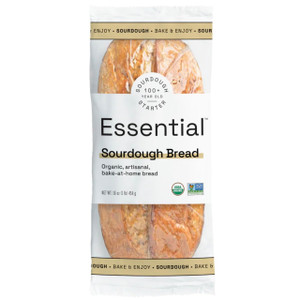
Sprouted Seed Sourdough Sandwich Bread - 24 oz
Izzio Artisan Bakery
$6.99
Below are the available bulk discount rates for each individual item when you purchase a certain amount
- Buy 2 - 3 and get 2% off
- Buy 4 - 7 and get 4% off
- Buy 8 or above and get 8% off
(No reviews yet)

Write a Review

Izzio Artisan Bakery
Sprouted Seed Sourdough Sandwich Bread - 24 oz
Izzio doesn't add vinegar, vital wheat gluten, or 'sourdough flavoring' to fake the tang other bakeries chase — this loaf gets its real sour flavor and open, digestible crumb from a wild sourdough starter that's given the time to actually ferment. Baked in small batches at the family's Colorado bakery, it's built on a custom, traceable organic flour grown and milled specifically for Izzio, then loaded with a hearty five-seed blend — sunflower, pumpkin, flax, millet, and poppy — for a sandwich loaf with real bite and substance in every slice.
- A sturdy, seeded sandwich bread that holds up to thick fillings, grilled cheese, or a hearty toast without falling apart
- Naturally fermented over time (not rushed with vinegar or sourdough flavoring) for a more digestible loaf with genuine sourdough character
- Organic, non-GMO ingredients throughout — no dairy or eggs, making it suitable for vegetarian and dairy-free diets
Most 'sourdough' on grocery shelves today is sandwich bread with vinegar or sourdough flavoring added for tang -- no wild starter, no real fermentation, no extra digestibility benefit. Izzio's Organic Sprouted Seeds Sourdough Sandwich Bread is the opposite: a genuine sourdough starter (just organic wheat flour and water) does the work, given the time it needs to slowly transform the dough the way bakers did for thousands of years before commercial yeast existed.
This loaf starts with a custom-milled, unenriched organic flour that Izzio developed directly with local farmers and millers -- flour they can trace back to the field it was grown in, with no enrichments or additives folded in afterward. Izzio bakes this bread in small batches at its family-owned bakery in the Rocky Mountains of Colorado, sourcing grain from farms close to home rather than shipping in generic commodity flour. Into that base goes a five-seed blend of organic sunflower, pumpkin, flax, millet, and poppy seeds, plus a touch of organic honey and sea salt, for a hearty, substantial sandwich loaf that still carries the tang and open crumb of true sourdough.
Because it's built on organic wheat flour and grains, this loaf isn't suited for keto, paleo, or carnivore eating, but it fits well into vegetarian diets and any table looking for real, seed-packed sourdough bread. Slice it for a stacked sandwich, toast it for breakfast, or use it as the base for a grilled cheese where you actually want this artisan sourdough sandwich bread to hold its own. Because it skips preservatives, artificial flavors, and seed oils, keep it in the freezer until you're ready to use it, then thaw or toast slices as needed to preserve that just-baked texture.
Ingredients: Organic Wheat Flour, Organic Sourdough Starter (Organic Wheat Flour, Water), Organic Flax Seeds, Organic Sunflower Seeds, Organic Millet Seeds, Organic Poppy Seeds, Organic Pumpkin Seeds, Organic Honey, Sea Salt, and Enzymes.
Common Questions
How does this compare nutritionally to a standard grocery store sandwich bread?
A typical mass-produced sandwich bread relies on commercial yeast, added vital wheat gluten, and often a dough conditioner or vinegar to fake a sourdough tang in under 3 hours of proofing. Izzio's loaf ferments for significantly longer using only a live wheat flour and water starter, which naturally lowers the bread's glycemic impact and breaks down more gluten and phytic acid before baking. It also carries five whole seeds (flax, sunflower, pumpkin, millet, poppy) that add fiber, plant-based omega-3s, and minerals like magnesium and zinc that plain white or wheat sandwich bread doesn't have. And because there's no dough conditioner, soy lecithin, or preservative package, the ingredient list is 10 recognizable items instead of 20-plus.
What does real fermentation actually do to the bread, mechanically?
During a long sourdough fermentation, wild lactobacilli and yeast in the starter produce lactic and acetic acid while also activating the enzyme phytase, which breaks down phytic acid bound to the flour's minerals. Phytic acid is an antinutrient that otherwise blocks absorption of iron, zinc, and magnesium, so reducing it makes those minerals more bioavailable. The same fermentation process partially breaks down gluten proteins and fructans, which is why many people who are sensitive to fast-proofed bread tolerate true sourdough better. Vinegar-spiked 'sourdough' skips this biological process entirely and only mimics the sour flavor, with none of the digestive benefit.
Does this bread fit a keto, paleo, or carnivore diet?
No. This is a wheat-flour sourdough bread with roughly the same carbohydrate load as any other seeded whole-grain loaf, so it does not fit ketogenic, paleo, or carnivore eating patterns, all of which either restrict carbohydrates sharply or exclude grains entirely. It's better suited to a whole-food, unprocessed-carb approach, similar to what you'd follow on a Mediterranean or general clean-eating diet. If you're tracking macros, expect a grain-and-seed bread's typical range of roughly 15-18 grams of carbohydrate per slice, with the seed blend contributing extra fiber and fat compared to a plain white loaf. Anyone following a strict low-carb protocol should treat this as an occasional exception rather than a staple.
What dishes work best with this bread, and does it need any recipe adjustments?
The dense, seeded crumb holds up well for stacked deli sandwiches, open-face tartines, and grilled cheese, since it won't turn to mush under wet fillings the way softer commercial bread does. It toasts beautifully for breakfast because the seeds add crunch and the natural sourdough tang balances sweet toppings like honey or jam. For French toast or bread pudding, cut slightly thicker slices than you would with a standard loaf, since the open crumb absorbs custard fast and can go soft if it's too thin. If a recipe calls for a soft white sandwich bread, expect a heartier bite and more pronounced tang here, so you may want to scale back other strong flavors like sharp mustard or vinegar-based spreads.
How can I verify the organic and sourdough claims on this bread?
The bread carries USDA Organic certification, which requires every agricultural ingredient, including the wheat flour, sourdough starter, and seeds, to be grown without synthetic pesticides or fertilizers and verified annually by an accredited certifying body. It's also Non-GMO Project Verified on select SKUs, which is a separate, stricter verification specifically testing for genetically modified organisms rather than just relying on the organic label. On the sourdough claim, the ingredient list itself is the proof: there's no vinegar, no 'sourdough flavor,' and no added vital wheat gluten, which are the usual giveaways of a fake sourdough. You can also check the kosher certification mark on the packaging, which confirms the ingredients and production process were reviewed by a third-party kosher agency.
What makes this different from other breads labeled 'sourdough' at the grocery store?
Most sandwich breads labeled sourdough at conventional grocery stores use commercial baker's yeast for a fast rise and then add vinegar, citric acid, or artificial sourdough flavoring to fake the tang, since real fermentation takes too long for mass production schedules. Izzio uses an actual live starter made from nothing but organic wheat flour and water, and lets it slowly ferment the dough the way bakers did before commercial yeast existed. That slower process is what produces the open, irregular crumb structure and genuine sour flavor you're tasting, not an additive. It's a meaningful distinction because the fermentation itself is what delivers the digestibility and mineral-availability benefits people are looking for when they specifically seek out sourdough.
Why is this bread made with custom-milled flour instead of standard enriched flour?
Most commercial bread flour is enriched after milling, meaning synthetic vitamins and minerals are added back in because the refining process strips out the wheat's natural nutrients. Izzio instead worked directly with local farmers and millers to source an unenriched organic flour that's traceable back to the specific field it was grown in, so nothing needs to be added back afterward. This also means the flour retains more of its natural character and nutrient profile going into the dough, rather than relying on fortification to compensate for a stripped-down base ingredient. It's a sourcing choice that lines up with the bakery's broader approach of avoiding additives anywhere in the process, from the flour to the finished loaf.
This loaf starts with a custom-milled, unenriched organic flour that Izzio developed directly with local farmers and millers -- flour they can trace back to the field it was grown in, with no enrichments or additives folded in afterward. Izzio bakes this bread in small batches at its family-owned bakery in the Rocky Mountains of Colorado, sourcing grain from farms close to home rather than shipping in generic commodity flour. Into that base goes a five-seed blend of organic sunflower, pumpkin, flax, millet, and poppy seeds, plus a touch of organic honey and sea salt, for a hearty, substantial sandwich loaf that still carries the tang and open crumb of true sourdough.
Because it's built on organic wheat flour and grains, this loaf isn't suited for keto, paleo, or carnivore eating, but it fits well into vegetarian diets and any table looking for real, seed-packed sourdough bread. Slice it for a stacked sandwich, toast it for breakfast, or use it as the base for a grilled cheese where you actually want this artisan sourdough sandwich bread to hold its own. Because it skips preservatives, artificial flavors, and seed oils, keep it in the freezer until you're ready to use it, then thaw or toast slices as needed to preserve that just-baked texture.
Ingredients: Organic Wheat Flour, Organic Sourdough Starter (Organic Wheat Flour, Water), Organic Flax Seeds, Organic Sunflower Seeds, Organic Millet Seeds, Organic Poppy Seeds, Organic Pumpkin Seeds, Organic Honey, Sea Salt, and Enzymes.
Common Questions
How does this compare nutritionally to a standard grocery store sandwich bread?
A typical mass-produced sandwich bread relies on commercial yeast, added vital wheat gluten, and often a dough conditioner or vinegar to fake a sourdough tang in under 3 hours of proofing. Izzio's loaf ferments for significantly longer using only a live wheat flour and water starter, which naturally lowers the bread's glycemic impact and breaks down more gluten and phytic acid before baking. It also carries five whole seeds (flax, sunflower, pumpkin, millet, poppy) that add fiber, plant-based omega-3s, and minerals like magnesium and zinc that plain white or wheat sandwich bread doesn't have. And because there's no dough conditioner, soy lecithin, or preservative package, the ingredient list is 10 recognizable items instead of 20-plus.
What does real fermentation actually do to the bread, mechanically?
During a long sourdough fermentation, wild lactobacilli and yeast in the starter produce lactic and acetic acid while also activating the enzyme phytase, which breaks down phytic acid bound to the flour's minerals. Phytic acid is an antinutrient that otherwise blocks absorption of iron, zinc, and magnesium, so reducing it makes those minerals more bioavailable. The same fermentation process partially breaks down gluten proteins and fructans, which is why many people who are sensitive to fast-proofed bread tolerate true sourdough better. Vinegar-spiked 'sourdough' skips this biological process entirely and only mimics the sour flavor, with none of the digestive benefit.
Does this bread fit a keto, paleo, or carnivore diet?
No. This is a wheat-flour sourdough bread with roughly the same carbohydrate load as any other seeded whole-grain loaf, so it does not fit ketogenic, paleo, or carnivore eating patterns, all of which either restrict carbohydrates sharply or exclude grains entirely. It's better suited to a whole-food, unprocessed-carb approach, similar to what you'd follow on a Mediterranean or general clean-eating diet. If you're tracking macros, expect a grain-and-seed bread's typical range of roughly 15-18 grams of carbohydrate per slice, with the seed blend contributing extra fiber and fat compared to a plain white loaf. Anyone following a strict low-carb protocol should treat this as an occasional exception rather than a staple.
What dishes work best with this bread, and does it need any recipe adjustments?
The dense, seeded crumb holds up well for stacked deli sandwiches, open-face tartines, and grilled cheese, since it won't turn to mush under wet fillings the way softer commercial bread does. It toasts beautifully for breakfast because the seeds add crunch and the natural sourdough tang balances sweet toppings like honey or jam. For French toast or bread pudding, cut slightly thicker slices than you would with a standard loaf, since the open crumb absorbs custard fast and can go soft if it's too thin. If a recipe calls for a soft white sandwich bread, expect a heartier bite and more pronounced tang here, so you may want to scale back other strong flavors like sharp mustard or vinegar-based spreads.
How can I verify the organic and sourdough claims on this bread?
The bread carries USDA Organic certification, which requires every agricultural ingredient, including the wheat flour, sourdough starter, and seeds, to be grown without synthetic pesticides or fertilizers and verified annually by an accredited certifying body. It's also Non-GMO Project Verified on select SKUs, which is a separate, stricter verification specifically testing for genetically modified organisms rather than just relying on the organic label. On the sourdough claim, the ingredient list itself is the proof: there's no vinegar, no 'sourdough flavor,' and no added vital wheat gluten, which are the usual giveaways of a fake sourdough. You can also check the kosher certification mark on the packaging, which confirms the ingredients and production process were reviewed by a third-party kosher agency.
What makes this different from other breads labeled 'sourdough' at the grocery store?
Most sandwich breads labeled sourdough at conventional grocery stores use commercial baker's yeast for a fast rise and then add vinegar, citric acid, or artificial sourdough flavoring to fake the tang, since real fermentation takes too long for mass production schedules. Izzio uses an actual live starter made from nothing but organic wheat flour and water, and lets it slowly ferment the dough the way bakers did before commercial yeast existed. That slower process is what produces the open, irregular crumb structure and genuine sour flavor you're tasting, not an additive. It's a meaningful distinction because the fermentation itself is what delivers the digestibility and mineral-availability benefits people are looking for when they specifically seek out sourdough.
Why is this bread made with custom-milled flour instead of standard enriched flour?
Most commercial bread flour is enriched after milling, meaning synthetic vitamins and minerals are added back in because the refining process strips out the wheat's natural nutrients. Izzio instead worked directly with local farmers and millers to source an unenriched organic flour that's traceable back to the specific field it was grown in, so nothing needs to be added back afterward. This also means the flour retains more of its natural character and nutrient profile going into the dough, rather than relying on fortification to compensate for a stripped-down base ingredient. It's a sourcing choice that lines up with the bakery's broader approach of avoiding additives anywhere in the process, from the flour to the finished loaf.
- __Storage_Location:
- Frozen
- __Volume:
- 3240
- __Owner:
- TCFarm
- __badge:
- Organic
Related Products
-
-
-
Sale
-