Keto Sourdough Bread - 16 oz
Base Culture
$10.99
Below are the available bulk discount rates for each individual item when you purchase a certain amount
- Buy 2 - 2 and get 2% off
- Buy 3 - 5 and get 4% off
- Buy 6 or above and get 8% off
(No reviews yet)

Write a Review
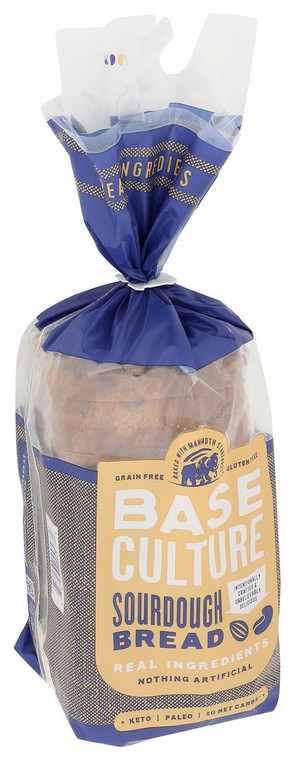
Base Culture
Keto Sourdough Bread - 16 oz
Six grams of net carbs and zero gums holding it together — this loaf proves grain-free bread doesn't have to apologize for itself. Instead of wheat and dough conditioners, Base Culture builds structure from cashew butter, almond flour, and golden flaxseed meal, then lets real sauerkraut and lactic acid do the sourdough tang the old-fashioned way. Lab-tested grain-free, slice for slice.
- Toasts up crisp-edged for sandwiches, avocado toast, or grilled cheese without the mid-afternoon carb crash
- Leavened with baking soda and soured with real sauerkraut and lactic acid instead of gluten, gums, or dough conditioners — no fillers standing in for real food
- Grain-free, keto-friendly, and paleo-friendly — built for clean eating without dietary restriction
Base Culture started with a 30-day paleo challenge and a founder, Jordann, who couldn't find bread that fit her plate. So she started baking her own — grain-free, gluten-free, and actually satisfying — in her own kitchen. This grain-free sourdough bread is what came out of that experiment: real tang, real crumb, real bread, just built without a single grain of wheat.
Instead of flour and gluten, this loaf leans on cashew butter, almond flour, arrowroot flour, and golden flaxseed meal for structure, with real sauerkraut, apple cider vinegar, and lactic acid doing the sourdough sour the way a fermented starter would. No xanthan gum, no dough conditioners, no fillers standing in for real ingredients — the whole loaf is built from foods you'd recognize in your own pantry.
Each slice comes in at 6g net carbs, keto math that actually pencils out, thanks to psyllium husk powder and flaxseed meal doing double duty as fiber instead of empty starch. That's the kind of grain-free baking Base Culture set out to prove was possible — no hydrogenated fats, no high-fructose corn syrup, no shortcuts. It's fully keto and paleo-friendly, with no grains or gluten anywhere in the recipe, so it fits cleanly into either way of eating without asterisks.
Toast it for crisp edges under eggs, stack it for a paleo-friendly sandwich, or use it as the base for grilled cheese without derailing a low-carb day. It holds up to sauces and fillings the way a real sourdough should.
Keep it in the freezer and pull slices as you need them — toast straight from frozen for the crispiest edges. Grain-free, gluten-free, keto-friendly, and paleo-friendly, this bread is built for clean eating without giving up the ritual of a good sandwich.
Ingredients: Water, Eggs, Cashew Butter, Arrowroot Flour, Sauerkraut, Golden Flaxseed Meal, Psyllium Husk Powder, Almond Flour, Apple Cider Vinegar, Lemon Juice, Coconut Oil, Honey, Sea Salt, Baking Soda, and Lactic Acid.
Common Questions
How does this bread compare nutritionally to a conventional wheat sourdough slice?
A typical wheat sourdough slice runs about 25-30g of total carbs and roughly 22-26g net carbs, since wheat flour has almost no fiber to offset the starch. This loaf comes in at 6g net carbs per slice because the carb count is built from arrowroot and almond flour but immediately reduced by fiber from psyllium husk powder and golden flaxseed meal. Total fat also shifts the macro profile toward cashew butter, almond flour, and coconut oil instead of gluten-based starch, so you're getting a bread that behaves more like a fat-and-fiber food than a starch food. Protein per slice is higher too, largely from the eggs and nut flours, which conventional wheat bread doesn't offer in comparable amounts.
Why does this bread taste sour like sourdough without a fermented starter?
The tang comes from three acidic ingredients working together: real sauerkraut, apple cider vinegar, and lactic acid. Traditional sourdough gets its sour flavor from lactic acid and acetic acid produced by wild yeast and lactobacillus during a multi-day fermentation of a flour-and-water starter. Here, sauerkraut supplies naturally fermented lactic acid bacteria byproducts, while the added apple cider vinegar and lactic acid replicate that same acidic profile directly, without needing an active starter or a wheat-based ferment. The result is the characteristic sour crumb flavor without any gluten or grain fermentation involved.
Does this bread fit a keto or paleo diet, and what about carnivore?
At 6g net carbs per slice, this bread fits comfortably into a standard keto carb budget of 20-50g net carbs a day, even if you're eating two slices. For paleo, the ingredient list avoids grains and legumes entirely, relying on almond flour, cashew butter, arrowroot, and coconut oil instead of wheat flour, which is why it's certified paleo-friendly. It won't fit a strict carnivore protocol since carnivore excludes plant foods altogether, including nuts, seeds, and honey, all of which appear here. If you're doing a modified or lower-strict carnivore approach that allows some plant-based ingredients, this would be one of the few bread options that could still work.
What does the fiber in this bread actually do, and is the net carb math legitimate?
Psyllium husk powder and golden flaxseed meal are both soluble and insoluble fiber sources that pass through digestion largely unmetabolized, which is why they're subtracted from total carbs to get the net carb number. Psyllium in particular swells with water and forms a gel-like structure, which is part of why this bread holds together without gluten, and it also slows glucose absorption when eaten. Flaxseed meal contributes lignans and additional fiber on top of its structural role in the dough. So the net carb subtraction isn't a marketing trick, it reflects real fiber content doing double duty as both a binder and a metabolic offset.
What can I substitute this bread into without changing my usual recipe?
It works as a direct swap in any recipe that calls for sourdough, including grilled cheese, French toast, and avocado toast, since the tang and crumb structure mimic real fermented bread closely enough that no recipe adjustment is needed for flavor. For sandwiches, toast it first because the denser, egg-and-nut-flour crumb benefits from a bit of crisping to hold fillings the way wheat bread does straight from the bag. If you're using it under eggs or in a strata-style bake, keep it toasted or lightly dried out beforehand since the higher moisture content from ingredients like cashew butter and coconut oil can make raw slices softer than wheat bread in wet applications.
What do the gluten-free, keto, and paleo certifications actually verify?
These aren't self-declared marketing labels, they're third-party certifications that require ingredient audits and, in the case of gluten-free, testing to confirm gluten content stays below 20 parts per million. The keto certification checks that net carb counts and ingredient sourcing align with low-carb standards, meaning no hidden starches or sugars beyond what's disclosed. Paleo certification confirms the absence of grains, legumes, dairy, and refined sugars in the formulation. The kosher certification is a separate process involving ingredient sourcing and production oversight, and it's worth checking the specific certifying body's mark on the packaging if that matters for your dietary practice.
What makes this bread different from other grain-free breads on the market?
Most grain-free breads lean heavily on gums like xanthan or guar gum to replace the binding role gluten normally plays, along with dough conditioners to extend shelf life and improve texture. This loaf skips both, using psyllium husk powder and flaxseed meal for structure instead of gums, and relying on real acidic ingredients like sauerkraut and vinegar for flavor instead of synthetic sour flavoring agents. There's also no hydrogenated fat or high-fructose corn syrup, which shows up in some commercial gluten-free breads as a cheaper binder or sweetener. The ingredient list reads like a short pantry list rather than a food-science formulation, which is the specific gap the founder was trying to close when she started baking it herself.
Instead of flour and gluten, this loaf leans on cashew butter, almond flour, arrowroot flour, and golden flaxseed meal for structure, with real sauerkraut, apple cider vinegar, and lactic acid doing the sourdough sour the way a fermented starter would. No xanthan gum, no dough conditioners, no fillers standing in for real ingredients — the whole loaf is built from foods you'd recognize in your own pantry.
Each slice comes in at 6g net carbs, keto math that actually pencils out, thanks to psyllium husk powder and flaxseed meal doing double duty as fiber instead of empty starch. That's the kind of grain-free baking Base Culture set out to prove was possible — no hydrogenated fats, no high-fructose corn syrup, no shortcuts. It's fully keto and paleo-friendly, with no grains or gluten anywhere in the recipe, so it fits cleanly into either way of eating without asterisks.
Toast it for crisp edges under eggs, stack it for a paleo-friendly sandwich, or use it as the base for grilled cheese without derailing a low-carb day. It holds up to sauces and fillings the way a real sourdough should.
Keep it in the freezer and pull slices as you need them — toast straight from frozen for the crispiest edges. Grain-free, gluten-free, keto-friendly, and paleo-friendly, this bread is built for clean eating without giving up the ritual of a good sandwich.
Ingredients: Water, Eggs, Cashew Butter, Arrowroot Flour, Sauerkraut, Golden Flaxseed Meal, Psyllium Husk Powder, Almond Flour, Apple Cider Vinegar, Lemon Juice, Coconut Oil, Honey, Sea Salt, Baking Soda, and Lactic Acid.
Common Questions
How does this bread compare nutritionally to a conventional wheat sourdough slice?
A typical wheat sourdough slice runs about 25-30g of total carbs and roughly 22-26g net carbs, since wheat flour has almost no fiber to offset the starch. This loaf comes in at 6g net carbs per slice because the carb count is built from arrowroot and almond flour but immediately reduced by fiber from psyllium husk powder and golden flaxseed meal. Total fat also shifts the macro profile toward cashew butter, almond flour, and coconut oil instead of gluten-based starch, so you're getting a bread that behaves more like a fat-and-fiber food than a starch food. Protein per slice is higher too, largely from the eggs and nut flours, which conventional wheat bread doesn't offer in comparable amounts.
Why does this bread taste sour like sourdough without a fermented starter?
The tang comes from three acidic ingredients working together: real sauerkraut, apple cider vinegar, and lactic acid. Traditional sourdough gets its sour flavor from lactic acid and acetic acid produced by wild yeast and lactobacillus during a multi-day fermentation of a flour-and-water starter. Here, sauerkraut supplies naturally fermented lactic acid bacteria byproducts, while the added apple cider vinegar and lactic acid replicate that same acidic profile directly, without needing an active starter or a wheat-based ferment. The result is the characteristic sour crumb flavor without any gluten or grain fermentation involved.
Does this bread fit a keto or paleo diet, and what about carnivore?
At 6g net carbs per slice, this bread fits comfortably into a standard keto carb budget of 20-50g net carbs a day, even if you're eating two slices. For paleo, the ingredient list avoids grains and legumes entirely, relying on almond flour, cashew butter, arrowroot, and coconut oil instead of wheat flour, which is why it's certified paleo-friendly. It won't fit a strict carnivore protocol since carnivore excludes plant foods altogether, including nuts, seeds, and honey, all of which appear here. If you're doing a modified or lower-strict carnivore approach that allows some plant-based ingredients, this would be one of the few bread options that could still work.
What does the fiber in this bread actually do, and is the net carb math legitimate?
Psyllium husk powder and golden flaxseed meal are both soluble and insoluble fiber sources that pass through digestion largely unmetabolized, which is why they're subtracted from total carbs to get the net carb number. Psyllium in particular swells with water and forms a gel-like structure, which is part of why this bread holds together without gluten, and it also slows glucose absorption when eaten. Flaxseed meal contributes lignans and additional fiber on top of its structural role in the dough. So the net carb subtraction isn't a marketing trick, it reflects real fiber content doing double duty as both a binder and a metabolic offset.
What can I substitute this bread into without changing my usual recipe?
It works as a direct swap in any recipe that calls for sourdough, including grilled cheese, French toast, and avocado toast, since the tang and crumb structure mimic real fermented bread closely enough that no recipe adjustment is needed for flavor. For sandwiches, toast it first because the denser, egg-and-nut-flour crumb benefits from a bit of crisping to hold fillings the way wheat bread does straight from the bag. If you're using it under eggs or in a strata-style bake, keep it toasted or lightly dried out beforehand since the higher moisture content from ingredients like cashew butter and coconut oil can make raw slices softer than wheat bread in wet applications.
What do the gluten-free, keto, and paleo certifications actually verify?
These aren't self-declared marketing labels, they're third-party certifications that require ingredient audits and, in the case of gluten-free, testing to confirm gluten content stays below 20 parts per million. The keto certification checks that net carb counts and ingredient sourcing align with low-carb standards, meaning no hidden starches or sugars beyond what's disclosed. Paleo certification confirms the absence of grains, legumes, dairy, and refined sugars in the formulation. The kosher certification is a separate process involving ingredient sourcing and production oversight, and it's worth checking the specific certifying body's mark on the packaging if that matters for your dietary practice.
What makes this bread different from other grain-free breads on the market?
Most grain-free breads lean heavily on gums like xanthan or guar gum to replace the binding role gluten normally plays, along with dough conditioners to extend shelf life and improve texture. This loaf skips both, using psyllium husk powder and flaxseed meal for structure instead of gums, and relying on real acidic ingredients like sauerkraut and vinegar for flavor instead of synthetic sour flavoring agents. There's also no hydrogenated fat or high-fructose corn syrup, which shows up in some commercial gluten-free breads as a cheaper binder or sweetener. The ingredient list reads like a short pantry list rather than a food-science formulation, which is the specific gap the founder was trying to close when she started baking it herself.
- __Storage_Location:
- Frozen
- __Volume:
- 1881
- __Owner:
- TCFarm
- __badge:
- Grain-Free
Related Products
-
-
-
Sale
-