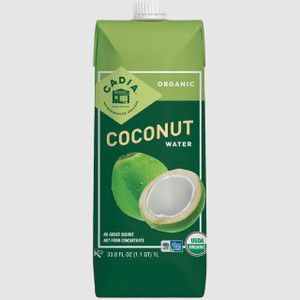
Coconut Water With Pulp - 17.5 oz
Cadia
$2.49
Below are the available bulk discount rates for each individual item when you purchase a certain amount
- Buy 2 - 5 and get 2% off
- Buy 6 - 11 and get 4% off
- Buy 12 or above and get 8% off
(No reviews yet)

Write a Review

Cadia
Coconut Water With Pulp - 17.5 oz
Every carton of this coconut water starts on family farms in rural Thailand, where coconuts are field-husked by hand rather than machine-processed at a mega-facility — a detail most coconut water brands skip because it's slower and costs more. Sold exclusively at independent neighborhood grocers, this organic, non-GMO coconut water carries its electrolytes the way the coconut made them, with no added sugar and no artificial flavor doing the work for it.
- Pour it straight over ice, blend it into a tropical smoothie, or use it to lighten up a rum cocktail — the pulp adds body most clear coconut waters can't match
- Field-husked by family farmers in Thailand and certified organic, so the sourcing and growing practices are verified, not just claimed
- Vegan, kosher-certified, and non-GMO — a straightforward alternative to sports drinks loaded with added sugar and dye
Crack open a carton of this organic, non-GMO coconut water and the first thing you'll notice is the pulp — soft shreds of actual coconut meat suspended in naturally sweet water, not a clarified, filtered version of the real thing.
Cadia sources these coconuts from rural Thailand, where family farmers field-husk each coconut by hand before the water and pulp are captured. It's a slower, more localized supply chain than the industrial coconut water most grocery shelves stock, and it's why the flavor reads as genuinely tropical rather than processed. Each carton holds 17.5 oz, and it's packed 12 to a case — the same case pack independent grocers use to stock their shelves.
Because it's organic and non-GMO from the ground up, there's no added sugar propping up the sweetness and no artificial additives replacing what the coconut already provides. That makes it a straightforward swap for sugary sports drinks when you need electrolyte replacement after a workout, a long day outside, or just a hot afternoon.
Pour it over ice on its own, blend it into a smoothie for tropical body and texture, or use it as the base for a pina colada or coconut mojito — the pulp holds up in blended drinks better than clear coconut water alone.
Vegan, kosher, and organic-certified, this coconut water fits dairy-free and plant-based routines without asterisks, and its whole-food, single-ingredient profile makes it paleo-friendly as well — though the natural coconut sugars mean strict keto followers should count it toward daily carbs. Store unopened cartons in a cool, dry pantry; refrigerate after opening and use within a few days for the best texture and flavor.
Ingredients: Coconut Water and Coconut Pulp.
Common Questions
How does this compare nutritionally to the clarified coconut water most brands sell?
Clarified coconut water is filtered to remove any solids, which strips out some of the potassium, magnesium, and fiber that naturally cling to the pulp and pericarp lining. A typical 11.2 oz serving of Cadia's unfiltered coconut water with pulp carries roughly 470 mg of potassium and 60 calories, compared to the 400-420 mg of potassium found in most filtered, shelf-stable brands of the same size. The pulp also adds about 1-2 grams of fiber per serving, which filtered versions have essentially none of. Sugar content stays comparable across both styles, generally 9-11 grams per serving, since that comes from the water itself rather than the solids.
What makes coconut water effective for electrolyte replacement, and what's actually in the pulp?
Coconut water's effectiveness comes down to its potassium-to-sodium ratio, which mirrors the fluid balance your body loses through sweat more closely than most sports drinks do. A single serving delivers around 470 mg of potassium against roughly 30-40 mg of sodium, whereas commercial sports drinks like Gatorade run closer to 75 mg sodium and only about 30 mg potassium per serving, relying on added dextrose instead. The pulp itself is mostly cellulose and hemicellulose fiber along with trace amounts of lauric acid, the same medium-chain fatty acid found in coconut meat and oil, though in far smaller concentrations than you'd get from creamed coconut or coconut milk. That fiber slows the rate at which the natural sugars hit your bloodstream compared to drinking the clear liquid alone.
Does this fit a keto, paleo, or carnivore diet?
It fits paleo and whole-food vegan protocols cleanly since the ingredient list is just coconut water and coconut pulp with nothing added. It does not fit strict keto or carnivore approaches: a single serving carries around 13-15 grams of net carbs almost entirely from naturally occurring fructose and sucrose, which will eat into a daily keto carb allowance of 20-25 grams fast. Carnivore protocols exclude plant foods entirely, so coconut water in any form is off the list there. For low-carb eaters who aren't in strict ketosis, it's still a far cleaner post-workout option than sports drinks loaded with dextrose and food dye, just one to portion carefully.
What dishes can I use this in beyond drinking it straight?
The pulp gives it body that clear coconut water lacks, so it works well folded into Thai coconut rice or added partway through simmering a curry to lighten a full can of coconut milk while still keeping texture. It also holds up in ceviche marinades, where the shredded pulp adds visual and textural interest alongside citrus and raw fish or hearts of palm. For breakfast, stir it into overnight oats or chia pudding in place of plain milk for natural sweetness and a bit of chew. If you freeze it into popsicle molds, the suspended pulp keeps the pops from tasting like flavored ice, which is a common complaint with filtered coconut water pops.
How can I verify the organic and kosher claims on this product?
The USDA Organic seal on the carton means the coconuts were grown without synthetic pesticides or fertilizers and the product contains no GMO ingredients, verified through third-party certifying agents that audit the supply chain from farm to bottling facility. You can confirm certification status directly through the USDA's organic integrity database using the certifying agent listed on the label. The kosher symbol indicates the product and its processing equipment were inspected by a certifying kosher agency, which is standard practice for verifying that a plant-based product with only two ingredients has no cross-contamination with non-kosher processing lines. Because the ingredient list is limited to coconut water and coconut pulp, there's little room for undisclosed additives to hide.
Why does this coconut water have visible pulp instead of being clear like most brands?
Most coconut water on grocery shelves goes through a clarifying and filtering step at industrial processing plants to produce a clear, uniform liquid that's easier to bottle at scale. Cadia sources from family farms in rural Thailand where coconuts are field-husked by hand, and the water and pulp are captured together rather than separated out during processing. That's a slower, smaller-scale supply chain than what large commercial coconut water producers use, and it's the direct reason you see soft shreds of actual coconut meat suspended in the carton instead of a clarified liquid. The pulp isn't an additive; it's simply the meat that clear coconut water brands filter out.
How long does the pulp stay suspended, and does it separate or settle?
Some settling at the bottom of the carton is normal and expected since the pulp is a solid suspended in liquid, not a stabilized emulsion, so give it a shake before pouring. Once opened, refrigerate and use within a few days, since the pulp is more perishable than the clarified water alone and can start to lose texture past that window. Unopened cartons are shelf-stable at room temperature in a cool, dry pantry for the duration of the printed best-by date. If the pulp looks discolored or the water smells fermented after opening, that's a sign it's past its usable window rather than a normal characteristic of the product.
Cadia sources these coconuts from rural Thailand, where family farmers field-husk each coconut by hand before the water and pulp are captured. It's a slower, more localized supply chain than the industrial coconut water most grocery shelves stock, and it's why the flavor reads as genuinely tropical rather than processed. Each carton holds 17.5 oz, and it's packed 12 to a case — the same case pack independent grocers use to stock their shelves.
Because it's organic and non-GMO from the ground up, there's no added sugar propping up the sweetness and no artificial additives replacing what the coconut already provides. That makes it a straightforward swap for sugary sports drinks when you need electrolyte replacement after a workout, a long day outside, or just a hot afternoon.
Pour it over ice on its own, blend it into a smoothie for tropical body and texture, or use it as the base for a pina colada or coconut mojito — the pulp holds up in blended drinks better than clear coconut water alone.
Vegan, kosher, and organic-certified, this coconut water fits dairy-free and plant-based routines without asterisks, and its whole-food, single-ingredient profile makes it paleo-friendly as well — though the natural coconut sugars mean strict keto followers should count it toward daily carbs. Store unopened cartons in a cool, dry pantry; refrigerate after opening and use within a few days for the best texture and flavor.
Ingredients: Coconut Water and Coconut Pulp.
Common Questions
How does this compare nutritionally to the clarified coconut water most brands sell?
Clarified coconut water is filtered to remove any solids, which strips out some of the potassium, magnesium, and fiber that naturally cling to the pulp and pericarp lining. A typical 11.2 oz serving of Cadia's unfiltered coconut water with pulp carries roughly 470 mg of potassium and 60 calories, compared to the 400-420 mg of potassium found in most filtered, shelf-stable brands of the same size. The pulp also adds about 1-2 grams of fiber per serving, which filtered versions have essentially none of. Sugar content stays comparable across both styles, generally 9-11 grams per serving, since that comes from the water itself rather than the solids.
What makes coconut water effective for electrolyte replacement, and what's actually in the pulp?
Coconut water's effectiveness comes down to its potassium-to-sodium ratio, which mirrors the fluid balance your body loses through sweat more closely than most sports drinks do. A single serving delivers around 470 mg of potassium against roughly 30-40 mg of sodium, whereas commercial sports drinks like Gatorade run closer to 75 mg sodium and only about 30 mg potassium per serving, relying on added dextrose instead. The pulp itself is mostly cellulose and hemicellulose fiber along with trace amounts of lauric acid, the same medium-chain fatty acid found in coconut meat and oil, though in far smaller concentrations than you'd get from creamed coconut or coconut milk. That fiber slows the rate at which the natural sugars hit your bloodstream compared to drinking the clear liquid alone.
Does this fit a keto, paleo, or carnivore diet?
It fits paleo and whole-food vegan protocols cleanly since the ingredient list is just coconut water and coconut pulp with nothing added. It does not fit strict keto or carnivore approaches: a single serving carries around 13-15 grams of net carbs almost entirely from naturally occurring fructose and sucrose, which will eat into a daily keto carb allowance of 20-25 grams fast. Carnivore protocols exclude plant foods entirely, so coconut water in any form is off the list there. For low-carb eaters who aren't in strict ketosis, it's still a far cleaner post-workout option than sports drinks loaded with dextrose and food dye, just one to portion carefully.
What dishes can I use this in beyond drinking it straight?
The pulp gives it body that clear coconut water lacks, so it works well folded into Thai coconut rice or added partway through simmering a curry to lighten a full can of coconut milk while still keeping texture. It also holds up in ceviche marinades, where the shredded pulp adds visual and textural interest alongside citrus and raw fish or hearts of palm. For breakfast, stir it into overnight oats or chia pudding in place of plain milk for natural sweetness and a bit of chew. If you freeze it into popsicle molds, the suspended pulp keeps the pops from tasting like flavored ice, which is a common complaint with filtered coconut water pops.
How can I verify the organic and kosher claims on this product?
The USDA Organic seal on the carton means the coconuts were grown without synthetic pesticides or fertilizers and the product contains no GMO ingredients, verified through third-party certifying agents that audit the supply chain from farm to bottling facility. You can confirm certification status directly through the USDA's organic integrity database using the certifying agent listed on the label. The kosher symbol indicates the product and its processing equipment were inspected by a certifying kosher agency, which is standard practice for verifying that a plant-based product with only two ingredients has no cross-contamination with non-kosher processing lines. Because the ingredient list is limited to coconut water and coconut pulp, there's little room for undisclosed additives to hide.
Why does this coconut water have visible pulp instead of being clear like most brands?
Most coconut water on grocery shelves goes through a clarifying and filtering step at industrial processing plants to produce a clear, uniform liquid that's easier to bottle at scale. Cadia sources from family farms in rural Thailand where coconuts are field-husked by hand, and the water and pulp are captured together rather than separated out during processing. That's a slower, smaller-scale supply chain than what large commercial coconut water producers use, and it's the direct reason you see soft shreds of actual coconut meat suspended in the carton instead of a clarified liquid. The pulp isn't an additive; it's simply the meat that clear coconut water brands filter out.
How long does the pulp stay suspended, and does it separate or settle?
Some settling at the bottom of the carton is normal and expected since the pulp is a solid suspended in liquid, not a stabilized emulsion, so give it a shake before pouring. Once opened, refrigerate and use within a few days, since the pulp is more perishable than the clarified water alone and can start to lose texture past that window. Unopened cartons are shelf-stable at room temperature in a cool, dry pantry for the duration of the printed best-by date. If the pulp looks discolored or the water smells fermented after opening, that's a sign it's past its usable window rather than a normal characteristic of the product.
- __Storage_Location:
- Dry
- __Volume:
- 500
- __Owner:
- TCFarm
- __badge:
- Organic