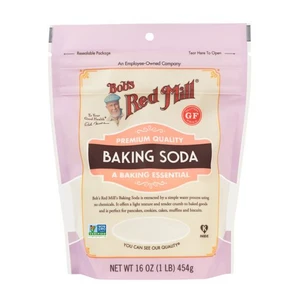

Baking Soda - 16 oz
Cadia
$1.79
Below are the available bulk discount rates for each individual item when you purchase a certain amount
- Buy 2 - 11 and get 2% off
- Buy 12 - 23 and get 4% off
- Buy 24 or above and get 8% off
(No reviews yet)

Write a Review

Cadia
Baking Soda - 16 oz
Sodium bicarbonate is sodium bicarbonate — but how it's mined, processed, and verified is where Cadia's version pulls ahead. This box is certified organic and Non-GMO Project Verified, a standard most baking soda on grocery shelves never bothers to meet, and it's available exclusively through the independent neighborhood grocers Cadia was built to support since 2010.
- One box handles the leavening in your weekend bake, the deodorizing in your fridge, and the gentle scrub in your sink
- Certified organic and non-GMO sourcing verified by third-party auditors, not just a label claim
- A single mineral ingredient with no synthetic additives — fits gluten-free, vegan, and paleo pantries without a second look at the box
Cadia exists so the neighborhood grocer down the street can stock the same clean-ingredient staples the big chains do — and this box of organic baking soda is a straightforward example of that promise in action.
It's a single mineral compound, sodium bicarbonate, certified USDA Organic and Non-GMO Project Verified. No synthetic processing aids, no fillers, nothing to read twice on the label — just the same functional compound your grandmother's baking soda box contained, held to a certification standard most baking soda brands skip entirely.
In the kitchen, it does the heavy lifting for quick breads, pancakes, and cookies that call for an acidic ingredient like buttermilk, cocoa, or vinegar to activate the rise. Beyond baking, keep a box in the fridge to absorb odors, stir a spoonful into a paste for scrubbing stovetops, or add it to a laundry load to soften water and boost your detergent.
Suitable for gluten-free, vegan, keto, carnivore, and paleo pantries — it's a mineral, not a food group, so there's nothing to restrict. Store the box sealed in a cool, dry place away from moisture to keep it fully reactive for baking.
Ingredients: Sodium Bicarbonate.
Common Questions
Is organic baking soda chemically different from the box in a conventional grocery aisle?
No. Baking soda is sodium bicarbonate, NaHCO3, and that molecule is identical whether it comes from a certified organic supplier or a conventional one. What the USDA Organic seal actually verifies is the mining and processing chain: the mineral is extracted from natural deposits like trona ore and refined without synthetic processing aids or additives such as aluminum silicate, which some conventional brands add as an anti-caking agent. So the functional chemistry is the same, but Cadia's box has one ingredient on the label and a third-party audit trail confirming nothing else was introduced during refining.
How does baking soda actually make baked goods rise?
Sodium bicarbonate is a base, and when it contacts an acidic ingredient like buttermilk, brown sugar, cocoa, or vinegar, an acid-base reaction produces carbon dioxide gas. That CO2 gets trapped in the batter's gluten or egg protein structure, and the bubbles expand under oven heat, giving you lift in pancakes, quick breads, and cookies. This is why recipes calling for baking soda almost always include an acidic component; without one, the soda has nothing to react with and can leave a slightly metallic, soapy taste instead of a rise. It's a fast reaction too, starting the moment wet and dry ingredients meet, which is why batters using straight baking soda should go in the oven promptly.
Does baking soda fit into keto, paleo, or carnivore eating?
Yes, without any adjustment needed. Baking soda is a mineral compound, not a food, so it carries zero calories, zero grams of carbohydrate, and zero protein or fat per serving. One teaspoon contains roughly 1,259 milligrams of sodium, which is actually a plus for keto and carnivore eaters who need to replace electrolytes lost when carbohydrate intake drops and the body excretes more sodium through the kidneys. Because there's no grain, sugar, or filler in the ingredient list, it's also compatible with paleo and gluten-free frameworks with no substitution required.
Can I use this in place of baking powder, and does the ratio change?
You can, but you need to add an acid since baking soda alone won't activate. A common conversion is that 1 teaspoon of baking powder can be replaced with 1/4 teaspoon of baking soda plus about 1/2 teaspoon of an acid like cream of tartar or lemon juice. In recipes that already lean acidic, like chocolate cake with cocoa powder, buttermilk biscuits, or gingerbread with molasses, straight baking soda is usually the better choice anyway since those ingredients supply the acid on their own. If you're converting a baking powder recipe that has no acidic ingredients, you'll need to introduce one or the batter simply won't rise.
What does the Non-GMO Project Verified label mean for a single-mineral product like this?
It might seem redundant since sodium bicarbonate is a mineral compound with no DNA to genetically modify, but the verification actually covers the full supply chain, including any processing aids, anti-caking agents, or facility cross-contamination risks from GMO crops processed on the same equipment. Non-GMO Project Verified requires third-party testing and ongoing audits, not just a one-time check, so the seal confirms Cadia's sourcing and packaging process was independently reviewed rather than self-declared. Combined with the USDA Organic certification, which requires annual inspection by an accredited certifying agent, you're getting two separate verification systems confirming the same claim from different angles.
Beyond baking, what's actually happening when I use it to absorb odors or clean?
Sodium bicarbonate is amphoteric, meaning it can neutralize both acidic and basic odor molecules by reacting with them rather than just masking the smell, which is why an open box in the fridge works on everything from sour milk to onion smells. For cleaning, its mild alkalinity, around pH 8, combined with its fine crystal structure gives it gentle abrasive action that lifts grease and grime without scratching most surfaces the way harsher abrasives can. In laundry, adding a half cup to a wash cycle raises the water's pH slightly, which helps detergent work more effectively in hard water by counteracting the minerals that make hard water interfere with soap's cleaning action.
Why does the box need to stay sealed in a cool, dry place, and what happens if it doesn't?
Sodium bicarbonate is hygroscopic, meaning it readily absorbs moisture from the air, and once it does, it can clump and lose some of its reactivity with acids. Humidity can also cause a slow breakdown of the compound over time, releasing small amounts of carbon dioxide even without an acid present, which is the same reaction you want to happen in your batter, not in the box on your shelf. Keeping it sealed and away from steam or moisture, like a spot near the stove or an open fridge, preserves its full leavening power so a spoonful still performs the way the recipe expects a year from now.
It's a single mineral compound, sodium bicarbonate, certified USDA Organic and Non-GMO Project Verified. No synthetic processing aids, no fillers, nothing to read twice on the label — just the same functional compound your grandmother's baking soda box contained, held to a certification standard most baking soda brands skip entirely.
In the kitchen, it does the heavy lifting for quick breads, pancakes, and cookies that call for an acidic ingredient like buttermilk, cocoa, or vinegar to activate the rise. Beyond baking, keep a box in the fridge to absorb odors, stir a spoonful into a paste for scrubbing stovetops, or add it to a laundry load to soften water and boost your detergent.
Suitable for gluten-free, vegan, keto, carnivore, and paleo pantries — it's a mineral, not a food group, so there's nothing to restrict. Store the box sealed in a cool, dry place away from moisture to keep it fully reactive for baking.
Ingredients: Sodium Bicarbonate.
Common Questions
Is organic baking soda chemically different from the box in a conventional grocery aisle?
No. Baking soda is sodium bicarbonate, NaHCO3, and that molecule is identical whether it comes from a certified organic supplier or a conventional one. What the USDA Organic seal actually verifies is the mining and processing chain: the mineral is extracted from natural deposits like trona ore and refined without synthetic processing aids or additives such as aluminum silicate, which some conventional brands add as an anti-caking agent. So the functional chemistry is the same, but Cadia's box has one ingredient on the label and a third-party audit trail confirming nothing else was introduced during refining.
How does baking soda actually make baked goods rise?
Sodium bicarbonate is a base, and when it contacts an acidic ingredient like buttermilk, brown sugar, cocoa, or vinegar, an acid-base reaction produces carbon dioxide gas. That CO2 gets trapped in the batter's gluten or egg protein structure, and the bubbles expand under oven heat, giving you lift in pancakes, quick breads, and cookies. This is why recipes calling for baking soda almost always include an acidic component; without one, the soda has nothing to react with and can leave a slightly metallic, soapy taste instead of a rise. It's a fast reaction too, starting the moment wet and dry ingredients meet, which is why batters using straight baking soda should go in the oven promptly.
Does baking soda fit into keto, paleo, or carnivore eating?
Yes, without any adjustment needed. Baking soda is a mineral compound, not a food, so it carries zero calories, zero grams of carbohydrate, and zero protein or fat per serving. One teaspoon contains roughly 1,259 milligrams of sodium, which is actually a plus for keto and carnivore eaters who need to replace electrolytes lost when carbohydrate intake drops and the body excretes more sodium through the kidneys. Because there's no grain, sugar, or filler in the ingredient list, it's also compatible with paleo and gluten-free frameworks with no substitution required.
Can I use this in place of baking powder, and does the ratio change?
You can, but you need to add an acid since baking soda alone won't activate. A common conversion is that 1 teaspoon of baking powder can be replaced with 1/4 teaspoon of baking soda plus about 1/2 teaspoon of an acid like cream of tartar or lemon juice. In recipes that already lean acidic, like chocolate cake with cocoa powder, buttermilk biscuits, or gingerbread with molasses, straight baking soda is usually the better choice anyway since those ingredients supply the acid on their own. If you're converting a baking powder recipe that has no acidic ingredients, you'll need to introduce one or the batter simply won't rise.
What does the Non-GMO Project Verified label mean for a single-mineral product like this?
It might seem redundant since sodium bicarbonate is a mineral compound with no DNA to genetically modify, but the verification actually covers the full supply chain, including any processing aids, anti-caking agents, or facility cross-contamination risks from GMO crops processed on the same equipment. Non-GMO Project Verified requires third-party testing and ongoing audits, not just a one-time check, so the seal confirms Cadia's sourcing and packaging process was independently reviewed rather than self-declared. Combined with the USDA Organic certification, which requires annual inspection by an accredited certifying agent, you're getting two separate verification systems confirming the same claim from different angles.
Beyond baking, what's actually happening when I use it to absorb odors or clean?
Sodium bicarbonate is amphoteric, meaning it can neutralize both acidic and basic odor molecules by reacting with them rather than just masking the smell, which is why an open box in the fridge works on everything from sour milk to onion smells. For cleaning, its mild alkalinity, around pH 8, combined with its fine crystal structure gives it gentle abrasive action that lifts grease and grime without scratching most surfaces the way harsher abrasives can. In laundry, adding a half cup to a wash cycle raises the water's pH slightly, which helps detergent work more effectively in hard water by counteracting the minerals that make hard water interfere with soap's cleaning action.
Why does the box need to stay sealed in a cool, dry place, and what happens if it doesn't?
Sodium bicarbonate is hygroscopic, meaning it readily absorbs moisture from the air, and once it does, it can clump and lose some of its reactivity with acids. Humidity can also cause a slow breakdown of the compound over time, releasing small amounts of carbon dioxide even without an acid present, which is the same reaction you want to happen in your batter, not in the box on your shelf. Keeping it sealed and away from steam or moisture, like a spot near the stove or an open fridge, preserves its full leavening power so a spoonful still performs the way the recipe expects a year from now.
- __Storage_Location:
- Dry
- __Volume:
- 675
- __Owner:
- TCFarm
- __badge:
- Non-GMO
Related Products
-
-
-
Sale
-