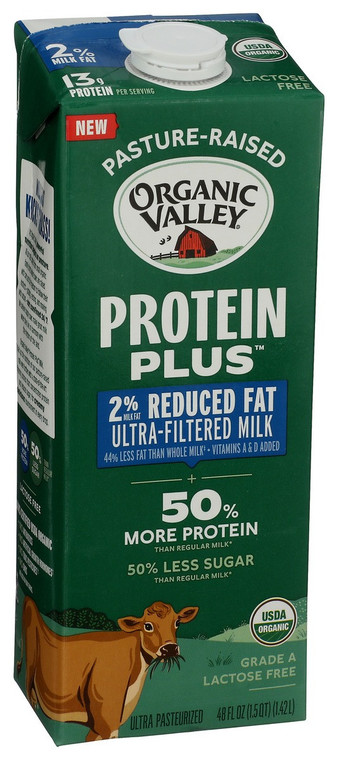
Protein Plus Reduced Fat Milk, Lactose-Free - 48 fl oz
Organic Valley
$7.49
Below are the available bulk discount rates for each individual item when you purchase a certain amount
- Buy 2 - 2 and get 2% off
- Buy 3 - 5 and get 4% off
- Buy 6 or above and get 8% off
This is milk that's been to farm school and grad school. Organic Valley's Protein Plus starts on pasture with our 1,600+ farmer-owners — the small organic family farms that make up our cooperative — then goes through a state-of-the-art ultra-filtration process that concentrates the protein and trims the sugar: 13 grams of protein and 50% less sugar than regular reduced-fat milk, with lactase added right in the carton so lactose-sensitive drinkers can pour freely. Same cows on grass, same USDA Certified Organic standard our founding farmers helped write back in 1988 — just filtered smarter.
- Pour it over cereal, foam it into coffee, or blend it into a post-workout shake — it performs anywhere you'd use regular milk, with a creamier body from the filtration process.
- Concentrated through a gentle ultra-filtration method that boosts protein and cuts sugar, with lactase enzyme added for easier digestion.
- USDA Certified Organic and lactose-friendly — fits vegetarian diets, sensitive stomachs, and anyone watching added sugar.
Organic Valley's Protein Plus Milk is the organic protein milk that proves you don't have to choose between protein, taste, and treating your gut right. It starts as pasture-raised organic milk from our 1,600+ farmer-owners across the United States, then goes through a gentle ultra-filtration process that concentrates protein and reduces sugar — all before we add lactase enzyme so lactose-sensitive drinkers can pour freely.
This is reduced-fat (2%) milk, carrying 5 grams of fat per serving versus 8 grams in whole milk — but 'reduced fat' doesn't mean reduced nutrition here. Each serving delivers 13 grams of protein — 10% more of the Daily Reference Value than regular reduced-fat milk (8 grams) — and just 6 grams of sugar, 50% less than regular reduced-fat milk (12 grams). Vitamin A and D3 are added to round out the nutrition.
Pour it over cereal, foam it for a protein-forward latte, or blend it straight into a smoothie — it holds up anywhere you'd use regular milk, with a slightly creamier body from the filtration process.
Every batch is always USDA Certified Organic: no antibiotics, no artificial growth hormones, no synthetic pesticides, no GMOs on any of our farms. Our cows graze at least 120 days a year on organic pasture with daily outdoor access, and every farm is inspected annually by independent third-party certifiers — you can scan the carton and see exactly which farms your milk came from.
Suitable for vegetarian and lactose-sensitive diets, though as a dairy product with natural milk sugars, it isn't a fit for strict keto, paleo, or carnivore eating plans. Keep refrigerated at all times and shake gently before pouring; use by the date stamped on the carton for best freshness.
Ingredients: Organic Ultra-Filtered Grade A Reduced Fat Milk, Lactase Enzyme, Vitamin A Palmitate, and Vitamin D3.
Common Questions
How does this compare nutritionally to a regular carton of 2% milk?
A standard serving of conventional reduced-fat milk has about 8 grams of protein, 12 grams of sugar, and 5 grams of fat. This Protein Plus milk keeps the same 5 grams of fat but delivers 13 grams of protein and only 6 grams of sugar per serving. That's a 62% increase in protein and a 50% cut in sugar without adding any fat back in. The shift comes from ultra-filtration, a mechanical process that separates and concentrates milk proteins while removing lactose-carrying whey permeate, not from added protein powders or sweeteners.
What actually happens during ultra-filtration, and why does it change the protein and sugar content?
Ultra-filtration passes milk through a semi-permeable membrane with pores fine enough to hold back larger protein molecules like casein and whey while letting smaller lactose and water molecules pass through. Running raw milk through this membrane concentrates the protein fraction and simultaneously reduces the lactose (milk sugar) content, which is why the sugar number drops from 12 grams to 6 grams per serving. Because some lactose still remains, the lactase enzyme is added afterward to break down what's left into glucose and galactose, making the milk easier to digest for people with lactose sensitivity. None of this involves heat treatment beyond standard pasteurization, so the process doesn't denature the protein the way some heat-based concentration methods can.
Does this fit a keto, low-carb, or high-protein diet?
It's not ketogenic on its own since one serving still carries 6 grams of carbohydrate (from residual lactose), which adds up quickly if you're capped at 20-25 grams of net carbs a day. But for a high-protein or macro-focused diet, it's a strong fit: 13 grams of protein for 5 grams of fat and 6 grams of carbs gives a protein-to-carb ratio more than double that of regular 2% milk. Paleo followers who avoid dairy altogether will still want to skip it, but those following a general whole-foods or high-protein template often use it specifically to hit protein targets without the added sugar load of flavored protein drinks.
Can I use this in place of regular milk in recipes like pancakes, mac and cheese, or protein smoothies?
Yes, it works as a direct 1:1 substitute in almost any recipe calling for 2% or reduced-fat milk, including pancake batter, béchamel sauce, mac and cheese, and baked custards. Because the protein content is higher, cheese sauces and puddings may set slightly firmer, so you can thin them with a tablespoon or two of extra liquid if you prefer a looser texture. In smoothies, the higher protein and creamier body from ultra-filtration mean you often need less added protein powder or Greek yogurt to hit the same thickness and protein count. It foams well for lattes too, since the concentrated protein structure holds air similarly to whole milk despite the lower fat.
How do I know this milk is actually from organic, pasture-raised cows and not just labeled that way?
Every carton carries a scannable code that traces the milk back to the specific farms it came from, so you can verify sourcing rather than take a label at face value. The USDA Certified Organic seal means the cows received no antibiotics, no synthetic pesticides or herbicides, and no GMO feed, and it requires annual on-site inspection by an independent third-party certifying body, not just a paperwork review. USDA organic standards also mandate a minimum of 120 days of grazing on pasture per year with daily outdoor access during the grazing season, which is a specific, auditable requirement rather than a marketing claim. Kosher and halal certifications add another layer of third-party verification on top of the organic inspection.
What makes Organic Valley different from other organic milk brands?
Organic Valley has operated as a farmer-owned cooperative since 1988, meaning the roughly 1,500 farms supplying this milk are member-owners of the company rather than contracted suppliers selling to a separate corporate buyer. That structure means pricing, quality standards, and organic practices are set collectively by the farmers themselves rather than dictated top-down by a processor trying to minimize input costs. It also means the traceability system tying each carton back to specific farms isn't just a marketing feature, it reflects the cooperative's actual ownership and accountability structure. This model has kept the co-op independent for over three decades in an industry where many organic brands have been acquired by larger conventional dairy corporations.
This is reduced-fat (2%) milk, carrying 5 grams of fat per serving versus 8 grams in whole milk — but 'reduced fat' doesn't mean reduced nutrition here. Each serving delivers 13 grams of protein — 10% more of the Daily Reference Value than regular reduced-fat milk (8 grams) — and just 6 grams of sugar, 50% less than regular reduced-fat milk (12 grams). Vitamin A and D3 are added to round out the nutrition.
Pour it over cereal, foam it for a protein-forward latte, or blend it straight into a smoothie — it holds up anywhere you'd use regular milk, with a slightly creamier body from the filtration process.
Every batch is always USDA Certified Organic: no antibiotics, no artificial growth hormones, no synthetic pesticides, no GMOs on any of our farms. Our cows graze at least 120 days a year on organic pasture with daily outdoor access, and every farm is inspected annually by independent third-party certifiers — you can scan the carton and see exactly which farms your milk came from.
Suitable for vegetarian and lactose-sensitive diets, though as a dairy product with natural milk sugars, it isn't a fit for strict keto, paleo, or carnivore eating plans. Keep refrigerated at all times and shake gently before pouring; use by the date stamped on the carton for best freshness.
Ingredients: Organic Ultra-Filtered Grade A Reduced Fat Milk, Lactase Enzyme, Vitamin A Palmitate, and Vitamin D3.
Common Questions
How does this compare nutritionally to a regular carton of 2% milk?
A standard serving of conventional reduced-fat milk has about 8 grams of protein, 12 grams of sugar, and 5 grams of fat. This Protein Plus milk keeps the same 5 grams of fat but delivers 13 grams of protein and only 6 grams of sugar per serving. That's a 62% increase in protein and a 50% cut in sugar without adding any fat back in. The shift comes from ultra-filtration, a mechanical process that separates and concentrates milk proteins while removing lactose-carrying whey permeate, not from added protein powders or sweeteners.
What actually happens during ultra-filtration, and why does it change the protein and sugar content?
Ultra-filtration passes milk through a semi-permeable membrane with pores fine enough to hold back larger protein molecules like casein and whey while letting smaller lactose and water molecules pass through. Running raw milk through this membrane concentrates the protein fraction and simultaneously reduces the lactose (milk sugar) content, which is why the sugar number drops from 12 grams to 6 grams per serving. Because some lactose still remains, the lactase enzyme is added afterward to break down what's left into glucose and galactose, making the milk easier to digest for people with lactose sensitivity. None of this involves heat treatment beyond standard pasteurization, so the process doesn't denature the protein the way some heat-based concentration methods can.
Does this fit a keto, low-carb, or high-protein diet?
It's not ketogenic on its own since one serving still carries 6 grams of carbohydrate (from residual lactose), which adds up quickly if you're capped at 20-25 grams of net carbs a day. But for a high-protein or macro-focused diet, it's a strong fit: 13 grams of protein for 5 grams of fat and 6 grams of carbs gives a protein-to-carb ratio more than double that of regular 2% milk. Paleo followers who avoid dairy altogether will still want to skip it, but those following a general whole-foods or high-protein template often use it specifically to hit protein targets without the added sugar load of flavored protein drinks.
Can I use this in place of regular milk in recipes like pancakes, mac and cheese, or protein smoothies?
Yes, it works as a direct 1:1 substitute in almost any recipe calling for 2% or reduced-fat milk, including pancake batter, béchamel sauce, mac and cheese, and baked custards. Because the protein content is higher, cheese sauces and puddings may set slightly firmer, so you can thin them with a tablespoon or two of extra liquid if you prefer a looser texture. In smoothies, the higher protein and creamier body from ultra-filtration mean you often need less added protein powder or Greek yogurt to hit the same thickness and protein count. It foams well for lattes too, since the concentrated protein structure holds air similarly to whole milk despite the lower fat.
How do I know this milk is actually from organic, pasture-raised cows and not just labeled that way?
Every carton carries a scannable code that traces the milk back to the specific farms it came from, so you can verify sourcing rather than take a label at face value. The USDA Certified Organic seal means the cows received no antibiotics, no synthetic pesticides or herbicides, and no GMO feed, and it requires annual on-site inspection by an independent third-party certifying body, not just a paperwork review. USDA organic standards also mandate a minimum of 120 days of grazing on pasture per year with daily outdoor access during the grazing season, which is a specific, auditable requirement rather than a marketing claim. Kosher and halal certifications add another layer of third-party verification on top of the organic inspection.
What makes Organic Valley different from other organic milk brands?
Organic Valley has operated as a farmer-owned cooperative since 1988, meaning the roughly 1,500 farms supplying this milk are member-owners of the company rather than contracted suppliers selling to a separate corporate buyer. That structure means pricing, quality standards, and organic practices are set collectively by the farmers themselves rather than dictated top-down by a processor trying to minimize input costs. It also means the traceability system tying each carton back to specific farms isn't just a marketing feature, it reflects the cooperative's actual ownership and accountability structure. This model has kept the co-op independent for over three decades in an industry where many organic brands have been acquired by larger conventional dairy corporations.
- __Storage_Location:
- refrigerated
- __Volume:
- 400
- __Owner:
- TCFarm
- __badge:
- Organic