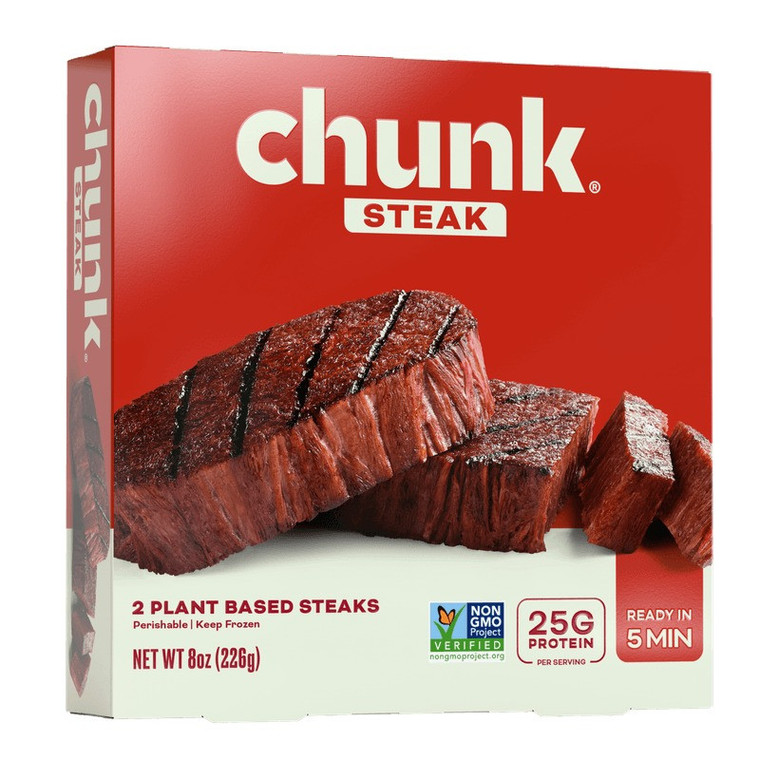
Chunk Foods set out to make a plant-based steak that behaves like steak on the grill — same sear, same char, same bite — built from eight ingredients instead of the long lists of gums, isolates, and starches common in a lot of plant-based meat.
Each 8-ounce package holds two individually portioned steaks made from cultured soy protein and wheat gluten, bound with coconut oil and colored naturally with beet juice concentrate rather than an artificial dye. Iron bisglycinate and cyanocobalamin (vitamin B12) are added back in, since those are two nutrients a soy-based diet has to work harder to get from food alone. No artificial flavors, colors, or preservatives anywhere on the label.
At 25 grams of protein per serving, this steak delivers a protein count in line with a similar-sized serving of beef — built from cultured soy protein and wheat gluten instead of animal muscle tissue.
It cooks fast: about five minutes on a grill or in a hot pan, basted the same way you'd baste a strip steak. Slice it thin for fajitas, layer it into a steak sandwich, or serve it whole with a pan sauce — anywhere a recipe calls for beef, this drops in.
Vegan, Non-GMO Project Verified, and keto-compatible, this frozen meat substitute is kept frozen until you're ready to cook — thaw it in the refrigerator, or cook straight from frozen with a few extra minutes on the heat.
Ingredients: Water, Cultured Soy Protein (Defatted Soy Flour, Soy Protein Isolate, Wheat Gluten), Coconut Oil, Natural Flavors, Beet Juice Concentrate (For Color), Salt, Iron Bisglycinate (Iron), and Cyanocobalamin (Vitamin B12).
Common Questions
How does the protein and fat profile compare to an actual beef steak?
This product delivers 25 grams of protein per serving, which lines up closely with a 3-ounce cooked beef sirloin, typically in the 24 to 26 gram range according to USDA data. The fat sources differ completely, though: beef fat is a mix of saturated and monounsaturated fats naturally marbled into the muscle, while this steak's fat comes from added coconut oil, which is mostly saturated fat in the form of medium-chain triglycerides. There's no cholesterol here, since cholesterol only occurs in animal tissue, whereas a beef steak of the same size carries roughly 70 to 90 milligrams. Calorie counts land in a similar range to a lean beef cut once you factor in the coconut oil, but the fatty acid composition is not interchangeable — this is not a grass-fed versus grain-finished comparison, since no animal is involved.
Why does this product need added iron and B12 if it's plant-based?
Soy protein contains iron, but it's non-heme iron, which the body absorbs at a lower rate than the heme iron found in animal muscle — typically 2 to 10 percent absorption for non-heme versus 15 to 35 percent for heme iron. To close that gap, this steak uses iron bisglycinate, a chelated form of iron bonded to the amino acid glycine, which research shows absorbs more efficiently and causes less GI irritation than standard iron salts like ferrous sulfate. Vitamin B12 doesn't exist in any plant food naturally — it's produced by bacteria, not plants — so it's added here as cyanocobalamin, a stable, well-studied synthetic form of B12 that converts to the active form in the body. Both additions exist specifically because a soy-and-wheat-gluten base doesn't supply either nutrient on its own.
Does this fit a keto, paleo, or carnivore diet?
It's formulated to be keto-compatible: at 25 grams of protein per serving with minimal carbohydrate from the soy and wheat gluten base, it fits within standard keto macros without disrupting ketosis for most people. It does not fit paleo or carnivore protocols, though, since both of those diets exclude soy, wheat gluten, and any processed plant protein isolate by definition — paleo restricts grains and legumes, and carnivore restricts all plant foods. It's also not suitable for anyone avoiding gluten, since wheat gluten is a primary structural ingredient, not a trace allergen. If your protocol is strictly keto without a paleo or grain restriction, the macros work; if it also excludes soy or wheat, this isn't the right fit.
What dishes work best with this steak, and does the cooking method change?
It's built to behave like a beef strip steak on direct heat: about five minutes on a hot grill or in a pan, basted the same way you'd baste a conventional steak, gets you a sear and char on the outside. Slice it thin across the grain for fajitas or a steak sandwich, or serve it whole with a pan sauce spooned over the top, the same way you'd finish a beef steak. Cooking straight from frozen works, but add a few extra minutes on the heat to make sure the center is fully warmed through, since there's no need to worry about food-safety doneness temperatures the way you would with animal protein — you're heating for texture and flavor, not to hit an internal temperature target.
What does Non-GMO Project Verified actually confirm about this product?
Non-GMO Project Verified means an independent third party tested the soy and wheat ingredients against a 0.9 percent threshold for genetically modified content, rather than relying on the manufacturer's own claim. Given that the base ingredients are soy protein and wheat gluten — two crops where GMO varieties are common in the conventional market — this verification specifically confirms the soy sourcing wasn't genetically modified. It also carries kosher certification, which confirms the ingredients and production process were reviewed against kosher dietary standards. Neither certification makes claims about farming practices, pesticide use, or where the soy and wheat were grown — the ingredient label itself is the most complete record of what's in the product.
Why only eight ingredients, and what's left out compared to typical plant-based steaks?
Many plant-based meat products rely on a longer list of methylcellulose, various gums, starches, and multiple protein isolates to build texture and hold moisture during cooking. This steak uses water, cultured soy protein (defatted soy flour, soy protein isolate, wheat gluten), coconut oil, natural flavors, beet juice concentrate, salt, iron bisglycinate, and cyanocobalamin — eight components total, with the soy protein and gluten doing double duty as both the protein source and the binding structure. Beet juice concentrate replaces artificial red or brown dyes for color, and there are no preservatives on the label, which is part of why it's kept frozen rather than shelf-stable. The shorter list doesn't change the nutrition math, but it does mean fewer functional additives are doing the work of texture and moisture retention.
Is this suitable for someone with a soy or wheat allergy?
No — soy and wheat gluten are the two primary structural ingredients, not minor additives, so this product is not appropriate for anyone with a soy allergy, wheat allergy, or celiac disease. The protein isolate, defatted soy flour, and wheat gluten together make up the base that gives the steak its bite and hold-together texture when seared, so there's no substitution that removes them while keeping the product intact. Anyone managing a soy or gluten intolerance should treat this the same way they'd treat seitan or tofu-based products and avoid it entirely rather than assuming a plant-based label means allergen-free.