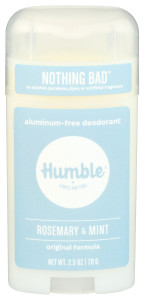
Mountain Lavender Deodorant - 2.5 oz
The Humble Co
$9.99
Below are the available bulk discount rates for each individual item when you purchase a certain amount
- Buy 2 - 2 and get 2% off
- Buy 3 - 5 and get 4% off
- Buy 6 or above and get 10% off
(No reviews yet)

Write a Review

The Humble Co
Mountain Lavender Deodorant - 2.5 oz
Seven ingredients are printed on this label, and every one of them is a name you can look up: baking soda, corn starch, beeswax, an MCT oil base, and lavender flower oil — with its two aromatic components, linalool and d-limonene, disclosed separately as international fragrance-allergen labeling requires. There's no aluminum salt working to block sweat ducts here; instead, sodium bicarbonate goes to work on the bacteria that cause odor in the first place.
- Formulated as a deodorant, not an antiperspirant — it neutralizes odor rather than stopping perspiration, so sweat glands keep functioning as they normally would.
- The full ingredient list stays short enough to read in one breath, and lavender oil's naturally occurring aromatic compounds are called out by name rather than folded into an undisclosed fragrance blend.
- Cruelty-Free certified, and backed by Humble's membership in 1% for the Planet, which commits a share of sales to environmental causes.
Mountain Lavender Deodorant, a natural deodorant free of aluminum, comes down to seven named ingredients, each doing a distinct job: baking soda neutralizing odor-causing bacteria at the source, corn starch pulling in moisture, beeswax and a caprylic/capric triglyceride (MCT) base giving the balm its glide, and lavender flower oil carrying the scent. Linalool and d-limonene — naturally occurring aromatic compounds within that lavender oil — are listed separately, as international fragrance-allergen disclosure practice requires.
Each tube holds 2.5 oz and is formulated as an aluminum-free deodorant, without the aluminum compounds antiperspirants rely on to physically block sweat ducts. This is a deodorant in the traditional sense: it manages odor rather than stopping perspiration, so sweat glands keep functioning normally.
Apply to clean, dry underarms after showering. Because there's no aluminum sealing pores, some people notice a short adjustment period — often a week or two — when switching over from a conventional antiperspirant as skin recalibrates.
Humble Brands carries Cruelty-Free certification and is a member of 1% for the Planet, contributing a percentage of sales to environmental nonprofits. Beeswax in the formula means this specific product is not vegan, though it remains free of animal testing. Store at room temperature away from direct sunlight; no refrigeration required. The manufacturer does not publish a country of origin for this formula, so no specific sourcing region is stated here.
Ingredients: Caprylic/Capric Triglyceride (MCT), Zea Mays (Corn) Starch**, Sodium Bicarbonate (Baking Soda), Cera Alba (Beeswax), Lavandula Officinalis (Lavender) Flower Oil, Linalool*, and D-Limonene*.
Common Questions
How does this compare to a conventional antiperspirant in terms of ingredients and what it actually does?
A typical antiperspirant stick contains 15-25% aluminum-based compounds, usually aluminum zirconium tetrachlorohydrex gly, which dissolve into a gel that physically plugs sweat ducts to stop perspiration. This formula has zero aluminum and instead relies on seven ingredients, led by sodium bicarbonate, to neutralize odor after sweat reaches the skin. The practical difference is that you will still sweat normally with this product, while an antiperspirant reduces sweat output by up to 20-30% in the treated area. If your main concern is wetness rather than smell, this isn't designed to solve that; if it's odor control without pore-blocking chemistry, that's exactly its job.
What is baking soda actually doing to control odor, mechanically speaking?
Body odor comes from bacteria on the skin metabolizing sweat compounds into shorter-chain fatty and sulfur-containing acids, which is what you smell. Sodium bicarbonate raises the local pH of the underarm surface, and most odor-producing bacteria (like Corynebacterium and Staphylococcus species) grow best in the mildly acidic range these acids create, so a higher pH slows their activity. It's a neutralization mechanism rather than an antimicrobial kill mechanism, which is why the effect is described as odor management rather than sterilization. Corn starch works alongside it by physically absorbing moisture, which reduces the damp environment bacteria need to proliferate in the first place.
Why does switching to this cause a rough patch for the first week or two?
When you stop using an aluminum-based antiperspirant, sweat ducts that were mechanically blocked reopen and glands resume their normal output, which some people experience as sudden dampness or a stronger initial odor as skin bacteria adjust to an unobstructed environment. This isn't a reaction to the new product itself but a return to baseline physiology after the pore-blocking effect wears off. Most people report this transition period lasts roughly seven to fourteen days before things stabilize. Applying to clean, dry skin and giving it a full daily cycle before judging effectiveness gives the fairest comparison.
Is this vegan, and what does the beeswax actually contribute?
No — cera alba, or beeswax, is an animal-derived ingredient, so this specific formula is not vegan even though the brand holds no animal testing anywhere in its production. Beeswax is included for texture: combined with the caprylic/capric triglyceride (MCT) base, it gives the balm its solid-but-glidable consistency and helps it adhere evenly to skin rather than sitting as a loose powder. If a strictly vegan formula matters to you, this particular scent and formula wouldn't qualify, though the brand's other cruelty-free claims are unaffected by that distinction.
What do the Cruelty-Free and 1% for the Planet certifications actually verify?
Cruelty-Free certification confirms that neither the finished product nor its individual ingredients were tested on animals at any stage, which is typically verified through third-party audits of supplier documentation rather than the brand's own claims. 1% for the Planet membership means the company commits at least 1% of annual sales revenue to vetted environmental nonprofits, and membership is publicly listed and auditable through the organization's own member directory. Neither certification speaks to the vegan status of a formula, which is why beeswax can still appear in a cruelty-free product. Anyone can independently confirm both by searching the respective certifying organizations' public databases.
Why are linalool and d-limonene listed separately when they're already part of the lavender oil?
Linalool and d-limonene are naturally occurring aromatic compounds found within lavender flower oil itself, not separate additives blended in afterward. International fragrance-allergen disclosure rules, including EU cosmetic regulation, require that certain compounds known to cause skin sensitivity in a small percentage of users be called out by name whenever they're present above a minimal threshold, even if their only source is a single essential oil. This is a transparency requirement rather than an indication of added synthetic fragrance. If you have a known sensitivity to either compound, this labeling is what lets you check before applying, rather than being buried under the single listing 'lavender oil.'
Each tube holds 2.5 oz and is formulated as an aluminum-free deodorant, without the aluminum compounds antiperspirants rely on to physically block sweat ducts. This is a deodorant in the traditional sense: it manages odor rather than stopping perspiration, so sweat glands keep functioning normally.
Apply to clean, dry underarms after showering. Because there's no aluminum sealing pores, some people notice a short adjustment period — often a week or two — when switching over from a conventional antiperspirant as skin recalibrates.
Humble Brands carries Cruelty-Free certification and is a member of 1% for the Planet, contributing a percentage of sales to environmental nonprofits. Beeswax in the formula means this specific product is not vegan, though it remains free of animal testing. Store at room temperature away from direct sunlight; no refrigeration required. The manufacturer does not publish a country of origin for this formula, so no specific sourcing region is stated here.
Ingredients: Caprylic/Capric Triglyceride (MCT), Zea Mays (Corn) Starch**, Sodium Bicarbonate (Baking Soda), Cera Alba (Beeswax), Lavandula Officinalis (Lavender) Flower Oil, Linalool*, and D-Limonene*.
Common Questions
How does this compare to a conventional antiperspirant in terms of ingredients and what it actually does?
A typical antiperspirant stick contains 15-25% aluminum-based compounds, usually aluminum zirconium tetrachlorohydrex gly, which dissolve into a gel that physically plugs sweat ducts to stop perspiration. This formula has zero aluminum and instead relies on seven ingredients, led by sodium bicarbonate, to neutralize odor after sweat reaches the skin. The practical difference is that you will still sweat normally with this product, while an antiperspirant reduces sweat output by up to 20-30% in the treated area. If your main concern is wetness rather than smell, this isn't designed to solve that; if it's odor control without pore-blocking chemistry, that's exactly its job.
What is baking soda actually doing to control odor, mechanically speaking?
Body odor comes from bacteria on the skin metabolizing sweat compounds into shorter-chain fatty and sulfur-containing acids, which is what you smell. Sodium bicarbonate raises the local pH of the underarm surface, and most odor-producing bacteria (like Corynebacterium and Staphylococcus species) grow best in the mildly acidic range these acids create, so a higher pH slows their activity. It's a neutralization mechanism rather than an antimicrobial kill mechanism, which is why the effect is described as odor management rather than sterilization. Corn starch works alongside it by physically absorbing moisture, which reduces the damp environment bacteria need to proliferate in the first place.
Why does switching to this cause a rough patch for the first week or two?
When you stop using an aluminum-based antiperspirant, sweat ducts that were mechanically blocked reopen and glands resume their normal output, which some people experience as sudden dampness or a stronger initial odor as skin bacteria adjust to an unobstructed environment. This isn't a reaction to the new product itself but a return to baseline physiology after the pore-blocking effect wears off. Most people report this transition period lasts roughly seven to fourteen days before things stabilize. Applying to clean, dry skin and giving it a full daily cycle before judging effectiveness gives the fairest comparison.
Is this vegan, and what does the beeswax actually contribute?
No — cera alba, or beeswax, is an animal-derived ingredient, so this specific formula is not vegan even though the brand holds no animal testing anywhere in its production. Beeswax is included for texture: combined with the caprylic/capric triglyceride (MCT) base, it gives the balm its solid-but-glidable consistency and helps it adhere evenly to skin rather than sitting as a loose powder. If a strictly vegan formula matters to you, this particular scent and formula wouldn't qualify, though the brand's other cruelty-free claims are unaffected by that distinction.
What do the Cruelty-Free and 1% for the Planet certifications actually verify?
Cruelty-Free certification confirms that neither the finished product nor its individual ingredients were tested on animals at any stage, which is typically verified through third-party audits of supplier documentation rather than the brand's own claims. 1% for the Planet membership means the company commits at least 1% of annual sales revenue to vetted environmental nonprofits, and membership is publicly listed and auditable through the organization's own member directory. Neither certification speaks to the vegan status of a formula, which is why beeswax can still appear in a cruelty-free product. Anyone can independently confirm both by searching the respective certifying organizations' public databases.
Why are linalool and d-limonene listed separately when they're already part of the lavender oil?
Linalool and d-limonene are naturally occurring aromatic compounds found within lavender flower oil itself, not separate additives blended in afterward. International fragrance-allergen disclosure rules, including EU cosmetic regulation, require that certain compounds known to cause skin sensitivity in a small percentage of users be called out by name whenever they're present above a minimal threshold, even if their only source is a single essential oil. This is a transparency requirement rather than an indication of added synthetic fragrance. If you have a known sensitivity to either compound, this labeling is what lets you check before applying, rather than being buried under the single listing 'lavender oil.'
- __Storage_Location:
- Dry
- __Volume:
- 142
- __Owner:
- TCFarm
- __badge:
- Cruelty-Free
Related Products
-
-
-
-
Sale