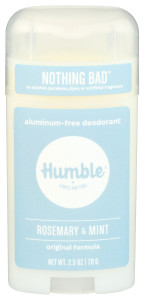
Mountain Lavender BSoda Free Deodorant - 2.5 oz
The Humble Co
$8.99
Below are the available bulk discount rates for each individual item when you purchase a certain amount
- Buy 2 - 2 and get 2% off
- Buy 3 - 5 and get 4% off
- Buy 6 or above and get 10% off
(No reviews yet)

Write a Review

The Humble Co
Mountain Lavender BSoda Free Deodorant - 2.5 oz
Humble Brands built this Mountain Lavender deodorant without baking soda — the ingredient responsible for the redness, itching, and razor-burn flare-ups that send so many "natural" deodorant users running back to antiperspirant. In its place: magnesium hydroxide, a mineral that neutralizes odor at the source instead of masking it, paired with a lavender scent built from real essential-oil aromatics rather than an undisclosed synthetic fragrance blend.
- Formulated for daily underarm use on sensitive, recently-shaved, or reactive skin that can't tolerate baking-soda formulas.
- Magnesium hydroxide replaces both baking soda and aluminum as the odor-fighting active, while candelilla wax stands in for beeswax as the plant-based texture base.
- Vegan-formulated and Cruelty Free certified, from a company that's a registered 1% for the Planet member.
Humble Brands' Mountain Lavender aluminum-free deodorant swaps the two most irritating ingredients found in natural deodorant — baking soda and aluminum — for a single mineral: magnesium hydroxide. It's actually more alkaline than baking soda, but its low solubility means it releases into the skin more gradually, so it works to neutralize odor-causing bacteria without the underarm burn that shows up a few days into switching from an antiperspirant, making it a gentle choice for sensitive skin.
Candelilla wax, a plant-derived alternative to beeswax, gives the balm its glide and hold, while corn starch helps absorb excess moisture through the day. The lavender fragrance is disclosed down to its individual aromatic compounds — linalool, limonene, coumarin, and geraniol — the naturally occurring components regulators require brands to name individually once they cross a concentration threshold in a fragrance blend, rather than hiding them behind the single word "fragrance."
Apply to clean, dry underarms the same way you would any stick or cream deodorant. Because there's no aluminum blocking sweat glands, expect it to manage odor rather than stop perspiration entirely — the tradeoff every aluminum-free deodorant makes in exchange for letting skin function normally.
The formula is vegan and Cruelty Free certified, and the company directs 1% of sales to environmental nonprofits through 1% for the Planet. Store at room temperature away from direct heat, as with any wax-based deodorant balm.
Ingredients: Caprylic/Capric Triglyceride (MCT), Zea Mays (Corn) Starch**, Magnesium Hydroxide, Euphorbia Cerifera (Candelilla) Wax, Fragrance*, Linalool*, Limonene*, Coumarin*, and Geraniol*.
Common Questions
How does this compare to a conventional aluminum antiperspirant in terms of what it actually does?
A conventional antiperspirant uses aluminum zirconium or aluminum chlorohydrate compounds, which dissolve in sweat and form a temporary gel plug in the sweat duct, cutting perspiration by roughly 20-30% in that area. This deodorant contains no aluminum, so it does not block sweat glands at all — you will still perspire normally. Instead, magnesium hydroxide raises the pH of the underarm surface enough to make it less hospitable to the bacteria that metabolize sweat into odor-causing compounds. The tradeoff is straightforward: you get odor control without duct-blocking, at the cost of not reducing wetness the way an antiperspirant does.
Why does magnesium hydroxide work as an odor control agent?
Body odor is produced by bacteria, mainly Staphylococcus and Corynebacterium species, breaking down proteins and lipids in sweat into short-chain fatty acids and thioalcohols, which is what you actually smell. Magnesium hydroxide is a mild alkaline mineral, similar to the active ingredient in milk of magnesia, that raises the skin's surface pH slightly above the range where these odor-producing bacteria thrive. It does this at a gentler pH curve than sodium bicarbonate (baking soda), which is why it doesn't strip or irritate skin the way baking soda-based natural deodorants often do after a few days of use.
Is this safe for sensitive skin, and will it cause the irritation baking soda deodorants are known for?
Most reports of underarm irritation, redness, or rash from natural deodorants trace back to baking soda's relatively high pH (around 8.3), which can disrupt the skin's naturally slightly acidic barrier with repeated daily contact. This formula replaces baking soda entirely with magnesium hydroxide, which sits at a lower, gentler pH while still providing antibacterial action. That said, the formula does contain a fragrance blend with linalool, limonene, coumarin, and geraniol, naturally occurring aromatic compounds that are common contact allergens in a small percentage of the population, so anyone with a known fragrance sensitivity should patch test on the inner forearm first.
How do I switch from an antiperspirant to this without dealing with the usual detox period?
Apply it to clean, dry underarms just as you would a standard stick or cream deodorant, ideally after showering when skin is free of antiperspirant residue. Because magnesium hydroxide doesn't rely on stripping oils or forcing a skin pH shift the way baking soda formulas do, most people don't experience the days-long burning or breakout period associated with switching off aluminum. You may notice more underarm wetness than you're used to since sweat glands are no longer blocked, which is expected and not a sign the product isn't working. Reapplying once midday is common for people who previously relied on antiperspirant's sweat-blocking effect.
What do the Cruelty Free and 1% for the Planet certifications actually verify?
The Cruelty Free certification confirms the finished product and its ingredients were not tested on animals at any stage of development, verified through third-party audit rather than the brand's own claim. 1% for the Planet membership means the company has committed, and reports annually, to donating 1% of total sales revenue to vetted environmental nonprofits, a model with public accountability since member companies are listed on the organization's website with their giving records. Neither certification speaks to ingredient sourcing or manufacturing location, but both require ongoing compliance rather than a one-time application to maintain the badge.
Why does the ingredient list break the fragrance down into individual compounds instead of just saying fragrance?
Regulations in several markets, including the EU's cosmetics regulation, require that certain naturally occurring aromatic compounds be individually disclosed on the label once they exceed a set concentration threshold within a fragrance blend, specifically because they're known potential contact allergens for a subset of users. Linalool, limonene, coumarin, and geraniol are all compounds that occur naturally in lavender essential oil and many other plants, not synthetic additives layered on top. Listing them separately from the umbrella term fragrance gives anyone with a diagnosed fragrance allergy the specific information needed to check against their own allergen list before use, which most conventional deodorants that only list fragrance don't provide.
Will this leave white marks or stains on clothing the way some natural deodorants do?
Corn starch and candelilla wax, the two ingredients responsible for texture and moisture absorption here, are both low-residue compared to the heavier oil bases used in some balm-style natural deodorants. Candelilla wax provides glide and hold without the greasy transfer associated with coconut oil-heavy formulas, and because there's no aluminum salt crystallizing on fabric the way antiperspirant residue does, yellow underarm staining on white shirts is less of a concern. Some users still notice minor white cast on dark fabrics if applied heavily and not given a minute to absorb before dressing, so allowing it to dry fully after application is worth doing.
Candelilla wax, a plant-derived alternative to beeswax, gives the balm its glide and hold, while corn starch helps absorb excess moisture through the day. The lavender fragrance is disclosed down to its individual aromatic compounds — linalool, limonene, coumarin, and geraniol — the naturally occurring components regulators require brands to name individually once they cross a concentration threshold in a fragrance blend, rather than hiding them behind the single word "fragrance."
Apply to clean, dry underarms the same way you would any stick or cream deodorant. Because there's no aluminum blocking sweat glands, expect it to manage odor rather than stop perspiration entirely — the tradeoff every aluminum-free deodorant makes in exchange for letting skin function normally.
The formula is vegan and Cruelty Free certified, and the company directs 1% of sales to environmental nonprofits through 1% for the Planet. Store at room temperature away from direct heat, as with any wax-based deodorant balm.
Ingredients: Caprylic/Capric Triglyceride (MCT), Zea Mays (Corn) Starch**, Magnesium Hydroxide, Euphorbia Cerifera (Candelilla) Wax, Fragrance*, Linalool*, Limonene*, Coumarin*, and Geraniol*.
Common Questions
How does this compare to a conventional aluminum antiperspirant in terms of what it actually does?
A conventional antiperspirant uses aluminum zirconium or aluminum chlorohydrate compounds, which dissolve in sweat and form a temporary gel plug in the sweat duct, cutting perspiration by roughly 20-30% in that area. This deodorant contains no aluminum, so it does not block sweat glands at all — you will still perspire normally. Instead, magnesium hydroxide raises the pH of the underarm surface enough to make it less hospitable to the bacteria that metabolize sweat into odor-causing compounds. The tradeoff is straightforward: you get odor control without duct-blocking, at the cost of not reducing wetness the way an antiperspirant does.
Why does magnesium hydroxide work as an odor control agent?
Body odor is produced by bacteria, mainly Staphylococcus and Corynebacterium species, breaking down proteins and lipids in sweat into short-chain fatty acids and thioalcohols, which is what you actually smell. Magnesium hydroxide is a mild alkaline mineral, similar to the active ingredient in milk of magnesia, that raises the skin's surface pH slightly above the range where these odor-producing bacteria thrive. It does this at a gentler pH curve than sodium bicarbonate (baking soda), which is why it doesn't strip or irritate skin the way baking soda-based natural deodorants often do after a few days of use.
Is this safe for sensitive skin, and will it cause the irritation baking soda deodorants are known for?
Most reports of underarm irritation, redness, or rash from natural deodorants trace back to baking soda's relatively high pH (around 8.3), which can disrupt the skin's naturally slightly acidic barrier with repeated daily contact. This formula replaces baking soda entirely with magnesium hydroxide, which sits at a lower, gentler pH while still providing antibacterial action. That said, the formula does contain a fragrance blend with linalool, limonene, coumarin, and geraniol, naturally occurring aromatic compounds that are common contact allergens in a small percentage of the population, so anyone with a known fragrance sensitivity should patch test on the inner forearm first.
How do I switch from an antiperspirant to this without dealing with the usual detox period?
Apply it to clean, dry underarms just as you would a standard stick or cream deodorant, ideally after showering when skin is free of antiperspirant residue. Because magnesium hydroxide doesn't rely on stripping oils or forcing a skin pH shift the way baking soda formulas do, most people don't experience the days-long burning or breakout period associated with switching off aluminum. You may notice more underarm wetness than you're used to since sweat glands are no longer blocked, which is expected and not a sign the product isn't working. Reapplying once midday is common for people who previously relied on antiperspirant's sweat-blocking effect.
What do the Cruelty Free and 1% for the Planet certifications actually verify?
The Cruelty Free certification confirms the finished product and its ingredients were not tested on animals at any stage of development, verified through third-party audit rather than the brand's own claim. 1% for the Planet membership means the company has committed, and reports annually, to donating 1% of total sales revenue to vetted environmental nonprofits, a model with public accountability since member companies are listed on the organization's website with their giving records. Neither certification speaks to ingredient sourcing or manufacturing location, but both require ongoing compliance rather than a one-time application to maintain the badge.
Why does the ingredient list break the fragrance down into individual compounds instead of just saying fragrance?
Regulations in several markets, including the EU's cosmetics regulation, require that certain naturally occurring aromatic compounds be individually disclosed on the label once they exceed a set concentration threshold within a fragrance blend, specifically because they're known potential contact allergens for a subset of users. Linalool, limonene, coumarin, and geraniol are all compounds that occur naturally in lavender essential oil and many other plants, not synthetic additives layered on top. Listing them separately from the umbrella term fragrance gives anyone with a diagnosed fragrance allergy the specific information needed to check against their own allergen list before use, which most conventional deodorants that only list fragrance don't provide.
Will this leave white marks or stains on clothing the way some natural deodorants do?
Corn starch and candelilla wax, the two ingredients responsible for texture and moisture absorption here, are both low-residue compared to the heavier oil bases used in some balm-style natural deodorants. Candelilla wax provides glide and hold without the greasy transfer associated with coconut oil-heavy formulas, and because there's no aluminum salt crystallizing on fabric the way antiperspirant residue does, yellow underarm staining on white shirts is less of a concern. Some users still notice minor white cast on dark fabrics if applied heavily and not given a minute to absorb before dressing, so allowing it to dry fully after application is worth doing.
- __Storage_Location:
- Dry
- __Volume:
- 142
- __Owner:
- TCFarm
- __badge:
- Baking Soda Free
Related Products
-
-
-
-
Sale