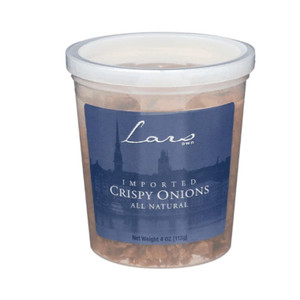
Crispy Fried Onions - 6 oz
Cadia
$5.29
Below are the available bulk discount rates for each individual item when you purchase a certain amount
- Buy 2 - 5 and get 2% off
- Buy 6 - 11 and get 4% off
- Buy 12 or above and get 8% off
Five straightforward, organic ingredients go into every batch of these onions — sliced, coated, and fried until they shatter into a crunch that holds up on a casserole, a salad, or a burger for hours, not minutes. Cadia is sold exclusively through independent neighborhood grocers, so the bag on your cart isn't just topping dinner — it's keeping a local retailer competitive with the chain store down the street.
- Crumble over green bean casserole, scatter onto salads and grain bowls, or pile onto burgers and sandwiches for a crunch that doesn't go soft.
- Made with organic onions, organic palm oil, and organic wheat and rice flour — non-GMO ingredients grown without synthetic pesticides or fertilizers.
- Kosher-certified and made without meat or dairy, a plant-based topping that fits vegetarian tables.
Cadia's Organic Crispy Fried Onions are built for the moment a dish needs texture — the last handful that turns a soft casserole or a green salad into something with bite.
Each 6 oz bag is organic front to back: organic onions sliced thin, organic palm oil for the fry, organic wheat and rice flour for the coating, and salt to finish. No filler starches, no flavor-enhancer blends, no ingredients you can't picture in a kitchen. The bag is sized for real cooking — enough for a full 9x13 casserole with extra left over for topping salads through the week.
Fold them into a green bean casserole straight from the bag, toast a handful over a warm grain bowl, or use them as the finishing crunch on a burger or a bowl of chili. Because they're fried and cooled before packing, they hold their crunch without needing to go back in the oven.
Vegetarian-friendly and kosher-certified, they're a straightforward pantry staple for anyone building a meal from organic, non-GMO ingredients. Because the coating includes organic wheat and rice flour, they're not suited for keto, paleo, or grain-free diets, though they fit easily into a vegetarian or plant-based kitchen. Store in a cool, dry pantry and reseal the bag tightly after opening to keep the crunch intact.
Ingredients: Organic Onions, Organic Palm Oil, Organic Wheat Flour, Organic Rice Flour, and Salt.
Common Questions
How does Cadia's organic version compare to conventional fried onions like French's or a store-brand canister?
The main differences are in the oil and the sourcing, not the basic process. Conventional fried onion toppings are typically fried in cottonseed or soybean oil and made from conventionally grown onions and wheat flour, sometimes with added dextrose or preservatives like BHT or TBHQ to extend shelf life. Cadia's version uses organic palm oil for frying and organic onions, wheat flour, and rice flour with no preservatives added, relying on the fry-and-cool process itself for shelf stability. Calorie and fat counts land in a similar range across brands, generally 35-45 calories and 2-3 grams of fat per 2-tablespoon serving, since both are thin-sliced onion strands fried in oil. The real distinction is that every ingredient here is certified organic and there's no synthetic antioxidant added to the ingredient list.
What happens to the onion's natural compounds during frying, and does it lose nutritional value?
Raw onions are rich in organosulfur compounds like allicin-related precursors and quercetin, a flavonoid linked to antioxidant activity, but high-heat frying breaks down a meaningful portion of both. The Maillard reaction that browns the onion and creates the savory, slightly sweet fried flavor also degrades some of the sulfur compounds responsible for onion's pungency and part of its antioxidant profile. What's left is mostly a fiber-light, carbohydrate-and-fat snack food rather than a significant source of onion's raw nutritional benefits. This product should be thought of as a texture and flavor ingredient, not a vehicle for onion's nutritional density.
Does this fit a keto, paleo, or carnivore diet?
No, on all three counts, mainly because of the wheat and rice flour coating. A typical 2-tablespoon serving carries roughly 4 grams of carbohydrate with less than a gram of fiber, which adds up quickly if used generously on a keto plate with a daily carb budget under 20-25 grams net. Paleo protocols generally exclude grain flours entirely, and rice flour and wheat flour both fall outside that framework regardless of organic status. Carnivore is a non-starter since the product is plant-based and grain-coated. It works fine within a general low-carb or Mediterranean-style eating pattern, just not the stricter grain-free protocols.
What dishes work best with these, and do I need to adjust cooking method?
Green bean casserole is the classic use, stirred in during the last few minutes of baking or scattered on top before the final oven pass so they warm through without softening. They also work well as a raw-from-the-bag topping on salads, grain bowls, baked potatoes, chili, and burgers, where no additional cooking is needed since they're already fried and cooled. If using them in a hot dish like a casserole or soup, add them at the very end of cooking rather than at the start, since extended time in liquid or high heat will make them go soft and lose the crunch that's the whole point of the product. They're not meant to be re-fried or roasted from scratch, since that step has already been done in production.
What do the organic, non-GMO, and kosher certifications actually verify?
USDA Organic certification means the onions, palm oil, wheat flour, and rice flour were all grown without synthetic pesticides or fertilizers and the finished product was processed according to USDA organic handling rules, verified by an accredited third-party certifying agent through annual inspections. Non-GMO status here is essentially built into the organic certification, since USDA organic standards already prohibit genetically modified ingredients, so a separate Non-GMO Project seal isn't required for the claim to be credible. Kosher certification confirms the product and its production facility were inspected by a recognized kosher certifying agency and meet kosher dietary standards, which for a vegetarian, dairy-free product mainly concerns shared equipment and facility practices. You can verify current certification status through the USDA organic integrity database using the brand and certifier listed on the package.
Why do these stay crispy in the bag without refrigeration or reheating?
The crunch comes from moisture removal during frying, not from any added preservative. Frying at high heat drives most of the water out of the thin-sliced onion, and the product is fully cooled before packing so no residual steam or condensation gets trapped inside the sealed bag. As long as the bag is resealed tightly after opening and kept in a cool, dry pantry, the low moisture content keeps the onions shelf-stable and crisp for months without refrigeration. The main enemy of texture here is humidity, not time, so a damp kitchen or a loosely closed bag will soften them faster than age alone would.
Each 6 oz bag is organic front to back: organic onions sliced thin, organic palm oil for the fry, organic wheat and rice flour for the coating, and salt to finish. No filler starches, no flavor-enhancer blends, no ingredients you can't picture in a kitchen. The bag is sized for real cooking — enough for a full 9x13 casserole with extra left over for topping salads through the week.
Fold them into a green bean casserole straight from the bag, toast a handful over a warm grain bowl, or use them as the finishing crunch on a burger or a bowl of chili. Because they're fried and cooled before packing, they hold their crunch without needing to go back in the oven.
Vegetarian-friendly and kosher-certified, they're a straightforward pantry staple for anyone building a meal from organic, non-GMO ingredients. Because the coating includes organic wheat and rice flour, they're not suited for keto, paleo, or grain-free diets, though they fit easily into a vegetarian or plant-based kitchen. Store in a cool, dry pantry and reseal the bag tightly after opening to keep the crunch intact.
Ingredients: Organic Onions, Organic Palm Oil, Organic Wheat Flour, Organic Rice Flour, and Salt.
Common Questions
How does Cadia's organic version compare to conventional fried onions like French's or a store-brand canister?
The main differences are in the oil and the sourcing, not the basic process. Conventional fried onion toppings are typically fried in cottonseed or soybean oil and made from conventionally grown onions and wheat flour, sometimes with added dextrose or preservatives like BHT or TBHQ to extend shelf life. Cadia's version uses organic palm oil for frying and organic onions, wheat flour, and rice flour with no preservatives added, relying on the fry-and-cool process itself for shelf stability. Calorie and fat counts land in a similar range across brands, generally 35-45 calories and 2-3 grams of fat per 2-tablespoon serving, since both are thin-sliced onion strands fried in oil. The real distinction is that every ingredient here is certified organic and there's no synthetic antioxidant added to the ingredient list.
What happens to the onion's natural compounds during frying, and does it lose nutritional value?
Raw onions are rich in organosulfur compounds like allicin-related precursors and quercetin, a flavonoid linked to antioxidant activity, but high-heat frying breaks down a meaningful portion of both. The Maillard reaction that browns the onion and creates the savory, slightly sweet fried flavor also degrades some of the sulfur compounds responsible for onion's pungency and part of its antioxidant profile. What's left is mostly a fiber-light, carbohydrate-and-fat snack food rather than a significant source of onion's raw nutritional benefits. This product should be thought of as a texture and flavor ingredient, not a vehicle for onion's nutritional density.
Does this fit a keto, paleo, or carnivore diet?
No, on all three counts, mainly because of the wheat and rice flour coating. A typical 2-tablespoon serving carries roughly 4 grams of carbohydrate with less than a gram of fiber, which adds up quickly if used generously on a keto plate with a daily carb budget under 20-25 grams net. Paleo protocols generally exclude grain flours entirely, and rice flour and wheat flour both fall outside that framework regardless of organic status. Carnivore is a non-starter since the product is plant-based and grain-coated. It works fine within a general low-carb or Mediterranean-style eating pattern, just not the stricter grain-free protocols.
What dishes work best with these, and do I need to adjust cooking method?
Green bean casserole is the classic use, stirred in during the last few minutes of baking or scattered on top before the final oven pass so they warm through without softening. They also work well as a raw-from-the-bag topping on salads, grain bowls, baked potatoes, chili, and burgers, where no additional cooking is needed since they're already fried and cooled. If using them in a hot dish like a casserole or soup, add them at the very end of cooking rather than at the start, since extended time in liquid or high heat will make them go soft and lose the crunch that's the whole point of the product. They're not meant to be re-fried or roasted from scratch, since that step has already been done in production.
What do the organic, non-GMO, and kosher certifications actually verify?
USDA Organic certification means the onions, palm oil, wheat flour, and rice flour were all grown without synthetic pesticides or fertilizers and the finished product was processed according to USDA organic handling rules, verified by an accredited third-party certifying agent through annual inspections. Non-GMO status here is essentially built into the organic certification, since USDA organic standards already prohibit genetically modified ingredients, so a separate Non-GMO Project seal isn't required for the claim to be credible. Kosher certification confirms the product and its production facility were inspected by a recognized kosher certifying agency and meet kosher dietary standards, which for a vegetarian, dairy-free product mainly concerns shared equipment and facility practices. You can verify current certification status through the USDA organic integrity database using the brand and certifier listed on the package.
Why do these stay crispy in the bag without refrigeration or reheating?
The crunch comes from moisture removal during frying, not from any added preservative. Frying at high heat drives most of the water out of the thin-sliced onion, and the product is fully cooled before packing so no residual steam or condensation gets trapped inside the sealed bag. As long as the bag is resealed tightly after opening and kept in a cool, dry pantry, the low moisture content keeps the onions shelf-stable and crisp for months without refrigeration. The main enemy of texture here is humidity, not time, so a damp kitchen or a loosely closed bag will soften them faster than age alone would.
- __Storage_Location:
- Dry
- __Volume:
- 400
- __Owner:
- TCFarm
- __badge:
- Organic