


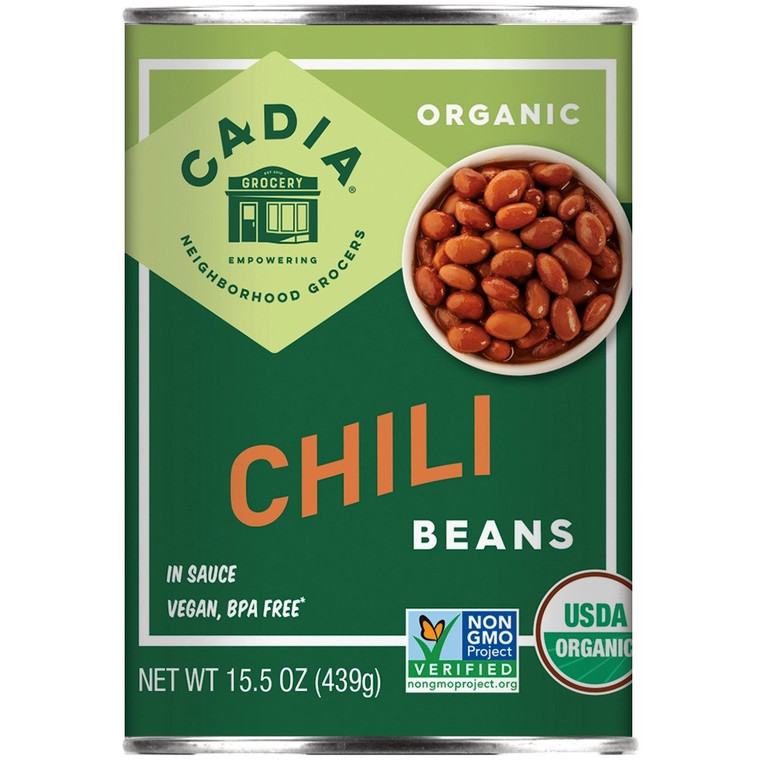
Chili Beans - 15.5 oz
Cadia
$2.29
Below are the available bulk discount rates for each individual item when you purchase a certain amount
- Buy 2 - 5 and get 2% off
- Buy 6 - 11 and get 4% off
- Buy 12 or above and get 8% off
(No reviews yet)

Write a Review
Cadia
Chili Beans - 15.5 oz
Cadia's Organic Chili Beans pair tender pinto beans with a chili-spiced tomato base built from organic tomato paste and organic chili powder seasoned with real garlic — no shortcuts, no fillers, just a straightforward pantry staple made possible because Cadia sells exclusively at independent neighborhood grocers, keeping clean-label food affordable without the big-box markup.
- Ready to simmer into chili, stir into soups and stews, or toss cold into grain and taco salads for a fast plant-based protein boost
- Certified organic and made with non-GMO ingredients and sustainably sourced pinto beans — no synthetic pesticides or fertilizers anywhere in the growing process
- Vegan-friendly and free of animal products, with a short, recognizable ingredient list you can read in one breath
Cadia's Organic Chili Beans take tender, organic pinto beans and simmer them in a chili-spiced tomato base — organic tomato paste, organic chili powder (seasoned with organic garlic), and sea salt — so the heat builds slowly instead of overwhelming the bean's natural texture.
Each 15.5 oz can holds beans that stay firm rather than mushy, giving you a base that holds its shape in chili, stews, and bean salads instead of dissolving into the pot. The chili powder itself is a small blend of organic spices, sea salt, and organic garlic — not a single generic spice-mix filler.
Because Cadia is sold exclusively through independent neighborhood grocers, every can carries USDA Organic certification and non-GMO ingredients at a price built for weekly cooking, not just special occasions — no premium markup for the same clean label big chains charge more for. These beans are also certified Kosher and naturally vegan, fitting easily into plant-based meal plans, though their carbohydrate content means they're not suited for keto or strict paleo diets.
Spoon them straight into a pot with diced tomatoes and ground meat or a plant-based crumble for a quick weeknight chili, layer them into burrito bowls, or fold them cold into a corn and pepper salad. Store unopened cans in a cool, dry pantry; refrigerate leftovers in a sealed container once opened.
Ingredients: Prepared Organic Pinto Beans, Water, Organic Tomato Paste, Organic Chili Powder (Organic Spices, Sea Salt, Organic Garlic), Sea Salt, and Organic Canola Oil.
Common Questions
How do these compare nutritionally to a standard can of conventional chili beans?
A typical 1/2-cup serving of canned pinto beans in chili sauce runs about 110-130 calories, 20-24 grams of carbohydrate, 6-7 grams of fiber, and 6-7 grams of protein, and that base holds whether the can is organic or conventional since pinto beans themselves don't change nutritionally under organic farming. The real difference shows up in the ingredient list: Cadia uses organic tomato paste and organic canola oil instead of the modified corn starch, dextrose, or calcium chloride firming agents that appear in many conventional store brands to keep beans from breaking down on the shelf. Sodium here comes only from sea salt in the beans and the chili powder blend, so you're not getting the added disodium EDTA or artificial color some conventional chili bean lines use to keep the tomato base looking bright. The macro profile is essentially identical between organic and conventional versions; what you're paying for is a shorter, recognizable ingredient list rather than a different nutrient breakdown.
What makes pinto beans a legitimate protein and fiber source, not just a filler?
Pinto beans carry a meaningful amount of resistant starch and soluble fiber, both of which slow glucose absorption in the small intestine and feed short-chain fatty acid production in the colon via bacterial fermentation - the mechanism behind their reputation for supporting stable blood sugar and gut health. At roughly 6-7 grams of protein and 6-7 grams of fiber per half-cup, they deliver a combined protein-fiber punch that keeps you full longer than an equivalent calorie amount of refined carbohydrate would. They're also a source of folate, potassium, and magnesium, three nutrients tied to normal muscle and nerve function. None of this makes them a replacement for animal protein's full amino acid profile, but paired with rice, meat, or a plant-based crumble in chili, the combination rounds out a complete protein meal.
Do these fit keto, paleo, or carnivore eating plans?
No, not in any strict version of those diets. A half-cup serving carries roughly 20-24 grams of net carbohydrate, which alone exceeds the daily carb allowance most keto protocols set at 20-50 grams total, so this product will knock you out of ketosis if you're tracking closely. Paleo and carnivore frameworks exclude legumes entirely regardless of carb count, since the core rule is avoiding beans, grains, and lentils as a food category, not just managing macros. If you're following a lower-carb but not strict-keto approach, pinto beans' fiber content does blunt some of the blood sugar impact compared to an equivalent amount of white rice or bread, but they still count as a moderate-to-high carb food in any macro tracker.
How do I use these to replace or extend meat in a chili or taco recipe?
For a 20-minute weeknight chili, brown one pound of ground beef, turkey, or a plant-based crumble, then stir in two cans of these beans along with diced tomatoes and simmer 10-15 minutes so the chili powder blend has time to distribute through the sauce. To cut meat cost or fat without losing texture, replace up to half the ground meat volume with drained beans and add an extra teaspoon of cumin or smoked paprika to compensate for the flavor you're diluting. For tacos or burrito bowls, mash a portion of the beans with a fork while leaving the rest whole to create a thicker binding layer that holds toppings better than meat alone. They also work cold, folded into a corn and pepper salad, without any cooking adaptation needed since they arrive fully cooked and tender.
What does the USDA Organic seal on this can actually guarantee?
USDA Organic certification means the pinto beans, tomato paste, chili powder spices, and canola were grown without synthetic pesticides, synthetic fertilizers, or genetically modified seed, and that the finished product was verified by a USDA-accredited certifying agent through annual inspection of the supply chain. It also caps synthetic additives allowed in processing to a short approved list, which is why you see sea salt and organic canola oil doing the preservation and texture work here instead of calcium chloride or EDTA. Non-GMO status is effectively guaranteed by organic certification itself, since GMO seed is prohibited under the USDA organic rule, so a separate Non-GMO Project seal is somewhat redundant on a certified organic product, though Cadia carries the claim anyway for shoppers who look for it specifically. You can verify any USDA Organic claim by checking the certifying agent's name, usually printed near the seal, against the USDA's public accredited certifying agent database.
Why do these beans hold their shape instead of turning mushy in chili?
The beans are cooked in a two-stage process before canning: first hydrated and simmered to full tenderness, then finished briefly in the tomato-chili base so the skin sets before the can is sealed and retorted for shelf stability. This sequencing matters because beans that are fully cooked in an acidic tomato sauce from the start tend to break down faster, since the acid interferes with pectin breakdown timing in the cell wall - cooking the bean to tenderness first, then introducing the acidic sauce, locks in structure before the acid has a chance to soften it further. That's why you can simmer these another 15-20 minutes in a pot of chili without them turning to paste, and why they hold up in a cold bean salad where you want distinct, intact beans rather than a mashed texture.
Each 15.5 oz can holds beans that stay firm rather than mushy, giving you a base that holds its shape in chili, stews, and bean salads instead of dissolving into the pot. The chili powder itself is a small blend of organic spices, sea salt, and organic garlic — not a single generic spice-mix filler.
Because Cadia is sold exclusively through independent neighborhood grocers, every can carries USDA Organic certification and non-GMO ingredients at a price built for weekly cooking, not just special occasions — no premium markup for the same clean label big chains charge more for. These beans are also certified Kosher and naturally vegan, fitting easily into plant-based meal plans, though their carbohydrate content means they're not suited for keto or strict paleo diets.
Spoon them straight into a pot with diced tomatoes and ground meat or a plant-based crumble for a quick weeknight chili, layer them into burrito bowls, or fold them cold into a corn and pepper salad. Store unopened cans in a cool, dry pantry; refrigerate leftovers in a sealed container once opened.
Ingredients: Prepared Organic Pinto Beans, Water, Organic Tomato Paste, Organic Chili Powder (Organic Spices, Sea Salt, Organic Garlic), Sea Salt, and Organic Canola Oil.
Common Questions
How do these compare nutritionally to a standard can of conventional chili beans?
A typical 1/2-cup serving of canned pinto beans in chili sauce runs about 110-130 calories, 20-24 grams of carbohydrate, 6-7 grams of fiber, and 6-7 grams of protein, and that base holds whether the can is organic or conventional since pinto beans themselves don't change nutritionally under organic farming. The real difference shows up in the ingredient list: Cadia uses organic tomato paste and organic canola oil instead of the modified corn starch, dextrose, or calcium chloride firming agents that appear in many conventional store brands to keep beans from breaking down on the shelf. Sodium here comes only from sea salt in the beans and the chili powder blend, so you're not getting the added disodium EDTA or artificial color some conventional chili bean lines use to keep the tomato base looking bright. The macro profile is essentially identical between organic and conventional versions; what you're paying for is a shorter, recognizable ingredient list rather than a different nutrient breakdown.
What makes pinto beans a legitimate protein and fiber source, not just a filler?
Pinto beans carry a meaningful amount of resistant starch and soluble fiber, both of which slow glucose absorption in the small intestine and feed short-chain fatty acid production in the colon via bacterial fermentation - the mechanism behind their reputation for supporting stable blood sugar and gut health. At roughly 6-7 grams of protein and 6-7 grams of fiber per half-cup, they deliver a combined protein-fiber punch that keeps you full longer than an equivalent calorie amount of refined carbohydrate would. They're also a source of folate, potassium, and magnesium, three nutrients tied to normal muscle and nerve function. None of this makes them a replacement for animal protein's full amino acid profile, but paired with rice, meat, or a plant-based crumble in chili, the combination rounds out a complete protein meal.
Do these fit keto, paleo, or carnivore eating plans?
No, not in any strict version of those diets. A half-cup serving carries roughly 20-24 grams of net carbohydrate, which alone exceeds the daily carb allowance most keto protocols set at 20-50 grams total, so this product will knock you out of ketosis if you're tracking closely. Paleo and carnivore frameworks exclude legumes entirely regardless of carb count, since the core rule is avoiding beans, grains, and lentils as a food category, not just managing macros. If you're following a lower-carb but not strict-keto approach, pinto beans' fiber content does blunt some of the blood sugar impact compared to an equivalent amount of white rice or bread, but they still count as a moderate-to-high carb food in any macro tracker.
How do I use these to replace or extend meat in a chili or taco recipe?
For a 20-minute weeknight chili, brown one pound of ground beef, turkey, or a plant-based crumble, then stir in two cans of these beans along with diced tomatoes and simmer 10-15 minutes so the chili powder blend has time to distribute through the sauce. To cut meat cost or fat without losing texture, replace up to half the ground meat volume with drained beans and add an extra teaspoon of cumin or smoked paprika to compensate for the flavor you're diluting. For tacos or burrito bowls, mash a portion of the beans with a fork while leaving the rest whole to create a thicker binding layer that holds toppings better than meat alone. They also work cold, folded into a corn and pepper salad, without any cooking adaptation needed since they arrive fully cooked and tender.
What does the USDA Organic seal on this can actually guarantee?
USDA Organic certification means the pinto beans, tomato paste, chili powder spices, and canola were grown without synthetic pesticides, synthetic fertilizers, or genetically modified seed, and that the finished product was verified by a USDA-accredited certifying agent through annual inspection of the supply chain. It also caps synthetic additives allowed in processing to a short approved list, which is why you see sea salt and organic canola oil doing the preservation and texture work here instead of calcium chloride or EDTA. Non-GMO status is effectively guaranteed by organic certification itself, since GMO seed is prohibited under the USDA organic rule, so a separate Non-GMO Project seal is somewhat redundant on a certified organic product, though Cadia carries the claim anyway for shoppers who look for it specifically. You can verify any USDA Organic claim by checking the certifying agent's name, usually printed near the seal, against the USDA's public accredited certifying agent database.
Why do these beans hold their shape instead of turning mushy in chili?
The beans are cooked in a two-stage process before canning: first hydrated and simmered to full tenderness, then finished briefly in the tomato-chili base so the skin sets before the can is sealed and retorted for shelf stability. This sequencing matters because beans that are fully cooked in an acidic tomato sauce from the start tend to break down faster, since the acid interferes with pectin breakdown timing in the cell wall - cooking the bean to tenderness first, then introducing the acidic sauce, locks in structure before the acid has a chance to soften it further. That's why you can simmer these another 15-20 minutes in a pot of chili without them turning to paste, and why they hold up in a cold bean salad where you want distinct, intact beans rather than a mashed texture.
- __Storage_Location:
- Dry
- __Volume:
- 619
- __Owner:
- TCFarm
- __badge:
- Organic
Related Products
-
-
Sale
-
-
Sale


