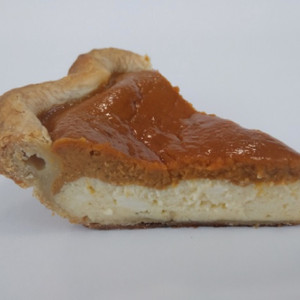
Caramel Pecan Cheesecake - avg 2.5lb
Ben The Baker
$38.00
(No reviews yet)

Write a Review

Ben The Baker
Caramel Pecan Cheesecake - avg 2.5lb
My crew and I bake this cheesecake to exactly 150°F internal temperature — the precise point where a New York-style cheesecake sets into that dense, creamy texture without ever turning dry or gummy. It starts in a graham cracker crust we press by hand, gets finished with sea salt caramel we cook ourselves, and is topped with pecans we toast in-house. Every piece of it comes out of our bakery in White Bear Lake, Minnesota.
- Arrives fully baked and frozen — thaw it in the refrigerator overnight or on the counter for a few hours, then slice and serve. No oven, no baking at home.
- Baked to a verified 150°F internal temperature for a texture that's fully set but never dense, then topped with homemade sea salt caramel and toasted pecans — not a jarred topping.
- Made by hand by a small crew of bakers in one bakery, not stamped out on a factory line — the crust, filling, caramel, and pecan topping all come from the same kitchen.
This is a classic New York-style cheesecake, baked low and slow to exactly 150°F internal temperature — the number that guarantees it's fully set but still gives a little when you cut into it, not firm and rubbery the way an overbaked cheesecake turns out. My crew and I make every part of it ourselves in our bakery in White Bear Lake, Minnesota: the graham cracker crust, the cheesecake filling, the sea salt caramel, and the toasted pecans on top.
The crust is graham crackers, sugar, and real butter, pressed into the pan by hand. The filling is cream cheese, eggs, sour cream, heavy cream, and real vanilla extract — nothing you can't picture in your own kitchen. We cook the sea salt caramel ourselves and toast the pecans in-house rather than buying either premade, so what ends up on top is caramel that came out of a pot in our kitchen, not out of a jug. Because it's built on a graham cracker crust with real sugar and dairy, this is a traditional indulgence rather than a keto, paleo, or carnivore-friendly dessert.
It arrives fully baked and frozen, so there's no baking required at home — thaw it in the refrigerator overnight, or set it on the counter for a few hours, then slice and serve. Let it sit at room temperature for a softer, fuller-flavored bite, or serve it straight from the fridge if you prefer it firmer.
Keep it frozen until you're ready to thaw it. Once thawed, treat it like any fresh cheesecake — keep it refrigerated, covered, and enjoy it within a few days.
Ingredients: Cream Cheese (Pasteurized Milk And Cream, Cheese Culture, Salt, Stabilizers (Carob Bean And/Or Xanthan And/Or Guar Gums)), Sugar, Eggs, Graham Crackers (Unbleached Enriched Flour (Wheat Flour, Niacin, Reduced Iron, Thiamine Mononitrate, Riboflavin, Folic Acid), Graham Flour (Whole Grain Wheat Flour), Sugar, Canola Oil, Honey, Leavening (Baking Soda And/Or Calcium Phosphate), Salt, Soy Lecithin, Artificial Flavor), Unsalted Butter (Pasteurized Cream, Natural Flavoring), Heavy Cream (Cream, Gellan Gum), Pecans, Sour Cream (Cultured Cream), Egg Yolks, Water, Vanilla Extract (Vanilla Bean Extractives In Water, Alcohol), Lemon Juice, Himalayan Sea Salt, and Cream Of Tartar.
Common Questions
How does this cheesecake compare to a typical grocery-store cheesecake?
Most mass-produced cheesecakes use a crust made with shortening or palm oil blends because they're cheaper and have a longer shelf life than butter. This one uses a graham cracker crust made with real unsalted butter (pasteurized cream and natural flavoring), pressed into the pan by hand rather than machine-pressed. The caramel on top is cooked from scratch in a pot rather than poured from a prepared jug, and the pecans are toasted in-house instead of purchased pre-roasted. The tradeoff is that this cheesecake arrives frozen and needs thawing, while a grocery-store version is usually sold already thawed and ready to eat.
Why does the recipe call for baking to exactly 150°F internal temperature?
150°F is the point at which the egg proteins in the filling have coagulated enough to hold the cheesecake's structure without curdling or weeping liquid. Cheesecakes baked past this point continue to firm up as the proteins tighten further, which is what produces the dense, rubbery texture associated with overbaked cheesecake. Pulling it at 150°F means the center is fully set but still has a slight give when sliced. This is a temperature target, not a time target, which is why an oven thermometer or probe thermometer matters more than a fixed bake time.
Is this cheesecake suitable for keto, paleo, or carnivore diets?
No. The crust is made from graham crackers, which contain wheat flour and sugar, and the caramel topping is a cooked sugar preparation, so this dessert does not fit keto, paleo, or carnivore eating patterns, all of which restrict added sugar and grain flour. The filling itself — cream cheese, eggs, sour cream, heavy cream — is closer to what those diets allow, but the crust and caramel put the whole product outside those carbohydrate limits. If you're tracking net carbs strictly, this isn't the right dessert for that goal.
Can I use this cheesecake as a base for other desserts, or adjust the topping?
Because the caramel and pecans are baked and set onto the top of the cheesecake before it's frozen, they can't be removed or swapped out at home the way you might with a plain cheesecake. What you can do is repurpose slices — crumbled into a trifle, layered into a parfait with fresh whipped cream, or blended into a milkshake base once thawed. If you want a plain cheesecake to build your own toppings on, this isn't that product; it's meant to be served as-is once thawed, sliced straight from the fridge or after sitting at room temperature.
What does the '100% butter crust' claim actually mean, and how can I verify it?
It means the crust recipe uses real unsalted butter — listed in the ingredients as pasteurized cream and natural flavoring — with no shortening, margarine, or palm oil substitutes anywhere in the formula. There's no third-party certification behind this claim; it's a statement about the recipe itself, which you can confirm by reading the ingredient list, where butter appears and shortening does not. The cheesecake, crust, caramel, and toasted pecans are all made by hand in the bakery's kitchen in White Bear Lake, Minnesota, by Ben's small crew of bakers rather than sourced pre-made from a supplier.
Why does using real butter instead of shortening in the crust matter?
Butter is roughly 80% fat and 20% water and milk solids, while shortening is nearly 100% fat with no milk solids and no water. Those milk solids in butter are what brown and caramelize in the oven, contributing real flavor to the crust that shortening — which is flavorless by design — can't replicate. Butter also has a lower melting point, around 90–95°F, which is part of why a butter crust has a more tender, short texture instead of the stiffer, waxier bite you get from a shortening-based crust. The tradeoff is that butter crusts are more finicky to work with by hand, which is part of why this crust is pressed into the pan manually rather than machine-formed.
What allergens are in this cheesecake?
Based on the ingredient list, this product contains milk (cream cheese, heavy cream, sour cream, butter), wheat (graham crackers), eggs, tree nuts (pecans), and soy (soy lecithin in the graham crackers). There are no certified allergen-free, gluten-free, or organic claims associated with this product — the ingredient list above is the full and only source for allergen information, and it should be checked directly if you have a specific allergy concern.
Ingredients — Classic (All-Butter / Regular Crust): Cream Cheese (pasteurized milk and cream, cheese culture, salt, stabilizers (carob bean and/or xanthan and/or guar gums), Sugar, Eggs, Graham Crackers (unbleached enriched flour (wheat flour, niacin, reduced iron, thiamine mononitrate, riboflavin, folic acid), graham flour (whole grain wheat flour), sugar, canola oil, honey, leavening (baking soda and/or calcium phosphate), salt, soy lecithin, artificial flavor), Unsalted Butter (pasteurized cream, natural flavoring), Heavy Cream (cream, gellan gum), Pecans, Sour Cream (cultured cream), Egg Yolks, Water, Vanilla Extract (vanilla bean extractives in water, alcohol), Lemon Juice, Himalayan Sea Salt, Cream of Tartar.
Ingredients — Gluten Free: Cream Cheese (pasteurized milk and cream, cheese culture, salt, stabilizers (carob bean and/or xanthan and/or guar gums), Sugar, Eggs, Gluten Free Graham Crackers(pea starch, non- hydrogenated shortening (palm oil and/or canola oil), potato starch, brown rice flour, brown sugar, sweet rice flour, tapioca starch, water, rice bran, sugar, blackstrap molasses, honey, glucose, salt, sodium bicarbonate, pea protein, vanilla extract, modified cellulose, pea fiber, guar gum, inulin, soy lecithin, mono sodium phosphate), Unsalted Butter (pasteurized cream, natural flavoring), Heavy Cream (cream, gellan gum), Pecans, Sour Cream (cultured cream), Egg Yolks, Water, Vanilla Extract (vanilla bean extractives in water, alcohol), Lemon Juice, Himalayan Sea Salt, Cream of Tartar.
The crust is graham crackers, sugar, and real butter, pressed into the pan by hand. The filling is cream cheese, eggs, sour cream, heavy cream, and real vanilla extract — nothing you can't picture in your own kitchen. We cook the sea salt caramel ourselves and toast the pecans in-house rather than buying either premade, so what ends up on top is caramel that came out of a pot in our kitchen, not out of a jug. Because it's built on a graham cracker crust with real sugar and dairy, this is a traditional indulgence rather than a keto, paleo, or carnivore-friendly dessert.
It arrives fully baked and frozen, so there's no baking required at home — thaw it in the refrigerator overnight, or set it on the counter for a few hours, then slice and serve. Let it sit at room temperature for a softer, fuller-flavored bite, or serve it straight from the fridge if you prefer it firmer.
Keep it frozen until you're ready to thaw it. Once thawed, treat it like any fresh cheesecake — keep it refrigerated, covered, and enjoy it within a few days.
Ingredients: Cream Cheese (Pasteurized Milk And Cream, Cheese Culture, Salt, Stabilizers (Carob Bean And/Or Xanthan And/Or Guar Gums)), Sugar, Eggs, Graham Crackers (Unbleached Enriched Flour (Wheat Flour, Niacin, Reduced Iron, Thiamine Mononitrate, Riboflavin, Folic Acid), Graham Flour (Whole Grain Wheat Flour), Sugar, Canola Oil, Honey, Leavening (Baking Soda And/Or Calcium Phosphate), Salt, Soy Lecithin, Artificial Flavor), Unsalted Butter (Pasteurized Cream, Natural Flavoring), Heavy Cream (Cream, Gellan Gum), Pecans, Sour Cream (Cultured Cream), Egg Yolks, Water, Vanilla Extract (Vanilla Bean Extractives In Water, Alcohol), Lemon Juice, Himalayan Sea Salt, and Cream Of Tartar.
Common Questions
How does this cheesecake compare to a typical grocery-store cheesecake?
Most mass-produced cheesecakes use a crust made with shortening or palm oil blends because they're cheaper and have a longer shelf life than butter. This one uses a graham cracker crust made with real unsalted butter (pasteurized cream and natural flavoring), pressed into the pan by hand rather than machine-pressed. The caramel on top is cooked from scratch in a pot rather than poured from a prepared jug, and the pecans are toasted in-house instead of purchased pre-roasted. The tradeoff is that this cheesecake arrives frozen and needs thawing, while a grocery-store version is usually sold already thawed and ready to eat.
Why does the recipe call for baking to exactly 150°F internal temperature?
150°F is the point at which the egg proteins in the filling have coagulated enough to hold the cheesecake's structure without curdling or weeping liquid. Cheesecakes baked past this point continue to firm up as the proteins tighten further, which is what produces the dense, rubbery texture associated with overbaked cheesecake. Pulling it at 150°F means the center is fully set but still has a slight give when sliced. This is a temperature target, not a time target, which is why an oven thermometer or probe thermometer matters more than a fixed bake time.
Is this cheesecake suitable for keto, paleo, or carnivore diets?
No. The crust is made from graham crackers, which contain wheat flour and sugar, and the caramel topping is a cooked sugar preparation, so this dessert does not fit keto, paleo, or carnivore eating patterns, all of which restrict added sugar and grain flour. The filling itself — cream cheese, eggs, sour cream, heavy cream — is closer to what those diets allow, but the crust and caramel put the whole product outside those carbohydrate limits. If you're tracking net carbs strictly, this isn't the right dessert for that goal.
Can I use this cheesecake as a base for other desserts, or adjust the topping?
Because the caramel and pecans are baked and set onto the top of the cheesecake before it's frozen, they can't be removed or swapped out at home the way you might with a plain cheesecake. What you can do is repurpose slices — crumbled into a trifle, layered into a parfait with fresh whipped cream, or blended into a milkshake base once thawed. If you want a plain cheesecake to build your own toppings on, this isn't that product; it's meant to be served as-is once thawed, sliced straight from the fridge or after sitting at room temperature.
What does the '100% butter crust' claim actually mean, and how can I verify it?
It means the crust recipe uses real unsalted butter — listed in the ingredients as pasteurized cream and natural flavoring — with no shortening, margarine, or palm oil substitutes anywhere in the formula. There's no third-party certification behind this claim; it's a statement about the recipe itself, which you can confirm by reading the ingredient list, where butter appears and shortening does not. The cheesecake, crust, caramel, and toasted pecans are all made by hand in the bakery's kitchen in White Bear Lake, Minnesota, by Ben's small crew of bakers rather than sourced pre-made from a supplier.
Why does using real butter instead of shortening in the crust matter?
Butter is roughly 80% fat and 20% water and milk solids, while shortening is nearly 100% fat with no milk solids and no water. Those milk solids in butter are what brown and caramelize in the oven, contributing real flavor to the crust that shortening — which is flavorless by design — can't replicate. Butter also has a lower melting point, around 90–95°F, which is part of why a butter crust has a more tender, short texture instead of the stiffer, waxier bite you get from a shortening-based crust. The tradeoff is that butter crusts are more finicky to work with by hand, which is part of why this crust is pressed into the pan manually rather than machine-formed.
What allergens are in this cheesecake?
Based on the ingredient list, this product contains milk (cream cheese, heavy cream, sour cream, butter), wheat (graham crackers), eggs, tree nuts (pecans), and soy (soy lecithin in the graham crackers). There are no certified allergen-free, gluten-free, or organic claims associated with this product — the ingredient list above is the full and only source for allergen information, and it should be checked directly if you have a specific allergy concern.
Ingredients — Classic (All-Butter / Regular Crust): Cream Cheese (pasteurized milk and cream, cheese culture, salt, stabilizers (carob bean and/or xanthan and/or guar gums), Sugar, Eggs, Graham Crackers (unbleached enriched flour (wheat flour, niacin, reduced iron, thiamine mononitrate, riboflavin, folic acid), graham flour (whole grain wheat flour), sugar, canola oil, honey, leavening (baking soda and/or calcium phosphate), salt, soy lecithin, artificial flavor), Unsalted Butter (pasteurized cream, natural flavoring), Heavy Cream (cream, gellan gum), Pecans, Sour Cream (cultured cream), Egg Yolks, Water, Vanilla Extract (vanilla bean extractives in water, alcohol), Lemon Juice, Himalayan Sea Salt, Cream of Tartar.
Ingredients — Gluten Free: Cream Cheese (pasteurized milk and cream, cheese culture, salt, stabilizers (carob bean and/or xanthan and/or guar gums), Sugar, Eggs, Gluten Free Graham Crackers(pea starch, non- hydrogenated shortening (palm oil and/or canola oil), potato starch, brown rice flour, brown sugar, sweet rice flour, tapioca starch, water, rice bran, sugar, blackstrap molasses, honey, glucose, salt, sodium bicarbonate, pea protein, vanilla extract, modified cellulose, pea fiber, guar gum, inulin, soy lecithin, mono sodium phosphate), Unsalted Butter (pasteurized cream, natural flavoring), Heavy Cream (cream, gellan gum), Pecans, Sour Cream (cultured cream), Egg Yolks, Water, Vanilla Extract (vanilla bean extractives in water, alcohol), Lemon Juice, Himalayan Sea Salt, Cream of Tartar.
- __Storage_Location:
- FrozenICE
- __Volume:
- 25000
- __Owner:
- Ben The Baker