Vanilla Bean Coconut Milk Ice Cream - 14 fl oz
Cosmic Bliss
$8.49
Below are the available bulk discount rates for each individual item when you purchase a certain amount
- Buy 2 - 3 and get 2% off
- Buy 4 - 7 and get 4% off
- Buy 8 or above and get 8% off
(No reviews yet)

Write a Review
Cosmic Bliss
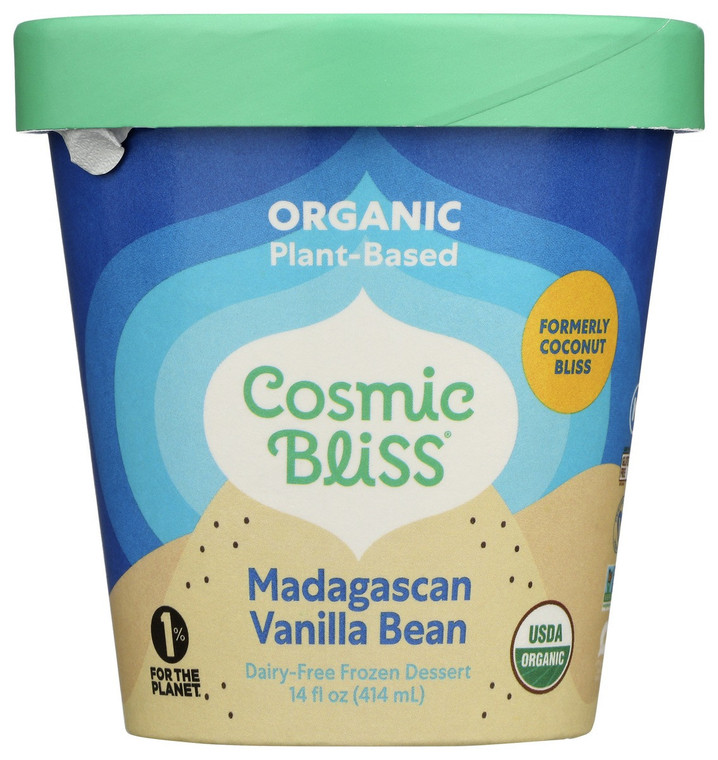
Vanilla Bean Coconut Milk Ice Cream - 14 fl oz
Cosmic Bliss builds this Vanilla Bean Coconut Milk Ice Cream entirely from whole coconut — coconut milk, coconut cream, and coconut syrup stand in for dairy — then folds in real Madagascar vanilla beans so you see actual flecks in the scoop, not just extract. The brand carries USDA Organic certification and got its start in 2005 as Coconut Bliss, long before dairy-free desserts crowded the freezer aisle.
- A cold-scoop dessert for anyone skipping dairy who still wants a rich, vanilla-bean-flecked scoop rather than an icy substitute.
- Built from five certified-organic ingredients with coconut cream carrying the richness and a touch of guar gum for scoopable texture — no dairy, no eggs, no stabilizer blends.
- Vegan, gluten-free, and kosher, with nothing from soy or dairy anywhere on the ingredient list.
Cosmic Bliss crafts this organic, dairy-free ice cream by treating coconut the way most brands treat cream: as the base, not an afterthought. Coconut milk, coconut cream, and coconut syrup build the body, while real vanilla extract and scraped vanilla beans carry the flavor — the visible black specks are vanilla bean, not an additive.
Every ingredient in this pint carries organic certification, and the brand backs that with Non-GMO, Kosher, and Vegan certification as well. There's no gum blend beyond a small amount of organic guar gum for scoopability, no egg yolks, and no dairy solids of any kind — this is a coconut-milk ice cream from the ground up, not a dairy formula with substitutions swapped in.
Serve it straight from the carton for a clean vanilla bean scoop, or use it as the base for a dairy-free affogato, a fruit crumble a la mode, or a milkshake blended with frozen banana.
Suitable for vegan, gluten-free, and kosher diets. Keep frozen and let sit a few minutes at room temperature before scooping for the smoothest texture.
Ingredients: Coconut Milk (Water, Coconut, Guar Gum), Coconut Syrup, Coconut Cream, Vanilla Extract, and Vanilla Beans.
Common Questions
How does this compare nutritionally to a conventional dairy vanilla ice cream?
Coconut-cream ice creams like this one typically run 140 to 160 calories and 9 to 11 grams of fat per two-thirds cup, with 8 to 9 grams of that as saturated fat from coconut rather than dairy fat. A conventional full-dairy vanilla runs similar total fat but pulls it from milkfat and often adds egg yolk for richness, plus 2 to 3 grams of protein versus roughly 1 gram here since there's no milk protein in the base. Sugar content lands close between the two, generally 12 to 14 grams per serving, because both rely on added sweetener rather than lactose for sweetness. The real difference is the fat source and the total absence of cholesterol and lactose, not the calorie count.
What does the coconut fat actually do here, mechanistically, compared to dairy fat?
Coconut cream and coconut milk are roughly 20 to 24 percent fat by weight, and a large share of that fat is medium-chain triglycerides (MCTs) like lauric and caprylic acid, which have a lower melting point and crystallize differently than the long-chain triglycerides in dairy butterfat. That's part of why coconut-based ice cream can feel creamy without any milkfat or emulsified egg yolk in the formula. The guar gum, derived from guar bean and used in small quantity, works as a soluble fiber that binds water and slows ice crystal formation during freezing, which is the main scoopability lever in a formula this short. There's no gum blend stacking multiple stabilizers, so guar gum is doing that single job on its own.
Does this fit keto, paleo, or carnivore eating patterns?
It does not fit carnivore, since it's 100 percent plant-based with zero animal product. For keto, it's a mismatch too: with 12 to 14 grams of sugar per two-thirds cup coming primarily from coconut syrup, a single serving can eat up a meaningful share of a 20-25 gram daily net carb budget, and there's no sugar-alcohol or allulose swap here to soften that. Paleo is the closest fit — it's dairy-free, egg-free, grain-free, and built from whole coconut components plus vanilla, with guar gum as the only ingredient some strict paleo followers debate. If carb count matters to your protocol, treat this as an occasional treat rather than a routine dessert.
Can I use this in recipes that call for dairy ice cream, and does anything need adjusting?
Yes, it swaps in at a 1:1 ratio for dairy vanilla in most applications — affogato, pie a la mode, milkshakes, and ice cream sandwiches all work directly. The one adjustment worth knowing: coconut fat has a lower melting point than dairy butterfat, so it softens and melts faster at room temperature, which matters for anything plated ahead of time like a crumble topping that needs to hold its shape for a photo or a buffet line. For blended drinks like a banana milkshake, you may need slightly less added liquid since the coconut base is already softer once it starts to melt. Baked applications like ice cream cake layers benefit from an extra 10-15 minutes in the freezer before assembly to compensate for that faster melt.
How can I verify the organic and non-GMO claims are real and not just marketing?
Every ingredient in the pint carries organic certification from a third-party organic certifying body, which means the coconut, vanilla, and guar gum all trace back to certified organic farms and processors audited under USDA organic standards, not just the finished product. The Non-GMO Project verification is a separate, additional certification with its own testing and supply-chain audit process — a product can be organic without carrying this mark, so its presence here means the brand paid for a second layer of scrutiny. Kosher certification means a rabbinical agency inspected the production line and ingredient sourcing directly. You can look up the specific certifying body's registration number, usually printed on the carton, to confirm it against that certifier's public database.
Why build this on coconut instead of oat, almond, or soy milk like most other dairy-free ice creams?
Coconut milk and cream naturally run 20+ percent fat, while oat, almond, and soy milk bases typically sit at 1 to 3 percent fat before any added oil, which means those formulas usually need supplemental sunflower or canola oil plus a longer stabilizer list to fake a creamy mouthfeel. Building from coconut milk, coconut meat, coconut cream, and coconut syrup means the fat needed for texture is already present in the base ingredients themselves, which is why this formula only needs one gum instead of a blend of three or four. The tradeoff is a mild coconut flavor note in the background, though the vanilla bean and vanilla extract are dosed heavily enough here that it reads as a vanilla bean ice cream, not a coconut-vanilla hybrid.
What are the black specks in the ice cream, and does that mean it's higher quality than vanilla-flavored versions?
The specks are scraped vanilla bean seeds, added alongside vanilla extract rather than as a substitute for it, which is why the ingredient list carries both vanilla extract and vanilla beans as separate line items. This is different from ice creams that use only vanilla flavoring or extract without the bean itself, where any dark flecks would come from added specks powder rather than whole bean. It doesn't change the fat or sugar numbers, but it does mean the vanilla flavor is coming from two whole-ingredient sources rather than a single extract or a synthetic flavoring compound.
Every ingredient in this pint carries organic certification, and the brand backs that with Non-GMO, Kosher, and Vegan certification as well. There's no gum blend beyond a small amount of organic guar gum for scoopability, no egg yolks, and no dairy solids of any kind — this is a coconut-milk ice cream from the ground up, not a dairy formula with substitutions swapped in.
Serve it straight from the carton for a clean vanilla bean scoop, or use it as the base for a dairy-free affogato, a fruit crumble a la mode, or a milkshake blended with frozen banana.
Suitable for vegan, gluten-free, and kosher diets. Keep frozen and let sit a few minutes at room temperature before scooping for the smoothest texture.
Ingredients: Coconut Milk (Water, Coconut, Guar Gum), Coconut Syrup, Coconut Cream, Vanilla Extract, and Vanilla Beans.
Common Questions
How does this compare nutritionally to a conventional dairy vanilla ice cream?
Coconut-cream ice creams like this one typically run 140 to 160 calories and 9 to 11 grams of fat per two-thirds cup, with 8 to 9 grams of that as saturated fat from coconut rather than dairy fat. A conventional full-dairy vanilla runs similar total fat but pulls it from milkfat and often adds egg yolk for richness, plus 2 to 3 grams of protein versus roughly 1 gram here since there's no milk protein in the base. Sugar content lands close between the two, generally 12 to 14 grams per serving, because both rely on added sweetener rather than lactose for sweetness. The real difference is the fat source and the total absence of cholesterol and lactose, not the calorie count.
What does the coconut fat actually do here, mechanistically, compared to dairy fat?
Coconut cream and coconut milk are roughly 20 to 24 percent fat by weight, and a large share of that fat is medium-chain triglycerides (MCTs) like lauric and caprylic acid, which have a lower melting point and crystallize differently than the long-chain triglycerides in dairy butterfat. That's part of why coconut-based ice cream can feel creamy without any milkfat or emulsified egg yolk in the formula. The guar gum, derived from guar bean and used in small quantity, works as a soluble fiber that binds water and slows ice crystal formation during freezing, which is the main scoopability lever in a formula this short. There's no gum blend stacking multiple stabilizers, so guar gum is doing that single job on its own.
Does this fit keto, paleo, or carnivore eating patterns?
It does not fit carnivore, since it's 100 percent plant-based with zero animal product. For keto, it's a mismatch too: with 12 to 14 grams of sugar per two-thirds cup coming primarily from coconut syrup, a single serving can eat up a meaningful share of a 20-25 gram daily net carb budget, and there's no sugar-alcohol or allulose swap here to soften that. Paleo is the closest fit — it's dairy-free, egg-free, grain-free, and built from whole coconut components plus vanilla, with guar gum as the only ingredient some strict paleo followers debate. If carb count matters to your protocol, treat this as an occasional treat rather than a routine dessert.
Can I use this in recipes that call for dairy ice cream, and does anything need adjusting?
Yes, it swaps in at a 1:1 ratio for dairy vanilla in most applications — affogato, pie a la mode, milkshakes, and ice cream sandwiches all work directly. The one adjustment worth knowing: coconut fat has a lower melting point than dairy butterfat, so it softens and melts faster at room temperature, which matters for anything plated ahead of time like a crumble topping that needs to hold its shape for a photo or a buffet line. For blended drinks like a banana milkshake, you may need slightly less added liquid since the coconut base is already softer once it starts to melt. Baked applications like ice cream cake layers benefit from an extra 10-15 minutes in the freezer before assembly to compensate for that faster melt.
How can I verify the organic and non-GMO claims are real and not just marketing?
Every ingredient in the pint carries organic certification from a third-party organic certifying body, which means the coconut, vanilla, and guar gum all trace back to certified organic farms and processors audited under USDA organic standards, not just the finished product. The Non-GMO Project verification is a separate, additional certification with its own testing and supply-chain audit process — a product can be organic without carrying this mark, so its presence here means the brand paid for a second layer of scrutiny. Kosher certification means a rabbinical agency inspected the production line and ingredient sourcing directly. You can look up the specific certifying body's registration number, usually printed on the carton, to confirm it against that certifier's public database.
Why build this on coconut instead of oat, almond, or soy milk like most other dairy-free ice creams?
Coconut milk and cream naturally run 20+ percent fat, while oat, almond, and soy milk bases typically sit at 1 to 3 percent fat before any added oil, which means those formulas usually need supplemental sunflower or canola oil plus a longer stabilizer list to fake a creamy mouthfeel. Building from coconut milk, coconut meat, coconut cream, and coconut syrup means the fat needed for texture is already present in the base ingredients themselves, which is why this formula only needs one gum instead of a blend of three or four. The tradeoff is a mild coconut flavor note in the background, though the vanilla bean and vanilla extract are dosed heavily enough here that it reads as a vanilla bean ice cream, not a coconut-vanilla hybrid.
What are the black specks in the ice cream, and does that mean it's higher quality than vanilla-flavored versions?
The specks are scraped vanilla bean seeds, added alongside vanilla extract rather than as a substitute for it, which is why the ingredient list carries both vanilla extract and vanilla beans as separate line items. This is different from ice creams that use only vanilla flavoring or extract without the bean itself, where any dark flecks would come from added specks powder rather than whole bean. It doesn't change the fat or sugar numbers, but it does mean the vanilla flavor is coming from two whole-ingredient sources rather than a single extract or a synthetic flavoring compound.
- __Storage_Location:
- FrozenICE
- __Volume:
- 648
- __Owner:
- TCFarm
- __badge:
- Organic