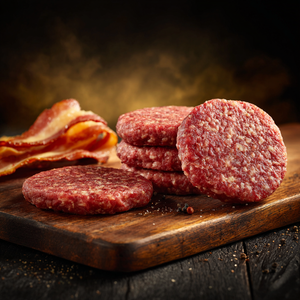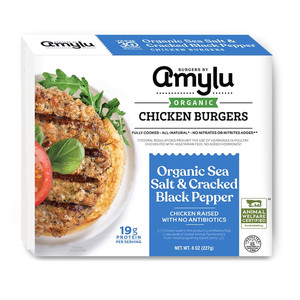

Stack Burger - 20 oz
Beyond Meat
$15.79
Below are the available bulk discount rates for each individual item when you purchase a certain amount
- Buy 2 - 3 and get 2% off
- Buy 4 - 8 and get 4% off
- Buy 9 or above and get 8% off
(No reviews yet)

Write a Review

Beyond Meat
Stack Burger - 20 oz
Built by scientists who set out to answer one question: can a burger patty deliver the protein and the char without the saturated fat load of ground beef? A 2.5 oz Beyond Stack patty carries 3g of saturated fat against 5g in the same-size 80/20 beef patty — a 35% reduction — while still landing 12g of protein per serving. Founder Ethan Brown built the company on a simple premise: take the animal off the table, keep the experience the same.
- Engineered to hold its structure through grilling, stacking, and searing — built for double- and triple-patty builds without falling apart
- Formulated from a pea, rice, and faba bean protein blend with 35% less saturated fat than 80/20 ground beef
- Vegan, kosher, halal, and Non-GMO Project Verified — fits fully plant-based, flexitarian, and mixed households at the same table
Beyond Meat built the Stack Burger, a frozen plant-based meat substitute, to solve a specific problem: plant-based burger patties that lose their shape when you try to stack them for a double or triple burger. This one is engineered to hold together through the grill, the flat-top, or the oven.
Each patty is formed from a pea protein, rice protein, and faba bean protein blend, bound with methylcellulose and colored with a vegetable juice concentrate (beet-derived) rather than synthetic dyes. Expeller-pressed canola oil and refined coconut oil supply the fat structure; pomegranate concentrate, apple extract, and lemon juice concentrate round out the flavor base. Keep the patties frozen until ready to cook.
Per serving: 12g of protein, 10g of total fat, and 3g of saturated fat - compared to 5g of saturated fat in a 2.5 oz raw 80/20 ground beef patty, a 35% reduction. That's the number to look at if you're managing saturated fat intake without giving up a burger night.
Cook it the way you'd cook any patty - cast iron, flat-top, or grill grate, a few minutes per side until it develops a crust. Stack two for a double, add cheese and let it hold, or break it up for tacos and chili where a firm plant-based crumble matters.
Certified Non-GMO Project Verified, kosher, and halal, and suitable for a vegan diet; because it's built on pea, rice, and faba bean proteins rather than animal fat, it's not formulated for strict keto, paleo, or carnivore eating plans. Keep frozen until ready to cook; do not refreeze after thawing.
Ingredients: Water, Pea Protein, Expeller-Pressed Canola Oil, Refined Coconut Oil, Rice Protein, Natural Flavors, 2% Or Less Of Methylcellulose, Potato Protein, Apple Extract, Salt, Pomegranate Concentrate, Vinegar, Lemon Juice Concentrate, Potassium Salt, Dextrose, Spices, Faba Bean Protein, Vitamins And Minerals (Zinc Sulfate, Niacinamide [Vitamin B3], Pyridoxine Hydrochloride [Vitamin B6], Cyanocobalamin [Vitamin B12], Calcium Pantothenate [Vitamin B5]), and Vegetable Juice Color (With Beet).
Common Questions
How does this compare nutritically to a conventional grain-finished beef patty, not just on saturated fat?
A 2.5 oz raw 80/20 ground beef patty runs about 20g total fat, 5g saturated fat, and 12g protein with roughly 1.8mg of iron and no dietary fiber. This patty matches the 12g protein per serving but drops total fat to 10g and saturated fat to 3g, a 35% reduction on the saturated fat side. It also contributes plant fiber from pea, rice, and faba bean protein isolates, which ground beef contains none of. Where beef still wins is B12 bioavailability and heme iron, which is why this product adds cyanocobalamin (B12) and zinc sulfate directly to close that gap.
What does methylcellulose do and is it a health concern?
Methylcellulose is a plant-derived fiber compound extracted from cellulose, and here it works as a binder that gels when heated, which is the mechanism that lets this patty hold its shape through stacking and flipping instead of crumbling like earlier plant-based formulations. It's the same functional ingredient used in many gluten-free baking blends and is not digested or absorbed, so it passes through as insoluble fiber. The FDA classifies it as Generally Recognized As Safe (GRAS), and it makes up 2% or less of the total formula. It has no relationship to synthetic thickeners derived from petroleum, despite sometimes being confused with unrelated industrial cellulose products.
Does this fit a keto, paleo, or carnivore diet?
It does not fit carnivore or strict paleo, since both protocols exclude plant protein isolates, pea starch derivatives, and any non-animal ingredient by definition. For keto, the macros are workable but not ideal: 12g protein, 10g fat, and roughly 3-4g net carbs per patty (mostly from dextrose and potato/faba bean protein carriers), which fits inside a 20g daily net carb allowance if you're tracking closely. The fat-to-protein ratio is lower than a fatty ground beef patty, so keto dieters relying on this as a primary fat source may want to add avocado, cheese, or a fat-based sauce on top. It works better for flexible low-carb or high-protein plans than for strict fat-ratio ketogenic protocols.
What dishes work best with this patty beyond a basic burger?
Because the pea-rice-faba protein blend holds structure under stacking, it's built for double and triple burger builds where cheese and toppings add weight without the patty splitting. Broken up after cooking, it works as a taco or burrito filling, in chili where you need a firm crumble that doesn't turn mushy in liquid, or diced into a grain bowl. For meatballs or meatloaf-style dishes, cook the patty first and crumble rather than trying to reshape it raw, since the methylcellulose sets on first heat exposure and doesn't rebind well after that. It is not a good raw substitute in dishes like steak tartare or carpaccio, since the protein needs heat to firm up.
What do the Non-GMO, kosher, and halal certifications actually verify?
Non-GMO Project Verified means an accredited third party audited the supply chain and tested at-risk ingredients, mainly the canola oil and pea/rice protein sources, confirming they fall under the project's 0.9% contamination threshold. Kosher and halal certification here confirm the product contains no animal-derived ingredients or cross-contact with non-compliant equipment, verified by a certifying agency's on-site inspection, not just a label claim from the manufacturer. None of these certifications test for nutrient content or make health claims; they verify sourcing and production process only. You can look up the specific certifying body's mark printed on the package to confirm registration if you want to check the audit trail directly.
Why does this patty need vitamins and minerals added that beef doesn't require?
Ground beef naturally carries B12, zinc, and heme iron because those are inherent to animal muscle tissue, but a plant protein blend of pea, rice, and faba bean starts without meaningful B12 and with lower bioavailable zinc. The formula adds cyanocobalamin (the stable form of B12), zinc sulfate, and a B-complex (niacinamide, pyridoxine HCl, calcium pantothenate) specifically to bring the nutrient profile closer to parity with the animal product it's replacing. This isn't a fortification gimmick, it's a direct response to the nutritional gap that all-plant formulations have to solve for. If you're using this as a regular protein source rather than an occasional swap, that added B12 is functionally significant since plant proteins alone don't supply it.
Why compare this to beef at all if it's a plant-based product?
The comparison exists because this patty is engineered as a direct functional substitute for a beef patty in the same cooking applications, stacking, grilling, flat-top searing, so the relevant benchmark for most buyers is the ground beef they'd otherwise use. There's no grass-fed or grain-finished distinction here since no cattle are involved in production; the entire fat and protein profile comes from canola oil, coconut oil, and legume proteins instead of a feeding regimen. That means the usual grass-fed metrics like omega-3 ratio or CLA content don't apply in the same way, since those compounds are tied to ruminant digestion of pasture grasses. What you're evaluating instead is a formulated fat and protein blend engineered to hit a specific macro target, not a variable that shifts with how an animal was raised.
Each patty is formed from a pea protein, rice protein, and faba bean protein blend, bound with methylcellulose and colored with a vegetable juice concentrate (beet-derived) rather than synthetic dyes. Expeller-pressed canola oil and refined coconut oil supply the fat structure; pomegranate concentrate, apple extract, and lemon juice concentrate round out the flavor base. Keep the patties frozen until ready to cook.
Per serving: 12g of protein, 10g of total fat, and 3g of saturated fat - compared to 5g of saturated fat in a 2.5 oz raw 80/20 ground beef patty, a 35% reduction. That's the number to look at if you're managing saturated fat intake without giving up a burger night.
Cook it the way you'd cook any patty - cast iron, flat-top, or grill grate, a few minutes per side until it develops a crust. Stack two for a double, add cheese and let it hold, or break it up for tacos and chili where a firm plant-based crumble matters.
Certified Non-GMO Project Verified, kosher, and halal, and suitable for a vegan diet; because it's built on pea, rice, and faba bean proteins rather than animal fat, it's not formulated for strict keto, paleo, or carnivore eating plans. Keep frozen until ready to cook; do not refreeze after thawing.
Ingredients: Water, Pea Protein, Expeller-Pressed Canola Oil, Refined Coconut Oil, Rice Protein, Natural Flavors, 2% Or Less Of Methylcellulose, Potato Protein, Apple Extract, Salt, Pomegranate Concentrate, Vinegar, Lemon Juice Concentrate, Potassium Salt, Dextrose, Spices, Faba Bean Protein, Vitamins And Minerals (Zinc Sulfate, Niacinamide [Vitamin B3], Pyridoxine Hydrochloride [Vitamin B6], Cyanocobalamin [Vitamin B12], Calcium Pantothenate [Vitamin B5]), and Vegetable Juice Color (With Beet).
Common Questions
How does this compare nutritically to a conventional grain-finished beef patty, not just on saturated fat?
A 2.5 oz raw 80/20 ground beef patty runs about 20g total fat, 5g saturated fat, and 12g protein with roughly 1.8mg of iron and no dietary fiber. This patty matches the 12g protein per serving but drops total fat to 10g and saturated fat to 3g, a 35% reduction on the saturated fat side. It also contributes plant fiber from pea, rice, and faba bean protein isolates, which ground beef contains none of. Where beef still wins is B12 bioavailability and heme iron, which is why this product adds cyanocobalamin (B12) and zinc sulfate directly to close that gap.
What does methylcellulose do and is it a health concern?
Methylcellulose is a plant-derived fiber compound extracted from cellulose, and here it works as a binder that gels when heated, which is the mechanism that lets this patty hold its shape through stacking and flipping instead of crumbling like earlier plant-based formulations. It's the same functional ingredient used in many gluten-free baking blends and is not digested or absorbed, so it passes through as insoluble fiber. The FDA classifies it as Generally Recognized As Safe (GRAS), and it makes up 2% or less of the total formula. It has no relationship to synthetic thickeners derived from petroleum, despite sometimes being confused with unrelated industrial cellulose products.
Does this fit a keto, paleo, or carnivore diet?
It does not fit carnivore or strict paleo, since both protocols exclude plant protein isolates, pea starch derivatives, and any non-animal ingredient by definition. For keto, the macros are workable but not ideal: 12g protein, 10g fat, and roughly 3-4g net carbs per patty (mostly from dextrose and potato/faba bean protein carriers), which fits inside a 20g daily net carb allowance if you're tracking closely. The fat-to-protein ratio is lower than a fatty ground beef patty, so keto dieters relying on this as a primary fat source may want to add avocado, cheese, or a fat-based sauce on top. It works better for flexible low-carb or high-protein plans than for strict fat-ratio ketogenic protocols.
What dishes work best with this patty beyond a basic burger?
Because the pea-rice-faba protein blend holds structure under stacking, it's built for double and triple burger builds where cheese and toppings add weight without the patty splitting. Broken up after cooking, it works as a taco or burrito filling, in chili where you need a firm crumble that doesn't turn mushy in liquid, or diced into a grain bowl. For meatballs or meatloaf-style dishes, cook the patty first and crumble rather than trying to reshape it raw, since the methylcellulose sets on first heat exposure and doesn't rebind well after that. It is not a good raw substitute in dishes like steak tartare or carpaccio, since the protein needs heat to firm up.
What do the Non-GMO, kosher, and halal certifications actually verify?
Non-GMO Project Verified means an accredited third party audited the supply chain and tested at-risk ingredients, mainly the canola oil and pea/rice protein sources, confirming they fall under the project's 0.9% contamination threshold. Kosher and halal certification here confirm the product contains no animal-derived ingredients or cross-contact with non-compliant equipment, verified by a certifying agency's on-site inspection, not just a label claim from the manufacturer. None of these certifications test for nutrient content or make health claims; they verify sourcing and production process only. You can look up the specific certifying body's mark printed on the package to confirm registration if you want to check the audit trail directly.
Why does this patty need vitamins and minerals added that beef doesn't require?
Ground beef naturally carries B12, zinc, and heme iron because those are inherent to animal muscle tissue, but a plant protein blend of pea, rice, and faba bean starts without meaningful B12 and with lower bioavailable zinc. The formula adds cyanocobalamin (the stable form of B12), zinc sulfate, and a B-complex (niacinamide, pyridoxine HCl, calcium pantothenate) specifically to bring the nutrient profile closer to parity with the animal product it's replacing. This isn't a fortification gimmick, it's a direct response to the nutritional gap that all-plant formulations have to solve for. If you're using this as a regular protein source rather than an occasional swap, that added B12 is functionally significant since plant proteins alone don't supply it.
Why compare this to beef at all if it's a plant-based product?
The comparison exists because this patty is engineered as a direct functional substitute for a beef patty in the same cooking applications, stacking, grilling, flat-top searing, so the relevant benchmark for most buyers is the ground beef they'd otherwise use. There's no grass-fed or grain-finished distinction here since no cattle are involved in production; the entire fat and protein profile comes from canola oil, coconut oil, and legume proteins instead of a feeding regimen. That means the usual grass-fed metrics like omega-3 ratio or CLA content don't apply in the same way, since those compounds are tied to ruminant digestion of pasture grasses. What you're evaluating instead is a formulated fat and protein blend engineered to hit a specific macro target, not a variable that shifts with how an animal was raised.
- __Storage_Location:
- Frozen
- __Volume:
- 350
- __Owner:
- TCFarm
- __badge:
- Plant-Based