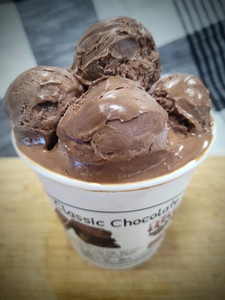
Salted Caramel Ice Cream - 16fl oz
Ben The Baker
$10.00
(No reviews yet)

Write a Review

Ben The Baker
Salted Caramel Ice Cream - 16fl oz
Most salted caramel ice cream is vanilla base with caramel sauce swirled through it at the end. Mine works backwards: I caramelize a full batch of sugar first, then — instead of the splash of cream you'd normally add to turn that caramel into sauce — I pour in almost five times as much cream, plus egg yolks, and build an entire caramel custard base from scratch. It's a different process because it's a different ice cream, not a stock vanilla base with caramel dropped in.
- Scoop it on its own, or set it next to a warm slice of Take & Bake pie for an actual à la mode instead of a garnish.
- Built from a caramelized-sugar custard base with nearly five parts cream to caramel — not a caramel swirl folded into a pre-made vanilla mix.
- Four ingredients you can say out loud: sugar, heavy cream, egg yolks, and sea salt — no stabilizers, gums, or flavor extracts standing in for the real thing.
I'm Ben, and I bake pies by hand in White Bear Lake, Minnesota -- but pie without ice cream felt like half a dessert, so I started making that from scratch too. This one didn't come easy. Instead of swirling a jar of caramel into a vanilla base, I caramelize a big batch of sugar on its own, then add almost five times as much cream as you'd use for a normal caramel sauce, along with egg yolks, to build a full pot of salted caramel custard before it ever goes into the ice cream maker.
That extra step is the whole point. It's the difference between caramel-flavored ice cream and ice cream built on an actual caramel custard -- deeper, less sugary-sweet, and rounded out with sea salt instead of just leaning on more sugar. Comes in a container of handmade salted caramel ice cream, made in the same kitchen as the pies here in White Bear Lake, Minnesota.
Eat it straight out of the container with a spoon, or do what it's built for -- set a scoop next to a warm slice of pie right out of the oven and let it melt in. Salted caramel pairs particularly well with the apple and pecan pies, but I won't stop you from just eating the ice cream.
Keep it in your freezer, same as any ice cream, and let it sit out for a few minutes before scooping if it's been in there a while -- the custard base sets up firmer than the air-whipped stuff from a factory line.
Made from just sugar, heavy cream, egg yolks, and sea salt, this ice cream is naturally gluten-free, but the cream and egg yolks mean it's not dairy-free, vegan, or a fit for strict keto or paleo diets.
Ingredients: Sugar, Heavy Cream, Egg Yolks, and Sea Salt.
Common Questions
How does this compare to a typical grocery store salted caramel ice cream?
Most commercial salted caramel ice creams start with a plain vanilla or sweet cream base and then ribbon in a separate caramel sauce or flavoring after churning, so the caramel taste sits on top of the ice cream rather than inside it. This one skips that shortcut entirely — Ben caramelizes sugar on its own first, then builds a full custard around it with heavy cream and egg yolks before it ever hits the ice cream maker. The ingredient list is four things: sugar, heavy cream, egg yolks, and sea salt, compared to the ten-plus ingredients (corn syrup, stabilizers, mono- and diglycerides, artificial flavoring) common in mass-produced versions. The tradeoff is texture and richness rather than a lighter, more air-whipped scoop.
Why does using egg yolks and a custard base change the texture so much?
Egg yolks contain lecithin, a natural emulsifier that binds fat and water together more tightly than a factory-line ice cream can manage with just stabilizers and gums. That tighter emulsion, combined with cooking the cream and yolks into an actual custard before freezing, produces smaller ice crystals and a denser, creamier mouthfeel. It's also why this ice cream sets up firmer in the freezer than the air-whipped kind — there's less air (overrun) churned into it, so you're getting more actual custard per scoop rather than volume padded with air. That's also why Ben recommends letting it sit out a few minutes before scooping if it's been in the freezer a while.
Does this fit a keto, paleo, or carnivore diet?
No, not in any strict sense. Sugar is the first ingredient, and there's no way around that since it's what gets caramelized to build the flavor — this is a dessert, not a fat-based keto treat. It doesn't work for carnivore at all given the sugar content. For paleo, the ingredients themselves (cream, egg yolks, sea salt) are whole-food and recognizable, but refined sugar disqualifies it from strict paleo eating even though it contains no grains, gums, or artificial additives. If you're tracking carbs closely, treat this as an occasional dessert rather than a diet-compliant staple.
What are some good ways to use this beyond eating it out of the container?
It's built specifically to melt into a warm slice of pie, and Ben notes it pairs particularly well with apple and pecan. Beyond that, it works well as an affogato-style pour-over with hot espresso, since the custard base holds up better against heat than air-whipped ice cream before it turns to soup. It's also a solid pairing for warm brownies or a fruit crisp where you want something rich enough to stand up to butter and sugar rather than dissolve into it. No cooking adaptation is needed — just let it soften a few minutes out of the freezer before serving so it scoops cleanly.
How can I verify what's actually in this and how it's made?
The ingredient list is short and fixed: sugar, heavy cream, egg yolks, and sea salt — nothing hidden behind a 'natural flavor' line. It's made by hand in White Bear Lake, Minnesota, in the same kitchen where Ben bakes the pies, so if you're sensitive to cross-contact with wheat flour, that's worth knowing since the space isn't a dedicated allergen-free facility. There are no third-party certifications behind this product (no USDA organic seal, no gluten-free certification), so any claims about ingredient quality rest on the short ingredient list itself rather than a label logo. If you want more detail on sourcing of the cream or eggs specifically, that's a good question to ask directly since it isn't listed here.
What makes the caramel in this different from a caramel sauce swirl?
A typical caramel swirl is made separately at roughly a 1:1 or lower cream-to-sugar ratio, then folded into finished ice cream as ribbons. Ben's process caramelizes the sugar on its own first, then adds close to five times as much cream as a standard caramel sauce recipe calls for, along with egg yolks, to build an entire custard base around that caramel rather than treating it as a topping. The result is caramel flavor that's cooked into every bite of the base itself — less sugary-sweet up front, with the sea salt rounding out the flavor instead of piling on more sugar to balance it. It's a slower, more involved process, which is the reason this isn't a vanilla base with caramel dropped in afterward.
That extra step is the whole point. It's the difference between caramel-flavored ice cream and ice cream built on an actual caramel custard -- deeper, less sugary-sweet, and rounded out with sea salt instead of just leaning on more sugar. Comes in a container of handmade salted caramel ice cream, made in the same kitchen as the pies here in White Bear Lake, Minnesota.
Eat it straight out of the container with a spoon, or do what it's built for -- set a scoop next to a warm slice of pie right out of the oven and let it melt in. Salted caramel pairs particularly well with the apple and pecan pies, but I won't stop you from just eating the ice cream.
Keep it in your freezer, same as any ice cream, and let it sit out for a few minutes before scooping if it's been in there a while -- the custard base sets up firmer than the air-whipped stuff from a factory line.
Made from just sugar, heavy cream, egg yolks, and sea salt, this ice cream is naturally gluten-free, but the cream and egg yolks mean it's not dairy-free, vegan, or a fit for strict keto or paleo diets.
Ingredients: Sugar, Heavy Cream, Egg Yolks, and Sea Salt.
Common Questions
How does this compare to a typical grocery store salted caramel ice cream?
Most commercial salted caramel ice creams start with a plain vanilla or sweet cream base and then ribbon in a separate caramel sauce or flavoring after churning, so the caramel taste sits on top of the ice cream rather than inside it. This one skips that shortcut entirely — Ben caramelizes sugar on its own first, then builds a full custard around it with heavy cream and egg yolks before it ever hits the ice cream maker. The ingredient list is four things: sugar, heavy cream, egg yolks, and sea salt, compared to the ten-plus ingredients (corn syrup, stabilizers, mono- and diglycerides, artificial flavoring) common in mass-produced versions. The tradeoff is texture and richness rather than a lighter, more air-whipped scoop.
Why does using egg yolks and a custard base change the texture so much?
Egg yolks contain lecithin, a natural emulsifier that binds fat and water together more tightly than a factory-line ice cream can manage with just stabilizers and gums. That tighter emulsion, combined with cooking the cream and yolks into an actual custard before freezing, produces smaller ice crystals and a denser, creamier mouthfeel. It's also why this ice cream sets up firmer in the freezer than the air-whipped kind — there's less air (overrun) churned into it, so you're getting more actual custard per scoop rather than volume padded with air. That's also why Ben recommends letting it sit out a few minutes before scooping if it's been in the freezer a while.
Does this fit a keto, paleo, or carnivore diet?
No, not in any strict sense. Sugar is the first ingredient, and there's no way around that since it's what gets caramelized to build the flavor — this is a dessert, not a fat-based keto treat. It doesn't work for carnivore at all given the sugar content. For paleo, the ingredients themselves (cream, egg yolks, sea salt) are whole-food and recognizable, but refined sugar disqualifies it from strict paleo eating even though it contains no grains, gums, or artificial additives. If you're tracking carbs closely, treat this as an occasional dessert rather than a diet-compliant staple.
What are some good ways to use this beyond eating it out of the container?
It's built specifically to melt into a warm slice of pie, and Ben notes it pairs particularly well with apple and pecan. Beyond that, it works well as an affogato-style pour-over with hot espresso, since the custard base holds up better against heat than air-whipped ice cream before it turns to soup. It's also a solid pairing for warm brownies or a fruit crisp where you want something rich enough to stand up to butter and sugar rather than dissolve into it. No cooking adaptation is needed — just let it soften a few minutes out of the freezer before serving so it scoops cleanly.
How can I verify what's actually in this and how it's made?
The ingredient list is short and fixed: sugar, heavy cream, egg yolks, and sea salt — nothing hidden behind a 'natural flavor' line. It's made by hand in White Bear Lake, Minnesota, in the same kitchen where Ben bakes the pies, so if you're sensitive to cross-contact with wheat flour, that's worth knowing since the space isn't a dedicated allergen-free facility. There are no third-party certifications behind this product (no USDA organic seal, no gluten-free certification), so any claims about ingredient quality rest on the short ingredient list itself rather than a label logo. If you want more detail on sourcing of the cream or eggs specifically, that's a good question to ask directly since it isn't listed here.
What makes the caramel in this different from a caramel sauce swirl?
A typical caramel swirl is made separately at roughly a 1:1 or lower cream-to-sugar ratio, then folded into finished ice cream as ribbons. Ben's process caramelizes the sugar on its own first, then adds close to five times as much cream as a standard caramel sauce recipe calls for, along with egg yolks, to build an entire custard base around that caramel rather than treating it as a topping. The result is caramel flavor that's cooked into every bite of the base itself — less sugary-sweet up front, with the sea salt rounding out the flavor instead of piling on more sugar to balance it. It's a slower, more involved process, which is the reason this isn't a vanilla base with caramel dropped in afterward.
- __Storage_Location:
- Keep frozen.
- __Volume:
- 400
- __Owner:
- Ben The Baker
- __badge:
- Scratch-Made