
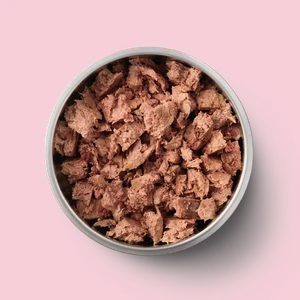

Raw Pork Grind - 4.5 lb
Raw Bistro
$30.60
Below are the available bulk discount rates for each individual item when you purchase a certain amount
- Buy 2 - 5 and get 7% off
- Buy 6 or above and get 9% off
(No reviews yet)

Write a Review

Raw Bistro
Raw Pork Grind - 4.5 lb
Made from pastured pork raised without feedlots, antibiotics, or added hormones — then ground with the neck, heart, liver, and kidney folded in, mirroring the muscle-to-organ ratio a dog or cat would get from a whole animal rather than a cut of meat alone. Raw Bistro sources the pork in the USA and grinds every batch in its own NICS-certified organic facility in Cannon Falls, Minnesota, keeping sourcing and processing under one roof instead of handing it to a co-packer.
- 2 oz patties portion each meal precisely, so raw feeders can measure by patty count instead of a kitchen scale.
- The pork is pastured and never sourced from a feedlot — ground at a facility Raw Bistro owns and operates, not outsourced.
- Built for dogs and cats on raw or prey-model diets; the neck, heart, liver, and kidney already in the grind supply the organ ratio a muscle-meat-only product skips.
Raw Bistro's Pork Grind is a raw pet food built the way a dog or cat would actually break down a pig -- muscle meat first, then the neck, heart, liver, and kidney ground in behind it. Nothing is added to round out the formula; the organ-to-muscle ratio comes from the animal itself.
Each 4.5 lb bag holds 2 oz patties, portioned so a raw feeder can pull exactly what a meal calls for without weighing anything out. A single patty runs 91 kcal (1,605 kcal/kg metabolizable energy), with a guaranteed analysis of 19% crude protein (min), 9% crude fat (min), 0% crude fiber (max), and 69% moisture (max) -- figures consistent with a fresh, unrendered grind rather than a dried or extruded product.
The pork itself is pastured and sourced in the USA under Raw Bistro's Never Ever Promise: no factory farming, no feedlots, no antibiotics, no added hormones. Every batch is ground at the company's own NICS-certified organic facility in Cannon Falls, Minnesota -- Raw Bistro controls the grind from intake to patty rather than handing it to a third-party co-packer.
Feed it as a complete raw meal or rotate this pork grind into a prey-model diet alongside other proteins. With no grains, fillers, or added carbohydrates, it fits naturally into BARF, prey-model raw (PMR), and other ancestral or keto-style feeding programs built around whole-animal ratios. Thaw sealed patties in the refrigerator and portion by patty count for the size of the dog or cat; keep the box frozen until you're ready to thaw, and use refrigerated portions within a few days.
Ingredients: Pork, Pork Neck, Pork Heart, Pork Liver, and Pork Kidney.
Common Questions
How does pastured pork actually compare to conventional feedlot pork on nutrition?
Conventional feedlot pork comes from pigs raised on corn and soy in confinement, which tends to produce a fattier carcass with a different fat profile — lower in omega-3s and higher in omega-6s, since the fatty acid makeup of pork fat shifts with diet more than beef does. Pastured pork from pigs with outdoor access and pasture forage typically shows a better omega-6 to omega-3 ratio and somewhat higher levels of vitamin E and antioxidants tied to fresh forage intake. This grind's guaranteed analysis runs 19% crude protein (min) and 9% crude fat (min) on an as-fed basis, which is in line with a fresh, unrendered muscle-and-organ blend rather than a fattier commodity trim. The bigger practical difference for a pet owner is upstream: no antibiotics, no added hormones, and no feedlot confinement means fewer inputs the pig's body has to process before that meat becomes food.
What do the organ meats in this grind actually contribute nutritionally?
Pork liver, heart, and kidney aren't filler — they're some of the most nutrient-dense tissue on the animal. Liver is the primary dietary source of retinol (true vitamin A), plus copper and B12, and it concentrates far more of these than muscle meat does. Heart is a rich source of CoQ10 and taurine, both tied to cardiac and muscle function, while kidney contributes selenium and additional B-vitamins. Because this blend mirrors a natural pig carcass ratio rather than a spiked or fortified formula, those nutrients arrive in roughly the proportions a dog or cat would get from eating prey whole, not from a synthetic vitamin premix added after the fact.
Does this fit a keto, carnivore, or prey-model raw feeding approach?
Yes. Doing the math on the guaranteed analysis: with 69% moisture, the dry matter portion is about 31% of the product, and within that dry matter, protein runs roughly 61% and fat around 29%. On a calorie basis, fat and protein each contribute close to half the energy (fat is roughly 81 kcal per 100g of dry matter equivalent versus about 76 kcal from protein), with essentially zero carbohydrate since crude fiber is capped at 0%. That macro split — high protein, moderate-to-high fat, no carbs — is exactly the profile prey-model raw (PMR) and ketogenic-style feeding protocols for dogs and cats are built around, and it slots in cleanly alongside muscle-meat-heavy rotations without needing extra fat or organ supplementation.
Can I substitute this for beef or chicken grind in an existing raw feeding rotation?
Yes, this works as a direct swap in any recipe or meal plan built around a single-protein grind — replace beef grind cup-for-cup or patty-for-patty since portions here are already fixed at 2 oz per patty. Because pork runs slightly leaner than fatty beef trim but richer than most chicken grinds, dogs and cats transitioning from a leaner protein may do better introduced gradually over 3-5 days to avoid loose stool from the fat increase. It also works well in a prey-model rotation where you're deliberately varying protein sources across the week — pork's organ ratio (heart, liver, kidney) mirrors what you'd get from a whole rabbit or small game animal, so it can stand in as the organ-inclusive protein for a given day rather than needing a separate organ supplement.
Why does the organ-to-muscle ratio matter, and how is it determined here?
Most commercial raw grinds hit their guaranteed analysis by adding isolated organ meat or vitamin premixes after the fact, which can overshoot or undershoot what a dog or cat would get from eating an actual animal. This grind is built in the order a carcass comes apart — muscle meat first, then neck, heart, liver, and kidney — so the organ percentage is whatever that particular pig yielded, not a formulated target. The tradeoff is that batch-to-batch organ content will vary slightly, but the upside is a nutrient profile that tracks biologically with how a dog's or cat's ancestral diet would have been composed, rather than being back-calculated to hit a label number.
How does the fat content here compare to a typical pork chop or ground pork sold for human consumption?
Standard ground pork sold at retail for human consumption often runs 20-30% fat by weight, since it's usually a blend of trim and fattier cuts chosen for flavor and mouthfeel. This grind's guaranteed analysis caps crude fat at 9% minimum on an as-fed basis (with 69% moisture accounted for separately), putting it on the leaner end for a pork product once you factor in that a meaningful share of the weight is organ tissue rather than adipose fat. That matters for dogs and cats prone to pancreatitis or fat sensitivity, where a very high-fat pork grind can be harder to tolerate than a leaner, organ-forward blend like this one.
Ordering more than one bag at a time lowers the price per bag — see the quantity pricing above.
Each 4.5 lb bag holds 2 oz patties, portioned so a raw feeder can pull exactly what a meal calls for without weighing anything out. A single patty runs 91 kcal (1,605 kcal/kg metabolizable energy), with a guaranteed analysis of 19% crude protein (min), 9% crude fat (min), 0% crude fiber (max), and 69% moisture (max) -- figures consistent with a fresh, unrendered grind rather than a dried or extruded product.
The pork itself is pastured and sourced in the USA under Raw Bistro's Never Ever Promise: no factory farming, no feedlots, no antibiotics, no added hormones. Every batch is ground at the company's own NICS-certified organic facility in Cannon Falls, Minnesota -- Raw Bistro controls the grind from intake to patty rather than handing it to a third-party co-packer.
Feed it as a complete raw meal or rotate this pork grind into a prey-model diet alongside other proteins. With no grains, fillers, or added carbohydrates, it fits naturally into BARF, prey-model raw (PMR), and other ancestral or keto-style feeding programs built around whole-animal ratios. Thaw sealed patties in the refrigerator and portion by patty count for the size of the dog or cat; keep the box frozen until you're ready to thaw, and use refrigerated portions within a few days.
Ingredients: Pork, Pork Neck, Pork Heart, Pork Liver, and Pork Kidney.
Common Questions
How does pastured pork actually compare to conventional feedlot pork on nutrition?
Conventional feedlot pork comes from pigs raised on corn and soy in confinement, which tends to produce a fattier carcass with a different fat profile — lower in omega-3s and higher in omega-6s, since the fatty acid makeup of pork fat shifts with diet more than beef does. Pastured pork from pigs with outdoor access and pasture forage typically shows a better omega-6 to omega-3 ratio and somewhat higher levels of vitamin E and antioxidants tied to fresh forage intake. This grind's guaranteed analysis runs 19% crude protein (min) and 9% crude fat (min) on an as-fed basis, which is in line with a fresh, unrendered muscle-and-organ blend rather than a fattier commodity trim. The bigger practical difference for a pet owner is upstream: no antibiotics, no added hormones, and no feedlot confinement means fewer inputs the pig's body has to process before that meat becomes food.
What do the organ meats in this grind actually contribute nutritionally?
Pork liver, heart, and kidney aren't filler — they're some of the most nutrient-dense tissue on the animal. Liver is the primary dietary source of retinol (true vitamin A), plus copper and B12, and it concentrates far more of these than muscle meat does. Heart is a rich source of CoQ10 and taurine, both tied to cardiac and muscle function, while kidney contributes selenium and additional B-vitamins. Because this blend mirrors a natural pig carcass ratio rather than a spiked or fortified formula, those nutrients arrive in roughly the proportions a dog or cat would get from eating prey whole, not from a synthetic vitamin premix added after the fact.
Does this fit a keto, carnivore, or prey-model raw feeding approach?
Yes. Doing the math on the guaranteed analysis: with 69% moisture, the dry matter portion is about 31% of the product, and within that dry matter, protein runs roughly 61% and fat around 29%. On a calorie basis, fat and protein each contribute close to half the energy (fat is roughly 81 kcal per 100g of dry matter equivalent versus about 76 kcal from protein), with essentially zero carbohydrate since crude fiber is capped at 0%. That macro split — high protein, moderate-to-high fat, no carbs — is exactly the profile prey-model raw (PMR) and ketogenic-style feeding protocols for dogs and cats are built around, and it slots in cleanly alongside muscle-meat-heavy rotations without needing extra fat or organ supplementation.
Can I substitute this for beef or chicken grind in an existing raw feeding rotation?
Yes, this works as a direct swap in any recipe or meal plan built around a single-protein grind — replace beef grind cup-for-cup or patty-for-patty since portions here are already fixed at 2 oz per patty. Because pork runs slightly leaner than fatty beef trim but richer than most chicken grinds, dogs and cats transitioning from a leaner protein may do better introduced gradually over 3-5 days to avoid loose stool from the fat increase. It also works well in a prey-model rotation where you're deliberately varying protein sources across the week — pork's organ ratio (heart, liver, kidney) mirrors what you'd get from a whole rabbit or small game animal, so it can stand in as the organ-inclusive protein for a given day rather than needing a separate organ supplement.
Why does the organ-to-muscle ratio matter, and how is it determined here?
Most commercial raw grinds hit their guaranteed analysis by adding isolated organ meat or vitamin premixes after the fact, which can overshoot or undershoot what a dog or cat would get from eating an actual animal. This grind is built in the order a carcass comes apart — muscle meat first, then neck, heart, liver, and kidney — so the organ percentage is whatever that particular pig yielded, not a formulated target. The tradeoff is that batch-to-batch organ content will vary slightly, but the upside is a nutrient profile that tracks biologically with how a dog's or cat's ancestral diet would have been composed, rather than being back-calculated to hit a label number.
How does the fat content here compare to a typical pork chop or ground pork sold for human consumption?
Standard ground pork sold at retail for human consumption often runs 20-30% fat by weight, since it's usually a blend of trim and fattier cuts chosen for flavor and mouthfeel. This grind's guaranteed analysis caps crude fat at 9% minimum on an as-fed basis (with 69% moisture accounted for separately), putting it on the leaner end for a pork product once you factor in that a meaningful share of the weight is organ tissue rather than adipose fat. That matters for dogs and cats prone to pancreatitis or fat sensitivity, where a very high-fat pork grind can be harder to tolerate than a leaner, organ-forward blend like this one.
Ordering more than one bag at a time lowers the price per bag — see the quantity pricing above.
- __Storage_Location:
- Frozen
- __Volume:
- 12500
- __Owner:
- Raw Bistro
- __badge:
- Pasture-Raised


