Once Daily Vitamin C Caplet - 60 ct
The Good Collective
$29.49
Below are the available bulk discount rates for each individual item when you purchase a certain amount
- Buy 2 - 2 and get 2% off
- Buy 3 - 5 and get 4% off
- Buy 6 or above and get 8% off
(No reviews yet)

Write a Review
The Good Collective
Once Daily Vitamin C Caplet - 60 ct
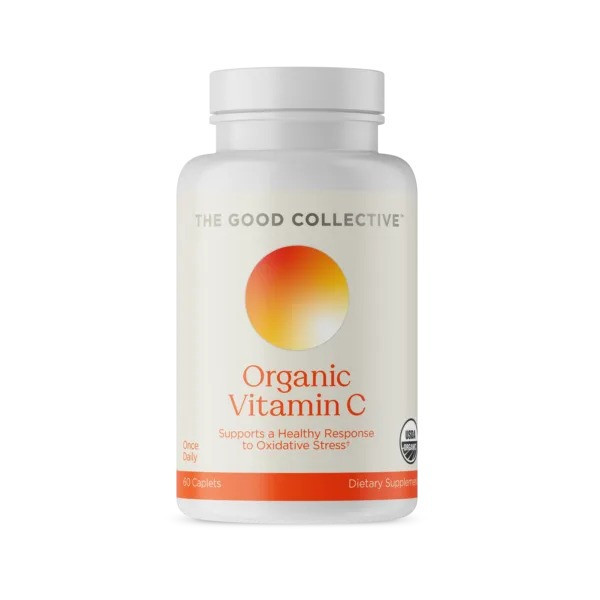
Most vitamin C on a grocery shelf is ascorbic acid isolated through industrial processing. This caplet starts with whole foods instead — organic Spanish chestnut, amla berry, and acerola cherry — grown under regenerative, sustainably managed agriculture and formulated into a once-daily dose.
- One caplet a day covers a full 2-month supply — no multi-pill routine to track.
- Whole-food vitamin C from an organic regenerative botanical blend, not an isolated single-nutrient additive.
- Vegan caplet, USDA Certified Organic, and Non-GMO Project Verified — fits plant-based and non-GMO-conscious routines.
The Good Collective is a private-label line carried by independent grocers, not a name you'll recognize from television or big-box endcaps. It's formulated to the same USDA Organic, Non-GMO, and vegan standard as recognizable national brands — it's priced lower because it skips the marketing budget and celebrity-endorsement spend that gets built into a familiar label's shelf price.
This is a 60-count bottle of once-daily Vitamin C caplets — a 2-month supply at one caplet per day. Instead of a single isolated compound, the formula draws its vitamin C from an organic regenerative botanical blend built around organic Spanish chestnut, amla berry, and acerola cherry, all grown under regenerative, sustainably managed agriculture. The caplet is vegan, with no gelatin capsule, and is USDA Certified Organic and Non-GMO Project Verified.
Being fully plant-based and vegan, this formula also fits vegetarian diets; if you're following a strict keto, paleo, or carnivore protocol, it's worth reviewing the full ingredient panel yourself, since the manufacturer doesn't publish net carb counts or specify compatibility with those approaches.
Vitamin C is an antioxidant that supports a healthy immune response, and this organic vitamin C supplement is positioned to support the body's response to oxidative stress along with the health of eyes, skin, bones, teeth, and gums. The whole-food sourcing is intended to help close the vitamin C gap that shows up when a diet runs light on fresh produce.
Take one caplet daily, ideally with a meal. Store in a cool, dry place, out of direct sunlight, and keep the cap tightly closed between uses.
Common Questions
How does this whole-food vitamin C blend compare to a typical drugstore vitamin C tablet?
Most mass-market vitamin C tablets are built around a single isolated compound, ascorbic acid, manufactured in a lab from corn starch through an industrial fermentation process. This formula instead pulls its vitamin C from an organic regenerative botanical blend of Spanish chestnut, amla berry, and acerola cherry, three plants naturally dense in vitamin C along with the polyphenols and trace compounds that occur alongside it in whole food. Amla berry alone can carry several hundred milligrams of vitamin C per 100 grams in its raw form, well above what a typical orange provides, which is why it's a common anchor in whole-food vitamin C blends. The caplet also delivers 19 vitamins and minerals total, including 3mg of iron, so you're getting a broader nutrient package rather than one isolated compound at a high dose. Because the source ingredients are USDA Certified Organic, they're grown without synthetic pesticides or fertilizers, which most conventional supplement-grade ascorbic acid sourcing doesn't require.
What does vitamin C actually do in the body, and why does the amount matter?
Vitamin C is a water-soluble antioxidant, meaning it neutralizes free radicals and helps protect cells from oxidative stress, a process linked to immune cell function and general tissue upkeep. It's also a required cofactor for two enzymes, prolyl hydroxylase and lysyl hydroxylase, that stabilize the collagen molecule, which is why vitamin C intake is tied to skin, gum, bone, and connective tissue health. Separately, vitamin C converts dietary non-heme iron (the form found in plant foods and this formula's 3mg iron) into a form the gut absorbs more efficiently, so pairing the two in one caplet has a functional reason behind it, not just a formulation convenience. Because the body doesn't store vitamin C, it needs a steady daily intake rather than an occasional large dose, which is the logic behind a once-daily caplet.
Does this fit into a keto, paleo, or vegan eating plan?
Yes to all three, with different reasons for each. The caplet is vegan-formulated with no gelatin capsule and no animal-derived binders, and its plant-sourced ingredients (Spanish chestnut, amla berry, acerola cherry) are all whole-food botanicals rather than animal extracts. For keto and paleo followers, the caplet carries negligible carbohydrate and no added sugar, so it won't affect a daily carb count the way a chewable gummy vitamin often does. Paleo diets in particular tend to run light on the citrus and tropical produce that are typical vitamin C sources, so a whole-food botanical blend can help close that gap without introducing grain-based fillers or synthetic binders that some paleo protocols try to avoid.
Is there a practical way to use this alongside meals to get more out of it?
Taking the caplet with a meal that contains plant-based iron, such as lentils, spinach, or a chickpea dish, takes advantage of the same absorption mechanism mentioned above, since vitamin C converts non-heme iron into a form the gut absorbs more readily. This matters most for anyone eating a mostly plant-based or vegan diet, where iron comes exclusively from the harder-to-absorb non-heme form. There's no cooking or recipe substitution involved since this is a caplet, not a food ingredient, but timing it with an iron-containing meal rather than taking it on an empty stomach or with coffee (which can blunt iron absorption) gets more functional value out of the same dose.
How can I verify the organic and non-GMO claims on the label?
USDA Certified Organic means the finished product and its listed agricultural ingredients meet USDA National Organic Program standards, which include restrictions on synthetic pesticides, synthetic fertilizers, and irradiation, and the certification is issued after review by an accredited third-party certifying agent, not by the brand itself. Non-GMO Project Verified is a separate, independent certification with its own testing and supply chain traceability requirements, so a product carrying both marks has been checked by two different outside bodies rather than relying on a single label claim. You can look up both certifications directly through the USDA organic integrity database and the Non-GMO Project's verified product list to confirm a specific batch or brand is currently certified rather than taking the packaging at face value.
What does it mean that this is a private-label brand, and how does that affect quality?
The Good Collective is formulated to the same USDA Organic, Non-GMO Project Verified, and vegan standards as recognizable national supplement brands, but it's manufactured and sold without the marketing budget, celebrity endorsement spend, or television advertising that gets priced into a more familiar label. The certifications themselves, USDA Organic and Non-GMO Project Verified, are issued independently of brand recognition, so the compliance bar is the same regardless of whether you've seen the name on a shelf before. This is the core reason a private-label organic supplement can be priced lower without cutting corners on the ingredient or certification side: the savings come from distribution and advertising, not from ingredient sourcing.
Who is this product designed to help most, in terms of diet gaps?
The formula is built around the idea of bridging a nutritional gap, specifically the vitamin C shortfall that shows up when a diet runs light on fresh produce, which is common for people who eat a lot of processed or shelf-stable food, follow restrictive diets like paleo or carnivore, or simply don't get the recommended servings of fruits and vegetables most days. Because vitamin C isn't stored by the body, a gap in dietary intake shows up relatively quickly in markers tied to immune response and connective tissue maintenance. The whole-food sourcing (Spanish chestnut, amla berry, acerola cherry) is meant to approximate what a produce-rich diet would supply, rather than delivering an isolated compound at a single high dose, which is the distinction the brand is drawing between this formula and a conventional ascorbic acid tablet.
This is a 60-count bottle of once-daily Vitamin C caplets — a 2-month supply at one caplet per day. Instead of a single isolated compound, the formula draws its vitamin C from an organic regenerative botanical blend built around organic Spanish chestnut, amla berry, and acerola cherry, all grown under regenerative, sustainably managed agriculture. The caplet is vegan, with no gelatin capsule, and is USDA Certified Organic and Non-GMO Project Verified.
Being fully plant-based and vegan, this formula also fits vegetarian diets; if you're following a strict keto, paleo, or carnivore protocol, it's worth reviewing the full ingredient panel yourself, since the manufacturer doesn't publish net carb counts or specify compatibility with those approaches.
Vitamin C is an antioxidant that supports a healthy immune response, and this organic vitamin C supplement is positioned to support the body's response to oxidative stress along with the health of eyes, skin, bones, teeth, and gums. The whole-food sourcing is intended to help close the vitamin C gap that shows up when a diet runs light on fresh produce.
Take one caplet daily, ideally with a meal. Store in a cool, dry place, out of direct sunlight, and keep the cap tightly closed between uses.
Common Questions
How does this whole-food vitamin C blend compare to a typical drugstore vitamin C tablet?
Most mass-market vitamin C tablets are built around a single isolated compound, ascorbic acid, manufactured in a lab from corn starch through an industrial fermentation process. This formula instead pulls its vitamin C from an organic regenerative botanical blend of Spanish chestnut, amla berry, and acerola cherry, three plants naturally dense in vitamin C along with the polyphenols and trace compounds that occur alongside it in whole food. Amla berry alone can carry several hundred milligrams of vitamin C per 100 grams in its raw form, well above what a typical orange provides, which is why it's a common anchor in whole-food vitamin C blends. The caplet also delivers 19 vitamins and minerals total, including 3mg of iron, so you're getting a broader nutrient package rather than one isolated compound at a high dose. Because the source ingredients are USDA Certified Organic, they're grown without synthetic pesticides or fertilizers, which most conventional supplement-grade ascorbic acid sourcing doesn't require.
What does vitamin C actually do in the body, and why does the amount matter?
Vitamin C is a water-soluble antioxidant, meaning it neutralizes free radicals and helps protect cells from oxidative stress, a process linked to immune cell function and general tissue upkeep. It's also a required cofactor for two enzymes, prolyl hydroxylase and lysyl hydroxylase, that stabilize the collagen molecule, which is why vitamin C intake is tied to skin, gum, bone, and connective tissue health. Separately, vitamin C converts dietary non-heme iron (the form found in plant foods and this formula's 3mg iron) into a form the gut absorbs more efficiently, so pairing the two in one caplet has a functional reason behind it, not just a formulation convenience. Because the body doesn't store vitamin C, it needs a steady daily intake rather than an occasional large dose, which is the logic behind a once-daily caplet.
Does this fit into a keto, paleo, or vegan eating plan?
Yes to all three, with different reasons for each. The caplet is vegan-formulated with no gelatin capsule and no animal-derived binders, and its plant-sourced ingredients (Spanish chestnut, amla berry, acerola cherry) are all whole-food botanicals rather than animal extracts. For keto and paleo followers, the caplet carries negligible carbohydrate and no added sugar, so it won't affect a daily carb count the way a chewable gummy vitamin often does. Paleo diets in particular tend to run light on the citrus and tropical produce that are typical vitamin C sources, so a whole-food botanical blend can help close that gap without introducing grain-based fillers or synthetic binders that some paleo protocols try to avoid.
Is there a practical way to use this alongside meals to get more out of it?
Taking the caplet with a meal that contains plant-based iron, such as lentils, spinach, or a chickpea dish, takes advantage of the same absorption mechanism mentioned above, since vitamin C converts non-heme iron into a form the gut absorbs more readily. This matters most for anyone eating a mostly plant-based or vegan diet, where iron comes exclusively from the harder-to-absorb non-heme form. There's no cooking or recipe substitution involved since this is a caplet, not a food ingredient, but timing it with an iron-containing meal rather than taking it on an empty stomach or with coffee (which can blunt iron absorption) gets more functional value out of the same dose.
How can I verify the organic and non-GMO claims on the label?
USDA Certified Organic means the finished product and its listed agricultural ingredients meet USDA National Organic Program standards, which include restrictions on synthetic pesticides, synthetic fertilizers, and irradiation, and the certification is issued after review by an accredited third-party certifying agent, not by the brand itself. Non-GMO Project Verified is a separate, independent certification with its own testing and supply chain traceability requirements, so a product carrying both marks has been checked by two different outside bodies rather than relying on a single label claim. You can look up both certifications directly through the USDA organic integrity database and the Non-GMO Project's verified product list to confirm a specific batch or brand is currently certified rather than taking the packaging at face value.
What does it mean that this is a private-label brand, and how does that affect quality?
The Good Collective is formulated to the same USDA Organic, Non-GMO Project Verified, and vegan standards as recognizable national supplement brands, but it's manufactured and sold without the marketing budget, celebrity endorsement spend, or television advertising that gets priced into a more familiar label. The certifications themselves, USDA Organic and Non-GMO Project Verified, are issued independently of brand recognition, so the compliance bar is the same regardless of whether you've seen the name on a shelf before. This is the core reason a private-label organic supplement can be priced lower without cutting corners on the ingredient or certification side: the savings come from distribution and advertising, not from ingredient sourcing.
Who is this product designed to help most, in terms of diet gaps?
The formula is built around the idea of bridging a nutritional gap, specifically the vitamin C shortfall that shows up when a diet runs light on fresh produce, which is common for people who eat a lot of processed or shelf-stable food, follow restrictive diets like paleo or carnivore, or simply don't get the recommended servings of fruits and vegetables most days. Because vitamin C isn't stored by the body, a gap in dietary intake shows up relatively quickly in markers tied to immune response and connective tissue maintenance. The whole-food sourcing (Spanish chestnut, amla berry, acerola cherry) is meant to approximate what a produce-rich diet would supply, rather than delivering an isolated compound at a single high dose, which is the distinction the brand is drawing between this formula and a conventional ascorbic acid tablet.
- __Storage_Location:
- Dry
- __Volume:
- 360
- __Owner:
- TCFarm
- __badge:
- Organic