Bacon Bundle - 2lb Ave
Nelson Grass Farm
$30.00
(No reviews yet)

Write a Review
Nelson Grass Farm
Bacon Bundle - 2lb Ave
This bundle puts three distinct cuts of smoked bacon on your table in one order — each one cured with sea salt and cane sugar instead of synthetic nitrites, and smoked from hogs that spent their summer rotating across open pasture on a no-soy, transitional organic feed. This isn't one bacon sliced three ways; it's a belly cut, a loin cut, and a shoulder cut, each with its own texture and smoke character, bundled at roughly 16% off buying them separately.
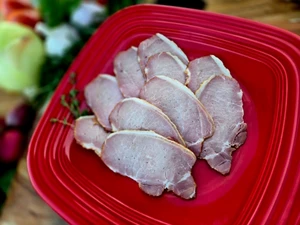
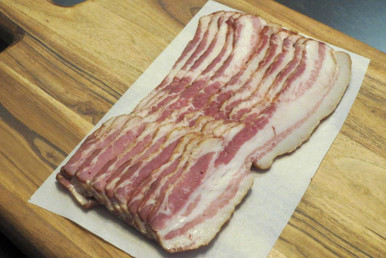
- Three cuts, three uses: classic Smoked Bacon for breakfast, lean Canadian Bacon sliced from the loin for sandwiches and eggs Benedict, and Smoked Cottage Bacon from the shoulder for pan-frying or dicing into beans and greens
- Cured with sea salt, cane sugar, and celery powder — no synthetic sodium nitrite or nitrate added — from pigs rotated on pasture through the summer months on a no-soy, transitional organic diet
- Free of fillers, phosphates, and flavor enhancers — nothing added beyond sea salt, cane sugar, and celery powder
This pasture-raised, uncured bacon variety pack is for anyone who wants to actually compare bacon cuts side by side instead of guessing from a single label. You get one pack each of Smoked Bacon (about 0.8 lb, 10 sliced pieces), Canadian Bacon (about 0.5 lb, sliced from the loin), and Smoked Cottage Bacon (about 0.7 lb, sliced from the shoulder) — roughly 2 lbs total, priced at about 16% less than buying the three packs separately.
All three cuts come from the same herd: hogs raised and rotated on pasture through the summer, fed a no-soy, transitional organic ration rather than the conventional soy-heavy grain mix. Each is smoked and cured the same simple way — sea salt, cane sugar, and celery powder in place of synthetic sodium nitrite or nitrate, the curing agent found in most supermarket bacon.
Conventional grocery bacon is almost always cured with synthetic sodium nitrite, injected with added water and phosphates to boost weight, and sourced from hogs raised in confinement on soy-heavy commodity feed with no visibility into how they lived. This bundle strips that out: the curing agent is celery powder (a natural source of nitrate that converts to nitrite during curing), the hogs had pasture access all summer, and the feed skipped soy in favor of a transitional organic ration — differences you can taste in the texture and the smoke, not just read on a label.
Cook the Smoked Bacon low and slow in a skillet for classic crisp strips. Sear the Canadian Bacon quickly in a hot pan for eggs Benedict or a breakfast sandwich — it's leaner than belly bacon and cooks fast. Cube or dice the Smoked Cottage Bacon into soups, braised greens, or bean dishes, where its shoulder-cut texture holds up to longer cooking.
All three cuts are suitable for Paleo and keto eating patterns and contain no fillers or flavor enhancers. Keep frozen until ready to use, then thaw in the refrigerator before cooking.
Ingredients: Smoked Bacon: Pork, Water, Sea Salt, and Cane Sugar (Celery Powder, Sea Salt). Canadian Bacon: Pork, Water, Sea Salt, and Cane Sugar (Celery Powder, Sea Salt). Smoked Cottage Bacon: Pork, Water, Sea Salt, and Cane Sugar (Celery Powder, Sea Salt).
Common Questions
How does this bacon actually compare to what's in a typical grocery store package?
Most supermarket bacon is cured with synthetic sodium nitrite, often injected with a water-and-phosphate solution that adds to the finished weight, and comes from hogs raised in confinement on soy-heavy commodity grain with no way to verify how they were raised. This bundle uses celery powder as the curing agent, a natural source of nitrate that converts to nitrite during the cure the same way synthetic nitrite does, so you get the same food-safety function without a synthetic additive on the label. The hogs had pasture access through the summer and ate a no-soy, transitional organic ration instead of standard commodity feed. You're also getting three distinct cuts (belly, loin, and shoulder) for about 16% less than buying each pack separately, which isn't something you can do at a conventional meat counter without buying whole packages of each.
What's the actual difference pasture access and a no-soy diet make in the meat?
Pigs are omnivores, so their fat composition responds to diet less dramatically than a ruminant like a cow does on grass, but it still shifts. Category research on pasture-raised pork generally points to differences in fat composition compared with hogs finished exclusively on confinement grain — this bundle carries no lab-verified nutrient panel, so treat that as a general pattern rather than a measured claim for this batch. Skipping soy in the ration matters most simply to people who avoid soy themselves. None of this turns bacon into a health food; the concrete, verifiable facts are the pasture access, the no-soy feed, and the short cure ingredient list.
Does this fit keto, paleo, or carnivore eating?
Keto, paleo and carnivore, yes; Whole30, no. The cure includes cane sugar — a trace amount absorbed during curing rather than a coating or glaze, so the carb count per serving stays close to zero and won't meaningfully affect ketosis. Whole30 excludes added sugar of any kind, though, so this bacon is not Whole30-compliant even though the nitrite source is celery powder rather than synthetic sodium nitrite. For carnivore eaters, all three cuts are straightforward animal protein and fat with no grain fillers, flavor enhancers, or non-animal ingredients beyond salt, sugar, and celery powder.
Can I use the Canadian bacon and cottage bacon in place of other cuts in recipes?
Canadian bacon is cut from the loin, so it's leaner and denser than belly bacon, and it works as a direct substitute for ham in a breakfast sandwich, eggs Benedict, or diced into a quiche, though it cooks faster than ham so pull it off heat as soon as it's seared through. Smoked cottage bacon is cut from the shoulder, which gives it a coarser grain and more connective tissue, making it a good substitute for pancetta or guanciale in carbonara, or for diced ham hock in bean soups and braised collards since it holds up well to long simmering. The smoked bacon behaves like standard strip bacon and can go anywhere a recipe calls for classic bacon, from a BLT to wrapping around a roast.
How do I know the pasture-raising and feed claims are real, since there's no certification listed?
There's no third-party organic or Certified Humane seal on this bundle, which is worth being upfront about: the feed is described as a no-soy, transitional organic ration, meaning it follows organic feeding principles but the farm hasn't completed formal USDA organic certification, and pasture access is a farm practice rather than a certified label claim. That distinction matters because USDA labeling rules allow terms like natural or raised without antibiotics on packaging without any pasture or diet verification at all, so absence of a certification here isn't unusual in the industry, it's just something to know rather than assume. If verification matters to you, the most direct route is asking us about the farm's specific rotation schedule and feed sourcing, since a small operation can typically answer that in more detail than a supermarket supply chain can.
Why get three different bacon cuts instead of just buying one type?
The point of this bundle is comparison rather than convenience: belly bacon, loin-cut Canadian bacon, and shoulder-cut cottage bacon come from the same animals, cured and smoked the same way, so any differences you notice in texture, fat rendering, or flavor come down to the cut itself rather than variables like different farms or different curing methods. That's useful if you've only ever cooked standard strip bacon and want to understand what loin or shoulder cuts bring to a dish, or if you're deciding which cut to reorder in bulk going forward. At roughly 2 lbs total across the three packs, it's also enough of each to actually cook a full meal rather than just a taste-test portion.
All three cuts come from the same herd: hogs raised and rotated on pasture through the summer, fed a no-soy, transitional organic ration rather than the conventional soy-heavy grain mix. Each is smoked and cured the same simple way — sea salt, cane sugar, and celery powder in place of synthetic sodium nitrite or nitrate, the curing agent found in most supermarket bacon.
Conventional grocery bacon is almost always cured with synthetic sodium nitrite, injected with added water and phosphates to boost weight, and sourced from hogs raised in confinement on soy-heavy commodity feed with no visibility into how they lived. This bundle strips that out: the curing agent is celery powder (a natural source of nitrate that converts to nitrite during curing), the hogs had pasture access all summer, and the feed skipped soy in favor of a transitional organic ration — differences you can taste in the texture and the smoke, not just read on a label.
Cook the Smoked Bacon low and slow in a skillet for classic crisp strips. Sear the Canadian Bacon quickly in a hot pan for eggs Benedict or a breakfast sandwich — it's leaner than belly bacon and cooks fast. Cube or dice the Smoked Cottage Bacon into soups, braised greens, or bean dishes, where its shoulder-cut texture holds up to longer cooking.
All three cuts are suitable for Paleo and keto eating patterns and contain no fillers or flavor enhancers. Keep frozen until ready to use, then thaw in the refrigerator before cooking.
Ingredients: Smoked Bacon: Pork, Water, Sea Salt, and Cane Sugar (Celery Powder, Sea Salt). Canadian Bacon: Pork, Water, Sea Salt, and Cane Sugar (Celery Powder, Sea Salt). Smoked Cottage Bacon: Pork, Water, Sea Salt, and Cane Sugar (Celery Powder, Sea Salt).
Common Questions
How does this bacon actually compare to what's in a typical grocery store package?
Most supermarket bacon is cured with synthetic sodium nitrite, often injected with a water-and-phosphate solution that adds to the finished weight, and comes from hogs raised in confinement on soy-heavy commodity grain with no way to verify how they were raised. This bundle uses celery powder as the curing agent, a natural source of nitrate that converts to nitrite during the cure the same way synthetic nitrite does, so you get the same food-safety function without a synthetic additive on the label. The hogs had pasture access through the summer and ate a no-soy, transitional organic ration instead of standard commodity feed. You're also getting three distinct cuts (belly, loin, and shoulder) for about 16% less than buying each pack separately, which isn't something you can do at a conventional meat counter without buying whole packages of each.
What's the actual difference pasture access and a no-soy diet make in the meat?
Pigs are omnivores, so their fat composition responds to diet less dramatically than a ruminant like a cow does on grass, but it still shifts. Category research on pasture-raised pork generally points to differences in fat composition compared with hogs finished exclusively on confinement grain — this bundle carries no lab-verified nutrient panel, so treat that as a general pattern rather than a measured claim for this batch. Skipping soy in the ration matters most simply to people who avoid soy themselves. None of this turns bacon into a health food; the concrete, verifiable facts are the pasture access, the no-soy feed, and the short cure ingredient list.
Does this fit keto, paleo, or carnivore eating?
Keto, paleo and carnivore, yes; Whole30, no. The cure includes cane sugar — a trace amount absorbed during curing rather than a coating or glaze, so the carb count per serving stays close to zero and won't meaningfully affect ketosis. Whole30 excludes added sugar of any kind, though, so this bacon is not Whole30-compliant even though the nitrite source is celery powder rather than synthetic sodium nitrite. For carnivore eaters, all three cuts are straightforward animal protein and fat with no grain fillers, flavor enhancers, or non-animal ingredients beyond salt, sugar, and celery powder.
Can I use the Canadian bacon and cottage bacon in place of other cuts in recipes?
Canadian bacon is cut from the loin, so it's leaner and denser than belly bacon, and it works as a direct substitute for ham in a breakfast sandwich, eggs Benedict, or diced into a quiche, though it cooks faster than ham so pull it off heat as soon as it's seared through. Smoked cottage bacon is cut from the shoulder, which gives it a coarser grain and more connective tissue, making it a good substitute for pancetta or guanciale in carbonara, or for diced ham hock in bean soups and braised collards since it holds up well to long simmering. The smoked bacon behaves like standard strip bacon and can go anywhere a recipe calls for classic bacon, from a BLT to wrapping around a roast.
How do I know the pasture-raising and feed claims are real, since there's no certification listed?
There's no third-party organic or Certified Humane seal on this bundle, which is worth being upfront about: the feed is described as a no-soy, transitional organic ration, meaning it follows organic feeding principles but the farm hasn't completed formal USDA organic certification, and pasture access is a farm practice rather than a certified label claim. That distinction matters because USDA labeling rules allow terms like natural or raised without antibiotics on packaging without any pasture or diet verification at all, so absence of a certification here isn't unusual in the industry, it's just something to know rather than assume. If verification matters to you, the most direct route is asking us about the farm's specific rotation schedule and feed sourcing, since a small operation can typically answer that in more detail than a supermarket supply chain can.
Why get three different bacon cuts instead of just buying one type?
The point of this bundle is comparison rather than convenience: belly bacon, loin-cut Canadian bacon, and shoulder-cut cottage bacon come from the same animals, cured and smoked the same way, so any differences you notice in texture, fat rendering, or flavor come down to the cut itself rather than variables like different farms or different curing methods. That's useful if you've only ever cooked standard strip bacon and want to understand what loin or shoulder cuts bring to a dish, or if you're deciding which cut to reorder in bulk going forward. At roughly 2 lbs total across the three packs, it's also enough of each to actually cook a full meal rather than just a taste-test portion.
- __Storage_Location:
- Frozen
- __Volume:
- 1200
- __Owner:
- NGF
- Pasture Raised:
- Yes
- Transition Organic Feed:
- Yes
- Dairy Free:
- Yes
Related Products
-
-
Sale
-
Sale
-
Sale