
Multi Collagen Protein Powder, Vanilla - 18.5 OZ
The Good Collective
$37.49
Below are the available bulk discount rates for each individual item when you purchase a certain amount
- Buy 2 - 2 and get 2% off
- Buy 3 - 5 and get 4% off
- Buy 6 or above and get 8% off
(No reviews yet)

Write a Review
The Good Collective
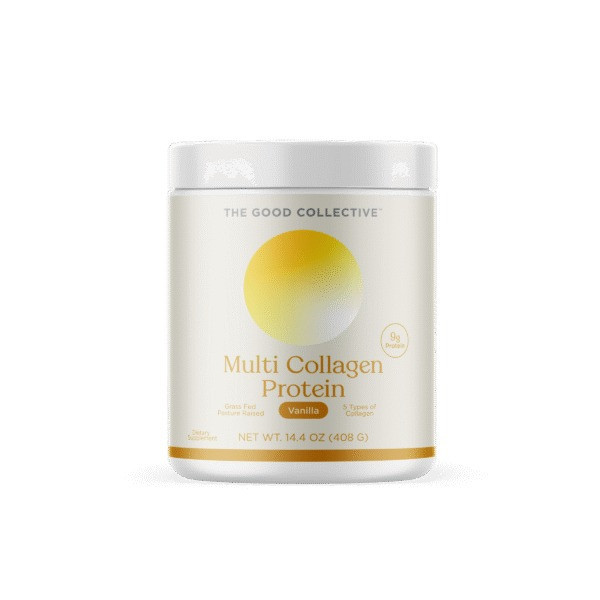
Multi Collagen Protein Powder, Vanilla - 18.5 OZ
This blend brings together five types of collagen sourced from pasture-raised, grass-fed sources, paired with a full day's Vitamin C and a live probiotic strain in a single lightly-sweet vanilla scoop built for skin, hair, joint, and gut support.
- Dissolves into coffee, a morning smoothie, oatmeal, or a glass of water for a daily routine — no gritty texture, no strong flavor to work around.
- Five collagen types sourced from pasture-raised, grass-fed sources give broader coverage than the single-type bovine peptides found in most grocery-shelf tubs.
- An animal-derived collagen formula, not a vegan or vegetarian product — built for a protein-focused daily supplement routine.
The Good Collective is a private-label line carried by independent grocers — not a name most shoppers already recognize — built to hold the same formulation and quality bar as national-brand supplements, without the marketing spend and shelf-slotting fees that get baked into a recognizable label's price.
This Multi Collagen Protein Powder blends five types of collagen, sourced from pasture-raised, grass-fed sources, into a lightly sweet vanilla scoop that works as a daily grass-fed collagen powder for hair, skin, joint, and gut support. Each serving delivers 9g of protein, 100% of the Daily Value of Vitamin C, and 2 billion CFU of Bacillus Coagulans (measured at the time of manufacture).
Vitamin C is included because it's a required cofactor for the enzymes your body uses to synthesize collagen — pairing it with collagen peptides is what connects the scoop to the hair, skin, nail, and joint support people take this kind of supplement for. The added probiotic strain rounds out the gut-support angle without changing the taste.
Stir one scoop into coffee, a smoothie, oatmeal, or water — the vanilla flavor is mild enough to blend in rather than dominate whatever you mix it with.
Because the collagen here comes from animal sources, this is not a vegan or vegetarian product; it's formulated for an animal-based, protein-focused supplement routine, and its low-sugar, animal-sourced protein profile fits comfortably into keto, paleo, or carnivore-style eating patterns. Store the tub in a cool, dry place — no refrigeration required.
Common Questions
How does grass-fed, pasture-raised collagen differ from collagen sourced from conventional, grain-finished cattle?
The difference isn't in the collagen protein itself, which is made of the same amino acids (mostly glycine, proline, and hydroxyproline) regardless of what the animal ate. Where grass-fed and pasture-raised sourcing matters is upstream: cattle raised on pasture without routine antibiotics or added hormones tend to come from operations with tighter animal-welfare and land-management standards, and that's what the grass-fed and pasture-raised claims on this label are certifying. Conventional, grain-finished operations aren't required to disclose antibiotic or hormone use on a collagen supplement label the way they might on a meat label, so there's less traceability. If you're specifically looking for the omega-3 and CLA differences that show up in grass-fed beef, those are fat-soluble compounds concentrated in muscle and fat tissue, not in the connective tissue collagen is extracted from, so they aren't a meaningful factor in a collagen powder either way.
Why is Vitamin C included with the collagen instead of just collagen peptides alone?
Vitamin C is a required cofactor for two enzymes, prolyl hydroxylase and lysyl hydroxylase, that your body uses to stabilize the collagen triple-helix structure during synthesis. Without adequate Vitamin C, those enzymes can't function properly, and the collagen your cells produce ends up structurally weaker. This is why people with severe Vitamin C deficiency (scurvy) show connective tissue breakdown even though their diet may still contain protein. Each serving here provides 100% of the Daily Value of Vitamin C specifically to support that enzymatic step, rather than relying on collagen peptides alone to do the work.
Does this fit a keto, paleo, or carnivore diet?
Each serving delivers 9g of protein with well under 1g of carbohydrate and no meaningful fat, which keeps it compatible with keto macros without pushing you out of ketosis. It fits paleo criteria because it's a single-ingredient-category animal protein without grains, dairy, or refined sugar in the base formula. For carnivore or carnivore-adjacent eating, bovine collagen is one of the more commonly accepted additions since it's sourced entirely from cattle connective tissue rather than plant material — though the added probiotic strain and organic food blend mean strict carnivore followers should check those inclusions against their own rules, since they go beyond animal-only ingredients.
How do I use this in food, and does it work the same as gelatin for recipes like broths or jello?
It dissolves into hot or cold liquids without clumping, which is why it works well stirred into coffee, smoothies, oatmeal, or plain water. It will not, however, set or gel the way unflavored gelatin does in a jello mold or a homemade gummy recipe. That's because this is hydrolyzed collagen (collagen peptides), where the protein chains have already been broken down for easier digestion and mixing, and that same breakdown removes gelatin's ability to firm up when chilled. If a recipe specifically calls for gelatin's gelling property, swap in unflavored gelatin instead; for anything where you're just adding protein to a drink or a bowl of food, this works as a stir-in without changing texture.
What do the grass-fed, pasture-raised, and USDA Organic claims actually guarantee, and how can I verify them?
USDA Organic certification means the product was produced and processed under USDA's National Organic Program standards, which restrict synthetic pesticides, prohibited additives, and require documented supply-chain audits — you can look up the certifying agent's records through the USDA's organic integrity database if you want to confirm the specific certifier. Grass-fed and pasture-raised are claims about how the source cattle were raised, and on a certified product they're backed by the same third-party audit trail rather than just a label statement. The Non-GMO claim covers the ingredient sourcing, not the collagen itself, since collagen is an animal protein rather than a crop. For the probiotic count, 2 billion CFU of Bacillus Coagulans is listed as measured at the time of manufacture, which is a more conservative and verifiable claim than an expiration-date guarantee, since live culture counts naturally decline in storage.
What does this product mean by 'bridging nutritional gaps,' and what's actually in a serving beyond collagen?
A serving combines five collagen types sourced from grass-fed cattle with 19 vitamins and minerals, including 3mg of iron, plus an organic food blend of superfoods and herbs layered into the base. The idea is that a straight collagen peptide product only addresses protein and amino acid intake, while adding the vitamin and mineral spread targets nutrients — like iron, which supports oxygen transport in red blood cells — that a protein-focused supplement wouldn't otherwise cover. This is why the formulation is positioned as more than a single-nutrient collagen scoop: it's built to cover several nutritional bases in one serving rather than requiring a separate multivitamin alongside it.
How many servings are in a tub, and what's the daily protein contribution?
One tub holds 408g and yields 40 servings at one scoop per day, which works out to a roughly 40-day supply at the standard serving size. Each scoop contributes 9g of protein, which on its own won't meet a full day's protein target for most adults but is meant to supplement — not replace — protein from meals. If you're tracking macros closely for a specific diet protocol, treat this as an add-on protein source layered into a smoothie, coffee, or oatmeal rather than a meal-replacement product.
This Multi Collagen Protein Powder blends five types of collagen, sourced from pasture-raised, grass-fed sources, into a lightly sweet vanilla scoop that works as a daily grass-fed collagen powder for hair, skin, joint, and gut support. Each serving delivers 9g of protein, 100% of the Daily Value of Vitamin C, and 2 billion CFU of Bacillus Coagulans (measured at the time of manufacture).
Vitamin C is included because it's a required cofactor for the enzymes your body uses to synthesize collagen — pairing it with collagen peptides is what connects the scoop to the hair, skin, nail, and joint support people take this kind of supplement for. The added probiotic strain rounds out the gut-support angle without changing the taste.
Stir one scoop into coffee, a smoothie, oatmeal, or water — the vanilla flavor is mild enough to blend in rather than dominate whatever you mix it with.
Because the collagen here comes from animal sources, this is not a vegan or vegetarian product; it's formulated for an animal-based, protein-focused supplement routine, and its low-sugar, animal-sourced protein profile fits comfortably into keto, paleo, or carnivore-style eating patterns. Store the tub in a cool, dry place — no refrigeration required.
Common Questions
How does grass-fed, pasture-raised collagen differ from collagen sourced from conventional, grain-finished cattle?
The difference isn't in the collagen protein itself, which is made of the same amino acids (mostly glycine, proline, and hydroxyproline) regardless of what the animal ate. Where grass-fed and pasture-raised sourcing matters is upstream: cattle raised on pasture without routine antibiotics or added hormones tend to come from operations with tighter animal-welfare and land-management standards, and that's what the grass-fed and pasture-raised claims on this label are certifying. Conventional, grain-finished operations aren't required to disclose antibiotic or hormone use on a collagen supplement label the way they might on a meat label, so there's less traceability. If you're specifically looking for the omega-3 and CLA differences that show up in grass-fed beef, those are fat-soluble compounds concentrated in muscle and fat tissue, not in the connective tissue collagen is extracted from, so they aren't a meaningful factor in a collagen powder either way.
Why is Vitamin C included with the collagen instead of just collagen peptides alone?
Vitamin C is a required cofactor for two enzymes, prolyl hydroxylase and lysyl hydroxylase, that your body uses to stabilize the collagen triple-helix structure during synthesis. Without adequate Vitamin C, those enzymes can't function properly, and the collagen your cells produce ends up structurally weaker. This is why people with severe Vitamin C deficiency (scurvy) show connective tissue breakdown even though their diet may still contain protein. Each serving here provides 100% of the Daily Value of Vitamin C specifically to support that enzymatic step, rather than relying on collagen peptides alone to do the work.
Does this fit a keto, paleo, or carnivore diet?
Each serving delivers 9g of protein with well under 1g of carbohydrate and no meaningful fat, which keeps it compatible with keto macros without pushing you out of ketosis. It fits paleo criteria because it's a single-ingredient-category animal protein without grains, dairy, or refined sugar in the base formula. For carnivore or carnivore-adjacent eating, bovine collagen is one of the more commonly accepted additions since it's sourced entirely from cattle connective tissue rather than plant material — though the added probiotic strain and organic food blend mean strict carnivore followers should check those inclusions against their own rules, since they go beyond animal-only ingredients.
How do I use this in food, and does it work the same as gelatin for recipes like broths or jello?
It dissolves into hot or cold liquids without clumping, which is why it works well stirred into coffee, smoothies, oatmeal, or plain water. It will not, however, set or gel the way unflavored gelatin does in a jello mold or a homemade gummy recipe. That's because this is hydrolyzed collagen (collagen peptides), where the protein chains have already been broken down for easier digestion and mixing, and that same breakdown removes gelatin's ability to firm up when chilled. If a recipe specifically calls for gelatin's gelling property, swap in unflavored gelatin instead; for anything where you're just adding protein to a drink or a bowl of food, this works as a stir-in without changing texture.
What do the grass-fed, pasture-raised, and USDA Organic claims actually guarantee, and how can I verify them?
USDA Organic certification means the product was produced and processed under USDA's National Organic Program standards, which restrict synthetic pesticides, prohibited additives, and require documented supply-chain audits — you can look up the certifying agent's records through the USDA's organic integrity database if you want to confirm the specific certifier. Grass-fed and pasture-raised are claims about how the source cattle were raised, and on a certified product they're backed by the same third-party audit trail rather than just a label statement. The Non-GMO claim covers the ingredient sourcing, not the collagen itself, since collagen is an animal protein rather than a crop. For the probiotic count, 2 billion CFU of Bacillus Coagulans is listed as measured at the time of manufacture, which is a more conservative and verifiable claim than an expiration-date guarantee, since live culture counts naturally decline in storage.
What does this product mean by 'bridging nutritional gaps,' and what's actually in a serving beyond collagen?
A serving combines five collagen types sourced from grass-fed cattle with 19 vitamins and minerals, including 3mg of iron, plus an organic food blend of superfoods and herbs layered into the base. The idea is that a straight collagen peptide product only addresses protein and amino acid intake, while adding the vitamin and mineral spread targets nutrients — like iron, which supports oxygen transport in red blood cells — that a protein-focused supplement wouldn't otherwise cover. This is why the formulation is positioned as more than a single-nutrient collagen scoop: it's built to cover several nutritional bases in one serving rather than requiring a separate multivitamin alongside it.
How many servings are in a tub, and what's the daily protein contribution?
One tub holds 408g and yields 40 servings at one scoop per day, which works out to a roughly 40-day supply at the standard serving size. Each scoop contributes 9g of protein, which on its own won't meet a full day's protein target for most adults but is meant to supplement — not replace — protein from meals. If you're tracking macros closely for a specific diet protocol, treat this as an add-on protein source layered into a smoothie, coffee, or oatmeal rather than a meal-replacement product.
- __Storage_Location:
- Dry
- __Volume:
- 1500
- __Owner:
- TCFarm
- __badge:
- Grass-Fed