
Men's Multivitamin - 60 ct
The Good Collective
$51.99
Below are the available bulk discount rates for each individual item when you purchase a certain amount
- Buy 2 - 2 and get 2% off
- Buy 3 - 5 and get 4% off
- Buy 6 or above and get 8% off
(No reviews yet)

Write a Review
The Good Collective
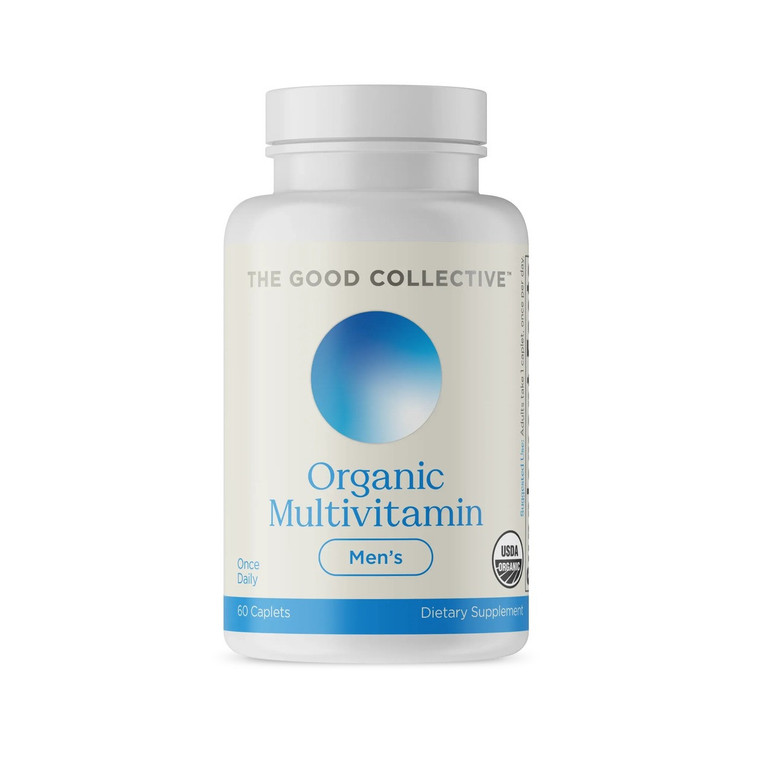
Men's Multivitamin - 60 ct
Most multivitamins on a grocery shelf can't back up the word "organic" with an actual USDA seal — this one can. It's built from a USDA Certified Organic food blend of superfoods and herbs rather than an isolated nutrient stack, and formulated specifically around where men's diets tend to fall short.
- Formulated for men's health specifically — supports energy, bone health, and cardiovascular health in a once-daily caplet
- USDA Certified Organic and Non-GMO Project Verified, sourced from an organic food blend of superfoods and herbs instead of an isolated vitamin-and-mineral stack
- Formulated vegan, fitting a plant-based routine, in a two-month supply bottle
The Good Collective is a private-label brand carried by independent grocers -- not a name you've likely seen on a national shelf. It's formulated to the same USDA Organic, Non-GMO, and vegan standard as bigger-name supplement brands, priced lower because the label skips the marketing spend and big-retail slotting fees that get built into a more recognizable brand's price tag.
This once-daily organic multivitamin for men is built around a targeted nutrient profile: 18 vitamins and minerals, sourced from a USDA Certified Organic food blend of organic superfoods and herbs rather than an isolated nutrient stack. It's Non-GMO Project Verified and formulated vegan, with support aimed at healthy bones, prostate health, a healthy response to oxidative stress, and cellular energy. The label doesn't specify a country or region of origin for its organic ingredients, so if that matters to you, it's worth checking with the retailer before buying.
Take one caplet daily, ideally with food, as part of a routine that already includes real meals -- this multivitamin is designed to close remaining nutritional gaps, not replace them. Each bottle holds 60 caplets, a two-month supply at the once-daily dose.
Formulated vegan and suitable for anyone following a plant-based diet; it isn't specifically formulated or certified for keto, paleo, or carnivore eating patterns, so check the ingredient panel if you're following one of those diets closely. Store in a cool, dry place away from direct sunlight, and keep the cap tightly closed between uses.
Common Questions
How does an organic, food-blend multivitamin compare to a conventional drugstore multivitamin?
Conventional multivitamins typically deliver each of their 19-plus nutrients as an isolated compound made in a lab reactor, with no requirement that any of it come from real food. This caplet instead builds its 19 vitamins and minerals, including 3mg of iron, from a USDA Certified Organic blend of superfoods and herbs, meaning the nutrients arrive alongside the plant compounds they naturally occur with. Conventional formulas often pack iron at 18mg or higher to hit 100% daily value in a single isolated form, which can cause stomach upset in some people; this formula uses a more moderate 3mg dose from a food source, which is gentler but means it's not designed to correct diagnosed iron deficiency on its own. Both approaches can meet daily nutrient targets, but the food-blend approach is the one most associated with 'whole-food multivitamin' labeling because of the organic-certified plant matrix.
What's the actual mechanism behind getting vitamins from an organic superfood blend instead of isolated compounds?
When a vitamin or mineral is delivered inside a food matrix, it's typically accompanied by cofactors, enzymes, and phytonutrients that occur alongside it in nature, such as the way vitamin C in a fruit blend co-occurs with bioflavonoids. Some research suggests these cofactors can support absorption and utilization, though the science on whether this meaningfully outperforms isolated-nutrient absorption is still mixed and not settled for every nutrient in this formula. The organic herbs included are chosen for targeted support rather than blanket coverage, aiming at bone health and cardiovascular support alongside the core vitamin and mineral profile. This is a nutrient-density strategy rather than a treatment strategy, so it's meant to fill dietary gaps rather than correct a diagnosed deficiency or medical condition.
Does this multivitamin fit a keto, paleo, or vegan diet?
It's formulated vegan, so it contains no animal-derived ingredients or gelatin capsules, which makes it compatible with vegan, vegetarian, and most paleo-adjacent eating patterns. For keto followers, the concern isn't macros since a single caplet contributes negligible calories or carbohydrates to a daily count, so it won't meaningfully affect ketosis. Paleo dieters sometimes avoid multivitamins with synthetic fillers or added sugars in the coating; check the ingredient panel for binders if strict paleo compliance matters to you. Because it's a once-daily caplet rather than a powder or gummy, there's no added sugar delivery mechanism to worry about, which is common in gummy-format multivitamins.
When and how should I actually take this for the best absorption?
The label recommends one caplet daily, ideally with food, and this isn't just a general suggestion — fat-soluble vitamins in a multivitamin blend, such as vitamin D and vitamin E, are absorbed more efficiently when taken alongside a meal that contains some dietary fat. Taking it on an empty stomach won't harm you, but you may absorb less of the fat-soluble fraction of the formula. If you're also taking a separate iron or calcium supplement, space them a few hours apart from this multivitamin, since high doses of calcium can compete with iron for absorption in the gut. A 60-caplet bottle at one per day gives you a two-month supply, so it's meant to be worked into an existing daily routine rather than taken in bursts.
How can I verify the organic and non-GMO claims on this label are legitimate?
USDA Organic certification requires third-party inspection of the supply chain, confirming that at least 95% of the organic-labeled ingredients meet USDA organic farming standards, including no synthetic pesticides or irradiation. Non-GMO Project Verification is a separate, additional process from a nonprofit that specifically tests and audits for genetically modified ingredients, since USDA Organic alone doesn't require that testing. Together, these two certifications mean the product has been checked by two independent bodies rather than relying on the brand's own claim. You can verify both certifications by looking up the lot or product on the USDA Organic Integrity Database and the Non-GMO Project's product verification search, which are both public records.
Why would a private-label brand's multivitamin be trustworthy if I've never heard of it?
The Good Collective is a private-label line sold through independent grocers rather than national retail chains, which means its pricing doesn't carry the marketing spend or big-box slotting fees that get built into more recognizable supplement brand pricing. The formulation itself is held to the same third-party standards as bigger names — USDA Organic and Non-GMO Project Verified certification apply the same audit requirements regardless of brand recognition. What you're paying less for is brand marketing overhead, not certification rigor or ingredient sourcing standards. If you're comparing it to a national brand, checking that both carry equivalent certifications is a more reliable comparison point than the label's familiarity.
What does 'bridging nutritional gaps' actually mean for this product?
This multivitamin isn't designed to replace meals or serve as a meal-replacement nutrient source; it's built to supplement whatever your regular diet might be missing, whether that's inconsistent vegetable intake, limited iron from a mostly plant-based diet, or gaps in B-vitamin intake from a busy schedule. The 3mg iron dose, for example, is calibrated as a gap-filler amount rather than a therapeutic dose for someone with diagnosed anemia, who would need a higher, doctor-directed amount. The organic herb blend targeting bone and cardiovascular support works the same way, adding incremental support rather than replacing dietary calcium or heart-healthy fats from food. Think of it as insurance against an imperfect diet, not a substitute for eating vegetables, protein, and whole grains consistently.
This once-daily organic multivitamin for men is built around a targeted nutrient profile: 18 vitamins and minerals, sourced from a USDA Certified Organic food blend of organic superfoods and herbs rather than an isolated nutrient stack. It's Non-GMO Project Verified and formulated vegan, with support aimed at healthy bones, prostate health, a healthy response to oxidative stress, and cellular energy. The label doesn't specify a country or region of origin for its organic ingredients, so if that matters to you, it's worth checking with the retailer before buying.
Take one caplet daily, ideally with food, as part of a routine that already includes real meals -- this multivitamin is designed to close remaining nutritional gaps, not replace them. Each bottle holds 60 caplets, a two-month supply at the once-daily dose.
Formulated vegan and suitable for anyone following a plant-based diet; it isn't specifically formulated or certified for keto, paleo, or carnivore eating patterns, so check the ingredient panel if you're following one of those diets closely. Store in a cool, dry place away from direct sunlight, and keep the cap tightly closed between uses.
Common Questions
How does an organic, food-blend multivitamin compare to a conventional drugstore multivitamin?
Conventional multivitamins typically deliver each of their 19-plus nutrients as an isolated compound made in a lab reactor, with no requirement that any of it come from real food. This caplet instead builds its 19 vitamins and minerals, including 3mg of iron, from a USDA Certified Organic blend of superfoods and herbs, meaning the nutrients arrive alongside the plant compounds they naturally occur with. Conventional formulas often pack iron at 18mg or higher to hit 100% daily value in a single isolated form, which can cause stomach upset in some people; this formula uses a more moderate 3mg dose from a food source, which is gentler but means it's not designed to correct diagnosed iron deficiency on its own. Both approaches can meet daily nutrient targets, but the food-blend approach is the one most associated with 'whole-food multivitamin' labeling because of the organic-certified plant matrix.
What's the actual mechanism behind getting vitamins from an organic superfood blend instead of isolated compounds?
When a vitamin or mineral is delivered inside a food matrix, it's typically accompanied by cofactors, enzymes, and phytonutrients that occur alongside it in nature, such as the way vitamin C in a fruit blend co-occurs with bioflavonoids. Some research suggests these cofactors can support absorption and utilization, though the science on whether this meaningfully outperforms isolated-nutrient absorption is still mixed and not settled for every nutrient in this formula. The organic herbs included are chosen for targeted support rather than blanket coverage, aiming at bone health and cardiovascular support alongside the core vitamin and mineral profile. This is a nutrient-density strategy rather than a treatment strategy, so it's meant to fill dietary gaps rather than correct a diagnosed deficiency or medical condition.
Does this multivitamin fit a keto, paleo, or vegan diet?
It's formulated vegan, so it contains no animal-derived ingredients or gelatin capsules, which makes it compatible with vegan, vegetarian, and most paleo-adjacent eating patterns. For keto followers, the concern isn't macros since a single caplet contributes negligible calories or carbohydrates to a daily count, so it won't meaningfully affect ketosis. Paleo dieters sometimes avoid multivitamins with synthetic fillers or added sugars in the coating; check the ingredient panel for binders if strict paleo compliance matters to you. Because it's a once-daily caplet rather than a powder or gummy, there's no added sugar delivery mechanism to worry about, which is common in gummy-format multivitamins.
When and how should I actually take this for the best absorption?
The label recommends one caplet daily, ideally with food, and this isn't just a general suggestion — fat-soluble vitamins in a multivitamin blend, such as vitamin D and vitamin E, are absorbed more efficiently when taken alongside a meal that contains some dietary fat. Taking it on an empty stomach won't harm you, but you may absorb less of the fat-soluble fraction of the formula. If you're also taking a separate iron or calcium supplement, space them a few hours apart from this multivitamin, since high doses of calcium can compete with iron for absorption in the gut. A 60-caplet bottle at one per day gives you a two-month supply, so it's meant to be worked into an existing daily routine rather than taken in bursts.
How can I verify the organic and non-GMO claims on this label are legitimate?
USDA Organic certification requires third-party inspection of the supply chain, confirming that at least 95% of the organic-labeled ingredients meet USDA organic farming standards, including no synthetic pesticides or irradiation. Non-GMO Project Verification is a separate, additional process from a nonprofit that specifically tests and audits for genetically modified ingredients, since USDA Organic alone doesn't require that testing. Together, these two certifications mean the product has been checked by two independent bodies rather than relying on the brand's own claim. You can verify both certifications by looking up the lot or product on the USDA Organic Integrity Database and the Non-GMO Project's product verification search, which are both public records.
Why would a private-label brand's multivitamin be trustworthy if I've never heard of it?
The Good Collective is a private-label line sold through independent grocers rather than national retail chains, which means its pricing doesn't carry the marketing spend or big-box slotting fees that get built into more recognizable supplement brand pricing. The formulation itself is held to the same third-party standards as bigger names — USDA Organic and Non-GMO Project Verified certification apply the same audit requirements regardless of brand recognition. What you're paying less for is brand marketing overhead, not certification rigor or ingredient sourcing standards. If you're comparing it to a national brand, checking that both carry equivalent certifications is a more reliable comparison point than the label's familiarity.
What does 'bridging nutritional gaps' actually mean for this product?
This multivitamin isn't designed to replace meals or serve as a meal-replacement nutrient source; it's built to supplement whatever your regular diet might be missing, whether that's inconsistent vegetable intake, limited iron from a mostly plant-based diet, or gaps in B-vitamin intake from a busy schedule. The 3mg iron dose, for example, is calibrated as a gap-filler amount rather than a therapeutic dose for someone with diagnosed anemia, who would need a higher, doctor-directed amount. The organic herb blend targeting bone and cardiovascular support works the same way, adding incremental support rather than replacing dietary calcium or heart-healthy fats from food. Think of it as insurance against an imperfect diet, not a substitute for eating vegetables, protein, and whole grains consistently.
- __Storage_Location:
- Dry
- __Volume:
- 360
- __Owner:
- TCFarm
- __badge:
- Organic
Related Products
-
-
-
Sale
-