Jalapeno Business Smoked Pepper Rub - 10 oz
DD-BBQ
$14.00
(No reviews yet)

Write a Review
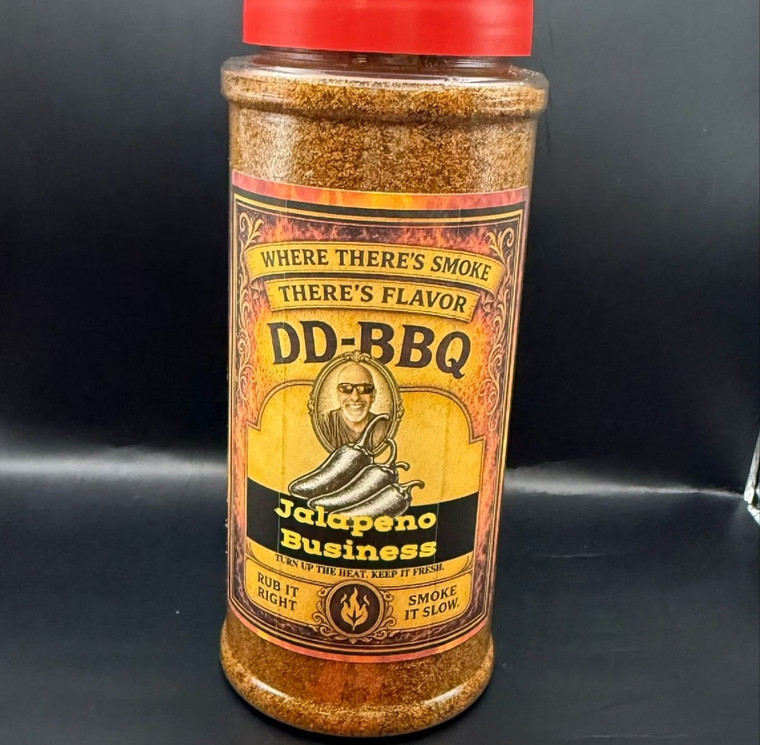
DD-BBQ
Jalapeno Business Smoked Pepper Rub - 10 oz
Jalapeno Business starts with fresh jalapeños and serrano chiles that are slow-smoked before they ever hit the mixing bowl — a step most pepper rubs skip entirely. Every batch is blended by hand in a small Minnesota kitchen, keeping runs small enough to control the smoke, the heat, and the balance between citrus brightness and pepper depth. It's built for backyard cooks who want a rub that stacks up next to anything from a competition tent, without needing a trophy case to prove it.
- Built for chicken, pork, seafood, and grilled vegetables — anywhere a clean, smoky pepper finish is welcome.
- Slow-smoked jalapeños and serranos plus locally sourced herbs set this apart from pepper rubs made with raw, unsmoked chile powder.
- Gluten-free ingredient list; contains dairy from butter powder, so it's not a vegan-friendly blend.
Every jar of Jalapeno Business, a small-batch smoked pepper rub, is mixed by hand in a Minnesota home kitchen, operating under the state's Cottage Food Producer Law that keeps every batch small, traceable, and personal - the same rub tested on the maker's own smoker before it ever left the house.
The base starts with fresh jalapenos and serrano chiles that are slow-smoked before grinding, then blended with garlic, rosemary, cumin, oregano, basil, thyme, marjoram, and a pop of lime powder for brightness. The result is a rub that leans savory and smoky first, with a clean pepper heat that builds instead of overwhelms.
Reach for it on grilled chicken thighs, a pork shoulder headed for the smoker, shrimp skewers, or a sheet pan of roasted vegetables - anywhere a straightforward smoky pepper finish beats a one-note hot sauce. Pressing a light coating into the meat about 30 minutes before cooking lets the smoked pepper flavor carry all the way through.
The ingredient list is gluten-free by nature - no wheat-based fillers or anti-caking agents - though the butter powder means it isn't a vegan pick, and the touch of sugar and dairy also keep it off strict keto, paleo, or carnivore lists even as it stays low-carb friendly in small pinches. Every spice and pepper in this blend is sourced from trusted local Minnesota suppliers, keeping the supply chain as small and traceable as the batch size itself. Store the jar sealed, away from heat and direct light, and a pinch stays potent for months in a regular pantry.
Ingredients: Salt, Butter Powder, Sugar, Paprika, Onion Powder, Garlic Powder, Serrano Peppers, Black Pepper, Jalapeno Peppers, Rosemary, Cumin, Oregano, Basil, Lime Powder, Thyme, and Marjoram. Contains: Milk.
Common Questions
How does this rub compare to a conventional grocery-store BBQ seasoning?
Most mass-produced rubs list salt, sugar, and then silicon dioxide or calcium silicate as anti-caking agents, followed by dextrose or maltodextrin fillers that can make up 20 to 40 percent of the jar's volume without adding flavor. Jalapeno Business skips those additives entirely — after salt, sugar, and butter powder, every remaining ingredient is a whole spice, dried herb, or pepper, including real jalapenos and serranos that were smoked before grinding rather than flavored with liquid smoke extract. That means a spoonful is doing more actual seasoning work per gram, since you're not diluting the blend with starch-based bulking agents. The tradeoff is a shorter shelf stability window than rubs loaded with preservatives, so it should be used within a few months of opening rather than sitting in the pantry for a year or two.
What gives this rub its heat, and is it actually a mild-to-medium blend?
The heat comes from capsaicin, the active compound concentrated in the membranes of the jalapenos and serrano peppers used here. Capsaicin binds to TRPV1 receptors on the tongue, the same receptors that respond to actual heat, which is why the sensation builds progressively rather than hitting all at once — serranos run roughly 10,000 to 25,000 Scoville units, well below habanero or ghost pepper territory. Slow-smoking the peppers before grinding also breaks down some of that raw capsaicin punch and layers in smoky compounds like guaiacol, which is why the finished rub reads as savory-smoky first with heat trailing behind rather than leading. Most people describe it as medium heat, noticeable but not something that needs dairy or sugar to counteract.
Does this rub fit keto, paleo, or carnivore eating patterns?
For keto, a typical quarter-teaspoon application adds a negligible amount of carbohydrate — the sugar and butter powder are present mostly for flavor balancing and browning, not as a significant carb source at normal serving sizes, so it fits comfortably under most daily net-carb targets. For paleo, every ingredient is a whole spice, dried herb, or pepper with no gums, starches, or synthetic anti-caking agents, which checks the box for that protocol's whole-food standard. It's not a fit for strict carnivore, since the entire point of the blend is plant-based seasoning — herbs, chiles, and aromatics — rather than an animal-derived flavor base. Vegans should also note the butter powder, which is a dairy-derived ingredient and the one thing keeping this from being fully plant-based despite the rest of the list being produce and spice.
What can I cook with this besides the pork and chicken mentioned already?
It works well pressed into a beef brisket or chuck roast before a long smoke, since the rosemary, cumin, and marjoram hold up over multi-hour cook times the way lighter herb blends can't. On a pork tenderloin or a rack of ribs, apply it the same way as the pork shoulder guidance — light coating, 30 minutes of rest before heat — since the sugar content needs that window to start caramelizing without burning. It also works stirred into softened butter for a compound butter finish on grilled steak, or mixed into ground beef or ground turkey before forming burger patties, where the paprika and onion powder help build a crust on the grill. For a non-meat application, tossing it with roasted chickpeas or a sheet pan of cauliflower before roasting gives a similar smoky-pepper profile without any adaptation needed.
What does small-batch actually mean here, and how do I know the sourcing claims are real?
Every jar is made in Dennis Daily's home kitchen in Minnesota under the state's Cottage Food Producer Law, which caps production scale and requires the producer to be directly accountable for each batch rather than outsourcing to a co-packer. That's a verifiable regulatory structure, not a marketing label — it legally limits how much can be produced at once and ties the product to a named individual and kitchen rather than an anonymous facility. Small-batch production also means less batch-to-batch variation from industrial blending equipment, since the peppers are smoked and ground in quantities small enough to monitor by hand. If you want to confirm any of this, Minnesota's Cottage Food registration is public record and tied to the producer's name on the label.
How should I store it and how long does the flavor actually last?
Keep the jar sealed and out of direct light and heat, ideally in a cabinet rather than a spot near the stove where ambient heat speeds up flavor loss. Ground chiles and dried herbs lose potency mainly through oxidation and volatile oil evaporation, not spoilage, so the rub won't go bad in the way fresh food does — it just gradually tastes flatter. Stored properly, it holds solid flavor for several months, though the smoked pepper and citrus notes from the lime powder are the first things to fade, so front-load your use of it if you want the brightest version of the blend. There's no need for refrigeration since there's no perishable protein or dairy fat in liquid form, just the dried butter powder.
The base starts with fresh jalapenos and serrano chiles that are slow-smoked before grinding, then blended with garlic, rosemary, cumin, oregano, basil, thyme, marjoram, and a pop of lime powder for brightness. The result is a rub that leans savory and smoky first, with a clean pepper heat that builds instead of overwhelms.
Reach for it on grilled chicken thighs, a pork shoulder headed for the smoker, shrimp skewers, or a sheet pan of roasted vegetables - anywhere a straightforward smoky pepper finish beats a one-note hot sauce. Pressing a light coating into the meat about 30 minutes before cooking lets the smoked pepper flavor carry all the way through.
The ingredient list is gluten-free by nature - no wheat-based fillers or anti-caking agents - though the butter powder means it isn't a vegan pick, and the touch of sugar and dairy also keep it off strict keto, paleo, or carnivore lists even as it stays low-carb friendly in small pinches. Every spice and pepper in this blend is sourced from trusted local Minnesota suppliers, keeping the supply chain as small and traceable as the batch size itself. Store the jar sealed, away from heat and direct light, and a pinch stays potent for months in a regular pantry.
Ingredients: Salt, Butter Powder, Sugar, Paprika, Onion Powder, Garlic Powder, Serrano Peppers, Black Pepper, Jalapeno Peppers, Rosemary, Cumin, Oregano, Basil, Lime Powder, Thyme, and Marjoram. Contains: Milk.
Common Questions
How does this rub compare to a conventional grocery-store BBQ seasoning?
Most mass-produced rubs list salt, sugar, and then silicon dioxide or calcium silicate as anti-caking agents, followed by dextrose or maltodextrin fillers that can make up 20 to 40 percent of the jar's volume without adding flavor. Jalapeno Business skips those additives entirely — after salt, sugar, and butter powder, every remaining ingredient is a whole spice, dried herb, or pepper, including real jalapenos and serranos that were smoked before grinding rather than flavored with liquid smoke extract. That means a spoonful is doing more actual seasoning work per gram, since you're not diluting the blend with starch-based bulking agents. The tradeoff is a shorter shelf stability window than rubs loaded with preservatives, so it should be used within a few months of opening rather than sitting in the pantry for a year or two.
What gives this rub its heat, and is it actually a mild-to-medium blend?
The heat comes from capsaicin, the active compound concentrated in the membranes of the jalapenos and serrano peppers used here. Capsaicin binds to TRPV1 receptors on the tongue, the same receptors that respond to actual heat, which is why the sensation builds progressively rather than hitting all at once — serranos run roughly 10,000 to 25,000 Scoville units, well below habanero or ghost pepper territory. Slow-smoking the peppers before grinding also breaks down some of that raw capsaicin punch and layers in smoky compounds like guaiacol, which is why the finished rub reads as savory-smoky first with heat trailing behind rather than leading. Most people describe it as medium heat, noticeable but not something that needs dairy or sugar to counteract.
Does this rub fit keto, paleo, or carnivore eating patterns?
For keto, a typical quarter-teaspoon application adds a negligible amount of carbohydrate — the sugar and butter powder are present mostly for flavor balancing and browning, not as a significant carb source at normal serving sizes, so it fits comfortably under most daily net-carb targets. For paleo, every ingredient is a whole spice, dried herb, or pepper with no gums, starches, or synthetic anti-caking agents, which checks the box for that protocol's whole-food standard. It's not a fit for strict carnivore, since the entire point of the blend is plant-based seasoning — herbs, chiles, and aromatics — rather than an animal-derived flavor base. Vegans should also note the butter powder, which is a dairy-derived ingredient and the one thing keeping this from being fully plant-based despite the rest of the list being produce and spice.
What can I cook with this besides the pork and chicken mentioned already?
It works well pressed into a beef brisket or chuck roast before a long smoke, since the rosemary, cumin, and marjoram hold up over multi-hour cook times the way lighter herb blends can't. On a pork tenderloin or a rack of ribs, apply it the same way as the pork shoulder guidance — light coating, 30 minutes of rest before heat — since the sugar content needs that window to start caramelizing without burning. It also works stirred into softened butter for a compound butter finish on grilled steak, or mixed into ground beef or ground turkey before forming burger patties, where the paprika and onion powder help build a crust on the grill. For a non-meat application, tossing it with roasted chickpeas or a sheet pan of cauliflower before roasting gives a similar smoky-pepper profile without any adaptation needed.
What does small-batch actually mean here, and how do I know the sourcing claims are real?
Every jar is made in Dennis Daily's home kitchen in Minnesota under the state's Cottage Food Producer Law, which caps production scale and requires the producer to be directly accountable for each batch rather than outsourcing to a co-packer. That's a verifiable regulatory structure, not a marketing label — it legally limits how much can be produced at once and ties the product to a named individual and kitchen rather than an anonymous facility. Small-batch production also means less batch-to-batch variation from industrial blending equipment, since the peppers are smoked and ground in quantities small enough to monitor by hand. If you want to confirm any of this, Minnesota's Cottage Food registration is public record and tied to the producer's name on the label.
How should I store it and how long does the flavor actually last?
Keep the jar sealed and out of direct light and heat, ideally in a cabinet rather than a spot near the stove where ambient heat speeds up flavor loss. Ground chiles and dried herbs lose potency mainly through oxidation and volatile oil evaporation, not spoilage, so the rub won't go bad in the way fresh food does — it just gradually tastes flatter. Stored properly, it holds solid flavor for several months, though the smoked pepper and citrus notes from the lime powder are the first things to fade, so front-load your use of it if you want the brightest version of the blend. There's no need for refrigeration since there's no perishable protein or dairy fat in liquid form, just the dried butter powder.
- __Storage_Location:
- Dry
- __Volume:
- 300
- __Owner:
- Double D BBQ
- __badge:
- Locally Sourced