Forest Hog Honey Bone-in Ham Roast - Avg. 2.5lb
TC Farm
$37.99
Below are the available bulk discount rates for each individual item when you purchase a certain amount
- Buy 2 - 5 and get 2% off
- Buy 6 - 11 and get 4% off
- Buy 12 or above and get 8% off
(No reviews yet)

Write a Review
TC Farm
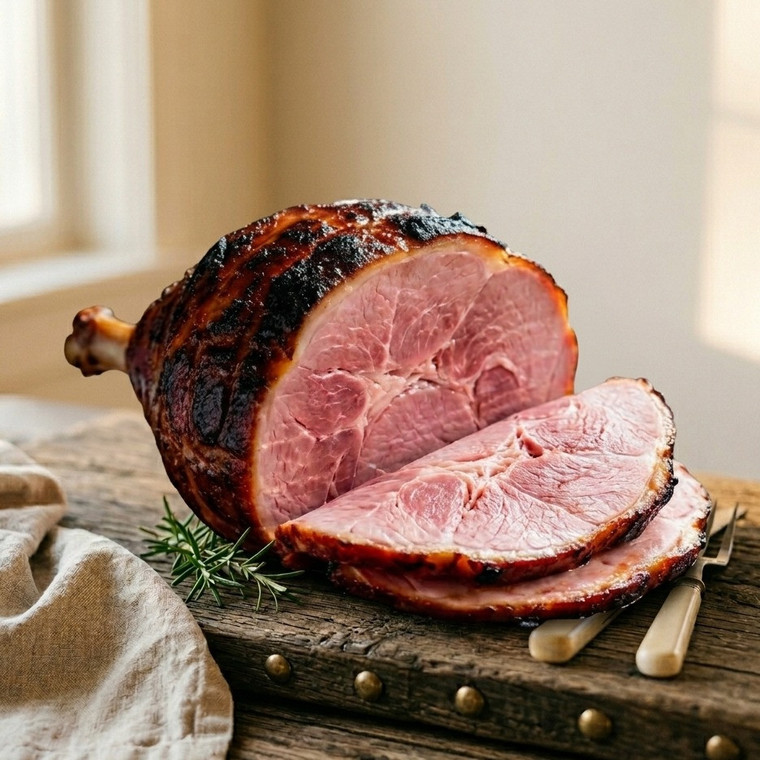
Forest Hog Honey Bone-in Ham Roast - Avg. 2.5lb
Min weight. 2lbs. This bone-in ham roast spends several days in a wet brine before it ever sees the smokehouse, then takes on a slow, saturating maplewood smoke that reaches all the way to the bone. It arrives fully cooked — no oven-timer anxiety, no guessing at temperatures — just a warm-and-serve centerpiece with the depth of flavor and moisture that a boneless, quick-smoked ham can't replicate.
- Built for the holiday table or any Sunday roast: warm it through and carve — no marinating, injecting, or hours of unattended cooking required.
- A multi-day brine followed by a slow maplewood smoke (not the hickory smoke used on our sibling ham line) gives the meat a deeper, more even smoke penetration than a fast-smoked ham.
- Made with a short, recognizable ingredient list — pork, water, sea salt, raw honey, sugar, and spice extracts — with no artificial preservatives or flavor enhancers in the brine.
This bone-in ham roast is built the slow way: brined for several days, then pushed into the smokehouse for a long, saturating maplewood smoke rather than a quick liquid-smoke shortcut. The result is a smoke ring and flavor depth that works its way to the bone, not just the surface.
Each roast is bone-in, fully cooked, and ready to warm and serve — average weight 2.5 lb, with a guaranteed minimum of 2 lb per roast. Because it's fully cooked, there's no need to bring it to a specific internal temperature before eating; warming it gently in the oven is simply about serving it hot and letting the smoke and brine flavor come forward. The bone itself helps the roast hold moisture and flavor through reheating, something a boneless spiral-cut ham can't match.
Warm covered, low and slow, until heated through, then rest briefly before carving for the cleanest slices. It works as a holiday ham centerpiece, a make-ahead Sunday dinner, or sliced cold for sandwiches once cooled.
Because the brine includes raw honey and sugar, this ham is not suited to strict keto, carnivore, or low-sugar eating plans — it's built for traditional, whole-food ham flavor rather than a restrictive-diet profile. Keep frozen until ready to use; thaw in the refrigerator before warming and serving.
Ingredients: Pork, Water, Sea Salt, Raw Honey, Sugar, and Spice Extracts.
Common Questions
How does this ham compare to a typical grocery store spiral-cut ham?
USDA labeling rules allow a ham labeled "ham with natural juices" to contain up to 10% added water and solution by weight, while a product labeled simply "ham, water added" or "ham and water product" can carry even more, sometimes 15-20% added weight in brine, phosphates, and sugars. This roast lists Pork, Water, Sea Salt, Raw Honey, Sugar, and Spice Extracts as its entire ingredient panel, with no added phosphates, carrageenan, or sodium erythorbate, which are common in mass-market spiral hams to extend shelf life and bulk up weight. It's also bone-in rather than boneless, so the meat isn't compressed and reformed the way many pre-sliced spiral hams are. The tradeoff is that a bone-in roast yields slightly less usable sliced meat per pound than a boneless one, but what you get is closer to a whole muscle cut than a reconstructed product.
What does the maplewood smoking actually do to the meat, beyond flavor?
True smokehouse smoking, as opposed to liquid smoke flavoring, works through a slow deposition of phenolic and carbonyl compounds from smoldering wood onto and into the meat's surface over several hours, which is what forms the pink-red smoke ring visible when you slice into it. That ring is a chemical reaction between nitric oxide from the smoke and myoglobin in the muscle, and it only penetrates fully with extended, low-temperature smoke exposure rather than a fast liquid-smoke bath. This process also has a mild preservative effect, since some of those same smoke compounds have antimicrobial properties on the meat's surface. The multi-day brine before smoking gives the salt and sugar time to migrate toward the bone as well, which is part of why the flavor doesn't stay superficial.
Does this ham fit a keto, paleo, or carnivore diet?
This is not a good fit for strict keto or carnivore eating because the brine contains raw honey and sugar, which contribute carbohydrates to the finished product, typically in the range of 1-2 grams of sugar per 2-ounce serving for a honey-brined ham, though exact values depend on how much brine is absorbed. For paleo, it's a partial fit at best since paleo generally avoids refined sugar, though some looser interpretations allow small amounts of honey as a natural sweetener. If you're tracking strict net carbs or eating zero-sugar, this product will add measurable carbs per serving that a plain roasted pork loin or unbrined ham would not. It's better suited to traditional or flexible whole-food eating patterns where a few grams of sugar from honey in a holiday ham isn't a concern.
What can I substitute this ham for in recipes that call for other pork or ham cuts?
Because it's fully cooked and bone-in, it works as a direct swap for a store-bought spiral ham in any baked ham recipe, glazed ham dinner, or ham-and-egg breakfast bake, without needing to adjust cook time much beyond warming through since you're not cooking raw meat. The bone itself is excellent simmered afterward in split pea soup, navy bean soup, or collard greens, where a ham bone is traditionally used to flavor the pot; save it rather than discarding it. Diced leftover meat substitutes well for cubed ham in quiche, fried rice, scalloped potatoes, or a breakfast hash. It's not a substitute for raw pork in recipes that require browning or rendering fat from uncooked meat, since it's already fully cooked and smoked.
How can I verify what's actually in this ham beyond the label?
The ingredient list itself is the clearest verification tool: six ingredients, all named plainly, with no phosphate blends, modified starches, or flavor compounds hidden under generic terms like "natural flavors." There are no third-party certifications listed on this product, so any claims about how the hogs were raised should be checked directly against the Forest Hog program page rather than assumed from packaging language. If a specific certification like USDA Organic or Certified Humane matters to you, look for that seal explicitly, since "Forest Hog" is a program name rather than a regulated certification term. The most reliable way to confirm quality is comparing the ingredient panel and weight guarantee against a comparable product's label side by side.
Why choose a bone-in roast instead of a boneless one, and what's the minimum weight I'm guaranteed?
The bone conducts heat differently than muscle during warming, which slows moisture loss from the center of the roast and helps keep the meat from drying out the way a boneless spiral-cut ham can when it sits under heat lamps or gets reheated too fast. It also adds body to any stock or bean dish you make afterward, which a boneless cut can't offer once it's gone. Each roast averages 2.5 pounds but is guaranteed to weigh at least 2 pounds, so you know the floor on what you're getting even though natural variation in bone-in cuts means exact weights differ roast to roast. If you need precise portion counts for a large group, plan servings off the 2-pound minimum rather than the average to be safe.
- __Storage_Location:
- Frozen
- __Volume:
- 3500
- __Owner:
- TCFarm
- Pasture Raised:
- Yes
- Non-GMO Feed Or Ingredient:
- Yes
- No Soy Feed:
- Yes
- Transition Organic Feed:
- Yes
- __unit_size:
- Min 2lb