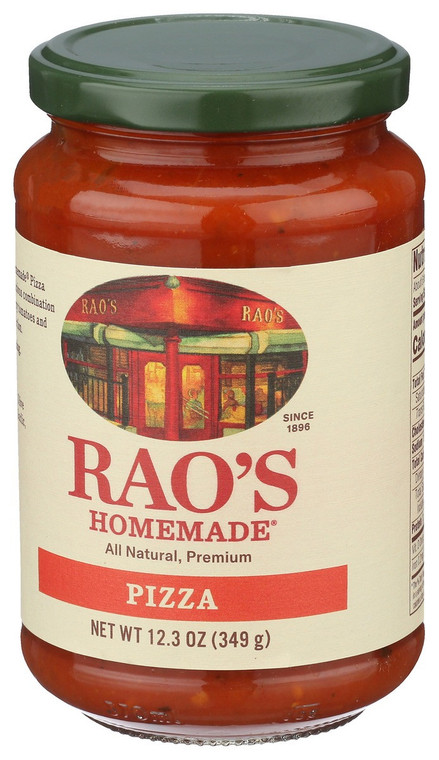
Classic Pizza Sauce - 12.3 oz
Rao's
$5.29
Below are the available bulk discount rates for each individual item when you purchase a certain amount
- Buy 2 - 2 and get 2% off
- Buy 3 - 5 and get 4% off
- Buy 6 or above and get 8% off
(No reviews yet)

Write a Review
Rao's
Classic Pizza Sauce - 12.3 oz
Rao's Homemade has followed the same rule since 1896: whole peeled tomatoes, cooked low and slow in small kettles, with nothing added to fix an underripe tomato. Most jarred pizza sauces reach for sugar to smooth out acidity — this one skips it, relying on Italian cherry tomatoes picked at peak ripeness for natural sweetness and a bright, unmistakably homemade taste.
- Built for pizza night, but just as useful spread under a calzone, spooned over baked ziti, or served as a dipping sauce for garlic knots.
- Made with no added sugar — a rarity in a category where sugar is the standard workaround for tomato acidity.
- Naturally vegan and vegetarian, with an ingredient list free of dairy, meat, or gluten-containing grains.
Rao's Homemade traces its slow-kettle method back to 1896, when the original restaurant first began simmering sauce the same way it does today. This Classic Italian Pizza Sauce follows that recipe: whole peeled Italian tomatoes and ripe cherry tomatoes cooked down until they break into a bright, cling-to-the-crust sauce, with no sugar added to mask an underripe batch.
Each 12.3 oz jar is built specifically for pizza night -- thicker and more concentrated than a pasta marinara -- rounded out with olive oil, carrots, onions, garlic, oregano, and basil. It's cooked in small batches rather than run through a high-volume industrial line, which is part of why the tomato flavor stays forward instead of cooking out flat. With no added sugar, grains, or dairy in the ingredient list, this sauce fits naturally into keto and paleo-style meal plans, though it carries no formal diet certification.
Spread it under mozzarella for a classic pie, use it as a dip for garlic knots, or spoon it over a calzone before it goes into the oven. Store the unopened jar in the pantry; refrigerate after opening and use within about a week.
Ingredients: Italian Whole Peeled Tomatoes, Italian Cherry Tomatoes, Olive Oil, Carrots, Onions, Salt, Oregano, Garlic, and Basil.
Common Questions
How does this compare nutritionally to a standard grocery store pizza sauce?
A typical serving (about 1/4 cup) of mainstream pizza sauce brands like Contadina or Ragu runs 4 to 6 grams of sugar per serving, much of it added cane sugar or corn syrup used to compensate for underripe or watery tomatoes. This sauce has no added sugar at all, so the naturally occurring sugars from the tomatoes and carrots land closer to 3 grams per serving. Sodium is comparable across most brands, generally 300 to 380 milligrams per serving, since salt is doing real seasoning work rather than masking flavor gaps. The calorie count is similar too, around 40 to 60 calories per serving, but the ingredient list here is nine items instead of the 12 to 15 you'll find on sauces that include modified starches, citric acid, and sugar as separate line items.
Why does cooking the tomatoes matter for lycopene, and does the olive oil actually do anything?
Raw tomatoes contain lycopene mostly in a trans-isomer form that the body absorbs poorly. Heating tomatoes during cooking converts a portion of that lycopene into cis-isomers, which are more soluble and easier for the intestine to absorb, a well-documented effect in food science literature on processed versus raw tomato products. Lycopene is also fat-soluble, meaning it needs a lipid to carry it across the intestinal wall, so the olive oil cooked into the sauce isn't just for flavor or texture, it's functioning as a delivery vehicle for that carotenoid. This is part of why slow-cooked tomato sauces made with real olive oil tend to test higher for bioavailable lycopene than a fresh tomato salad.
Does this fit a keto, paleo, or low-carb diet?
Yes, with normal portioning. A quarter-cup serving carries roughly 5 to 6 grams of total carbohydrate, most of it from the tomatoes and carrots, which is low enough to fit inside a standard 20 to 25 gram daily net carb allowance on keto if you're mindful of the rest of your toppings. For paleo, every ingredient on the label is a whole food or a spice, there's no added sugar, no starch thickener, and no seed oil, which checks the boxes most paleo protocols require. It's not relevant to strict carnivore eating since it's tomato-based, but for anyone doing keto or paleo pizza on a cauliflower or almond-flour crust, this sauce won't be the thing that knocks you out of macros.
What else can I make with this besides pizza?
Because it's cooked thicker and more concentrated than a standard marinara, it holds up well in baked dishes where a thinner sauce would turn watery. Use it as the sauce layer in baked ziti or lasagna, spread it under cheese for a quick chicken or eggplant parmesan, or thin it slightly with a splash of stock or crushed tomatoes if you want to stretch it into a pasta sauce for four instead of two. It also works cold or gently warmed as a dip for garlic knots, breadsticks, or mozzarella sticks. If you're using it in a dish that cooks longer than 20 to 30 minutes, add it later in the process since it's already reduced and can scorch if left over direct heat too long.
How do I know the no added sugar claim and the tomato sourcing are accurate?
The ingredient list is the verification: sugar does not appear anywhere on it, and any added sugar would legally have to be declared as its own ingredient under FDA labeling rules. The tomatoes are identified specifically as Italian whole peeled tomatoes and Italian cherry tomatoes rather than a generic country-of-origin blend, which is a more specific sourcing claim than most jarred sauces make. There's no third-party organic or non-GMO certification on this product, so if either of those matters to you specifically, this jar won't check that box, but the no added sugar claim is straightforwardly confirmed by reading the nine-ingredient label itself.
What actually makes this different from a jar of marinara?
This sauce is built at a thicker, more reduced consistency specifically so it clings to pizza dough instead of soaking in and making the crust soggy, which is a real functional difference from marinara that's designed to coat pasta and pool slightly in the bowl. The tomato-to-liquid ratio is higher, meaning less added water and a more concentrated tomato flavor per spoonful. It's still built from the same base of whole peeled and cherry tomatoes, olive oil, carrots, onions, garlic, and herbs, but the batch is cooked down further before jarring, which is why a quarter-cup goes noticeably further spread across a pizza than the same amount would across a plate of spaghetti.
- __Storage_Location:
- Dry
- __Volume:
- 595
- __Owner:
- TCFarm
- __badge:
- No Added Sugar
Related Products
-
-
-
-
Sale