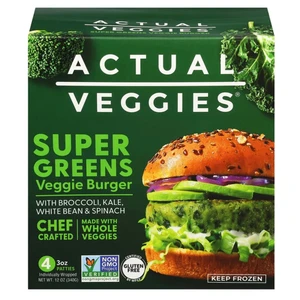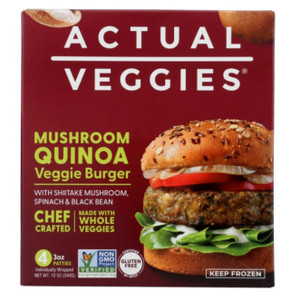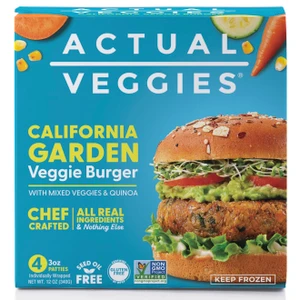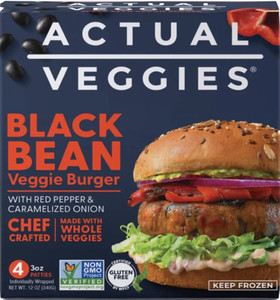

Black Bean Cheddar Veggie Burger 4ct - 12oz
Actual Veggies
$7.79
Below are the available bulk discount rates for each individual item when you purchase a certain amount
- Buy 2 - 2 and get 2% off
- Buy 3 - 5 and get 4% off
- Buy 6 or above and get 8% off
(No reviews yet)

Write a Review

Actual Veggies
Black Bean Cheddar Veggie Burger 4ct - 12oz
Cut into one of these patties and you'll see black beans, not a paste engineered to resemble them. Actual Veggies builds every burger in a working kitchen, not a food-science lab — chefs test batches by tasting them, not by matching a meat-mimicking spec sheet. The result is a burger that looks like what it is: black beans, real cheddar, and vegetables you can identify without a label.
- Built for the grill, skillet, or oven — holds together without turning to mush or drying out
- Whole visible black beans and cheddar instead of a protein isolate or a meat-replica blend
- Suited to vegetarian eating; contains dairy cheddar, so it's not a vegan pick
Actual Veggies didn't set out to make a burger that fools you into thinking it's beef. They set out to make a vegetable burger worth eating on its own terms - one where you can actually see the black beans and taste the cheddar instead of decoding an ingredient panel full of isolates and gums.
This black bean veggie burger is built around whole black beans and real cheddar, formulated in a test kitchen through trial, tasting, and adjustment rather than lab modeling. No fillers standing in for texture, no preservative system doing the work that good ingredients should do. It's a burger that reads like a recipe, not a spec sheet.
Cook it straight from frozen on a skillet, griddle, or grill until it hits a solid internal sear on both sides - the beans hold their shape and the cheddar keeps the patty from drying out, so there's no need to babysit it the way you might with a leaner veggie patty. Stack it with sauteed onions, avocado, or a fried egg, or crumble it over a grain bowl in place of a protein.
Buyers who've tried the Actual Veggies lineup consistently point to two things: the patties hold together through cooking instead of falling apart, and the flavor doesn't taste like a compromise. Several call out being able to see the actual bean and vegetable pieces as the reason they stuck with the brand.
- "These are all delicious, and they hold together well. Absolutely the best veggie burger I've tried. Permanent fan." - Sarah S., Verified Buyer
- "One look at the ingredients and you'll know they are the healthiest product on the market. They taste amazing and are far more versatile than just a burger patty." - Trevor B., Verified Buyer
- "I like everything about this burger. The size is just right, the ingredients are perfect, and the taste is great." - Audrianne E., Verified Buyer
Suitable for vegetarian eating as a vegetarian burger patty (contains dairy from the cheddar, so it is not vegan); because it's built on whole black beans and other vegetables, it's not a fit for keto, paleo, or carnivore diets. Keep frozen until ready to cook and store any leftovers in the refrigerator, cooked, for a few days.
Ingredients: Black Bean, Carrot, Organic White Cheddar Cheese (Organic Pasteurized Cultured Cow Milk, Salt, and Enzyme), Parsnip, Oat, Pea Protein, Yellow Onion, Quinoa, Red Pepper, Corn, Chickpea Flour, Avocado Oil, Ovata Seed (Psyllium), Lemon, Spice Blend (Kosher Salt, Garlic Powder, Chipotle Pepper, Cumin, Onion Powder, Black Pepper, Paprika).
Common Questions
How does this compare nutritionally to a conventional beef burger patty?
A typical 80/20 beef patty (about 4 oz raw) runs roughly 20-22 grams of protein and 20 grams of fat, with zero fiber and zero carbohydrates. A black bean and cheddar patty like this one flips that profile: black beans contribute complex carbohydrates and 6-8 grams of fiber per typical serving, plus a meaningful amount of plant protein, while the cheddar adds saturated fat and casein-based protein rather than myoglobin-based animal protein. The exact numbers on this specific patty depend on the final nutrition panel, so check the package for gram-for-gram figures, but the structural difference — fiber and complex carbs replacing part of the fat and protein load — is the consistent trade-off between a bean-based patty and a beef one.
What's the nutritional mechanism behind using black beans as the base instead of a protein isolate?
Black beans deliver protein and fiber together in their intact cellular structure, which is different from how a protein isolate works. Isolates (soy, pea) strip protein away from the fiber and other compounds in the original plant, then rely on added gums like methylcellulose or xanthan to rebuild texture. Keeping the bean whole preserves resistant starch and soluble fiber, both of which slow glucose absorption and feed gut bacteria that produce short-chain fatty acids like butyrate. It also means the binding in this patty comes from the bean's natural starch and the melted cheddar rather than a manufactured hydrocolloid doing that job.
Does this fit a keto, paleo, or carnivore diet?
No, and it's worth being upfront about that rather than stretching the claim. Black beans are a carbohydrate-dense legume, so this patty carries meaningfully more net carbs than a strict keto protocol (typically under 20-30 grams net carbs per day) can accommodate in a single serving. It also doesn't fit paleo or carnivore frameworks, since both exclude legumes and paleo generally excludes dairy as well. This is a vegetarian product built around beans and cheese, so it's a better fit for flexitarian, vegetarian, or higher-carb whole-food eating patterns than for low-carb or animal-only protocols.
What dishes work well if I'm substituting this for a beef or pork patty?
It holds up in anything where you want a patty that stays intact rather than crumbles, so classic burger builds, breakfast sandwiches with a fried egg, or a bunless plate with sautéed onions all work the same way you'd use a beef patty. It also breaks apart well after cooking, so crumbling it into a grain bowl, over rice, or into a taco in place of ground beef or chorizo is a solid substitution since the cheddar keeps it moist even when broken up. One adaptation: because it's denser and holds more moisture than a lean beef patty, don't press it flat on the griddle the way you might with a smash burger — let it sear undisturbed so the exterior firms up before flipping.
How can I verify what's actually in this burger since there's no certification listed?
The most direct way is the ingredient panel and nutrition facts printed on the package, which is the actual legal record of what's in the product regardless of marketing copy. This brand doesn't carry a third-party certification (like Non-GMO Project or USDA Organic) on this particular product, so verification rests on reading that panel rather than relying on a seal. If ingredient sourcing claims matter to you specifically, contacting the brand directly for their sourcing documentation is the reliable next step, since no independent audit body is attached to this label.
Why does this burger hold together without falling apart, unlike a lot of veggie patties?
The mechanism is straightforward: black beans have their own starch that acts as a natural binder when cooked, and melted cheddar adds fat and protein that fills gaps between bean pieces rather than leaving a dry, crumbly structure. Many veggie burgers rely on isolated proteins plus added gums or methylcellulose to hold shape, which can make the texture rubbery or cause the patty to fall apart once the binder breaks down under heat. Here, the beans and cheese are doing double duty as both flavor and structure, which is also why the patty doesn't need close monitoring on the grill the way a leaner, gum-bound veggie patty typically does.
This black bean veggie burger is built around whole black beans and real cheddar, formulated in a test kitchen through trial, tasting, and adjustment rather than lab modeling. No fillers standing in for texture, no preservative system doing the work that good ingredients should do. It's a burger that reads like a recipe, not a spec sheet.
Cook it straight from frozen on a skillet, griddle, or grill until it hits a solid internal sear on both sides - the beans hold their shape and the cheddar keeps the patty from drying out, so there's no need to babysit it the way you might with a leaner veggie patty. Stack it with sauteed onions, avocado, or a fried egg, or crumble it over a grain bowl in place of a protein.
Buyers who've tried the Actual Veggies lineup consistently point to two things: the patties hold together through cooking instead of falling apart, and the flavor doesn't taste like a compromise. Several call out being able to see the actual bean and vegetable pieces as the reason they stuck with the brand.
- "These are all delicious, and they hold together well. Absolutely the best veggie burger I've tried. Permanent fan." - Sarah S., Verified Buyer
- "One look at the ingredients and you'll know they are the healthiest product on the market. They taste amazing and are far more versatile than just a burger patty." - Trevor B., Verified Buyer
- "I like everything about this burger. The size is just right, the ingredients are perfect, and the taste is great." - Audrianne E., Verified Buyer
Suitable for vegetarian eating as a vegetarian burger patty (contains dairy from the cheddar, so it is not vegan); because it's built on whole black beans and other vegetables, it's not a fit for keto, paleo, or carnivore diets. Keep frozen until ready to cook and store any leftovers in the refrigerator, cooked, for a few days.
Ingredients: Black Bean, Carrot, Organic White Cheddar Cheese (Organic Pasteurized Cultured Cow Milk, Salt, and Enzyme), Parsnip, Oat, Pea Protein, Yellow Onion, Quinoa, Red Pepper, Corn, Chickpea Flour, Avocado Oil, Ovata Seed (Psyllium), Lemon, Spice Blend (Kosher Salt, Garlic Powder, Chipotle Pepper, Cumin, Onion Powder, Black Pepper, Paprika).
Common Questions
How does this compare nutritionally to a conventional beef burger patty?
A typical 80/20 beef patty (about 4 oz raw) runs roughly 20-22 grams of protein and 20 grams of fat, with zero fiber and zero carbohydrates. A black bean and cheddar patty like this one flips that profile: black beans contribute complex carbohydrates and 6-8 grams of fiber per typical serving, plus a meaningful amount of plant protein, while the cheddar adds saturated fat and casein-based protein rather than myoglobin-based animal protein. The exact numbers on this specific patty depend on the final nutrition panel, so check the package for gram-for-gram figures, but the structural difference — fiber and complex carbs replacing part of the fat and protein load — is the consistent trade-off between a bean-based patty and a beef one.
What's the nutritional mechanism behind using black beans as the base instead of a protein isolate?
Black beans deliver protein and fiber together in their intact cellular structure, which is different from how a protein isolate works. Isolates (soy, pea) strip protein away from the fiber and other compounds in the original plant, then rely on added gums like methylcellulose or xanthan to rebuild texture. Keeping the bean whole preserves resistant starch and soluble fiber, both of which slow glucose absorption and feed gut bacteria that produce short-chain fatty acids like butyrate. It also means the binding in this patty comes from the bean's natural starch and the melted cheddar rather than a manufactured hydrocolloid doing that job.
Does this fit a keto, paleo, or carnivore diet?
No, and it's worth being upfront about that rather than stretching the claim. Black beans are a carbohydrate-dense legume, so this patty carries meaningfully more net carbs than a strict keto protocol (typically under 20-30 grams net carbs per day) can accommodate in a single serving. It also doesn't fit paleo or carnivore frameworks, since both exclude legumes and paleo generally excludes dairy as well. This is a vegetarian product built around beans and cheese, so it's a better fit for flexitarian, vegetarian, or higher-carb whole-food eating patterns than for low-carb or animal-only protocols.
What dishes work well if I'm substituting this for a beef or pork patty?
It holds up in anything where you want a patty that stays intact rather than crumbles, so classic burger builds, breakfast sandwiches with a fried egg, or a bunless plate with sautéed onions all work the same way you'd use a beef patty. It also breaks apart well after cooking, so crumbling it into a grain bowl, over rice, or into a taco in place of ground beef or chorizo is a solid substitution since the cheddar keeps it moist even when broken up. One adaptation: because it's denser and holds more moisture than a lean beef patty, don't press it flat on the griddle the way you might with a smash burger — let it sear undisturbed so the exterior firms up before flipping.
How can I verify what's actually in this burger since there's no certification listed?
The most direct way is the ingredient panel and nutrition facts printed on the package, which is the actual legal record of what's in the product regardless of marketing copy. This brand doesn't carry a third-party certification (like Non-GMO Project or USDA Organic) on this particular product, so verification rests on reading that panel rather than relying on a seal. If ingredient sourcing claims matter to you specifically, contacting the brand directly for their sourcing documentation is the reliable next step, since no independent audit body is attached to this label.
Why does this burger hold together without falling apart, unlike a lot of veggie patties?
The mechanism is straightforward: black beans have their own starch that acts as a natural binder when cooked, and melted cheddar adds fat and protein that fills gaps between bean pieces rather than leaving a dry, crumbly structure. Many veggie burgers rely on isolated proteins plus added gums or methylcellulose to hold shape, which can make the texture rubbery or cause the patty to fall apart once the binder breaks down under heat. Here, the beans and cheese are doing double duty as both flavor and structure, which is also why the patty doesn't need close monitoring on the grill the way a leaner, gum-bound veggie patty typically does.
- __Storage_Location:
- Frozen
- __Volume:
- 350
- __Owner:
- TCFarm
- __badge:
- Vegetarian